🎉NEWCapSolver for AI agents-MCP, agent tools, and SDK integrations

Emma Foster
Machine Learning Engineer
Published Jan 05, 2026
Updated Jan 07, 2026 · min read
The web scraping landscape is undergoing a massive transformation. Traditional, brittle scrapers are being replaced by intelligent, AI-powered solutions. These tools are essential for reliable data extraction in 2026. Here are the most important points from this guide:
Web data is the lifeblood of modern artificial intelligence. Businesses require vast quantities of clean, structured data for training models and market intelligence. However, traditional web scraping methods are proving insufficient. Websites now employ sophisticated security measures to manage access. These measures instantly block simple, rule-based scrapers. The cost of constantly maintaining old scraping code has become prohibitive.
The solution is AI-powered scraping. These advanced tools use machine learning to intelligently mimic human behavior. They automatically adjust to changes in website structure. This guide identifies the Best AI Scraping tool options for 2026. We will help developers, data scientists, and marketers secure their data pipelines. You will learn what AI scraping is, its core advantages, and which tools offer the most compelling value proposition.
AI scraping is the application of artificial intelligence to automate web data extraction. It represents a significant evolution beyond simple rule-based extraction. AI tools analyze the visual and structural context of a webpage. They identify the target data based on its semantic meaning, not its fixed location. This fundamental shift makes the resulting scrapers far more resilient to website updates.
Traditional scraping relies on static selectors. A minor change in a website’s HTML structure immediately breaks the scraper. This forces costly, time-consuming manual intervention. In contrast, an AI scraper uses a large language model (LLM) or a specialized machine learning model. The model understands the user's intent. When you instruct the tool to "extract the product name and price," the Best AI Scraping tool finds this information even after a complete website redesign.
This adaptability is crucial for modern data collection. The global web scraping market is experiencing rapid expansion. It is projected to exceed $2 billion by 2026, a growth largely fueled by the adoption of AI technologies Mordor Intelligence. AI scraping is not merely an optional feature. It is a necessary evolution for maintaining a reliable data acquisition strategy.
Large Language Models (LLMs) are the engine of the AI scraping revolution. They process the raw, unstructured HTML content. They then output clean, structured data in formats like JSON or CSV. This dramatically reduces the time spent on data cleaning and preparation. Generative AI also plays a role in creating realistic, synthetic browsing patterns. These patterns help in navigating complex web applications. The Best AI Scraping tool integrates these LLM capabilities to deliver high-quality, structured data. For a deeper dive into the concept, read our article on What is AI Scraping?.
The modern web presents significant challenges to automated data collection. Websites use sophisticated security measures to detect and deter automated traffic. AI is the only viable method to consistently overcome these hurdles.
AI scrapers employ advanced techniques to simulate human interaction. They execute realistic mouse movements, handle scrolling, and manage dynamic content loading via JavaScript. This behavioral mimicry is far more effective than simple proxy rotation. The Best AI Scraping tool operates within a headless browser environment. This allows it to render pages and interact with elements just like a real user.
Security challenges, such as CAPTCHAs and complex verification screens, remain a major obstacle for high-volume data collection. Even the most advanced AI scrapers encounter these measures. Integrating a reliable service for security challenge resolution is mandatory for uninterrupted data flow. This integration ensures that your scraping workflow remains stable and efficient. You can learn more about this critical component in our guide on How to Integrate CAPTCHA Solving in Your AI Scraping Workflow. A truly effective Best AI Scraping tool either includes this feature or offers easy, robust integration.
Choosing the right tool depends on your technical expertise, project scale, and budget. We have analyzed the top contenders for 2026, covering everything from enterprise solutions to open-source libraries.
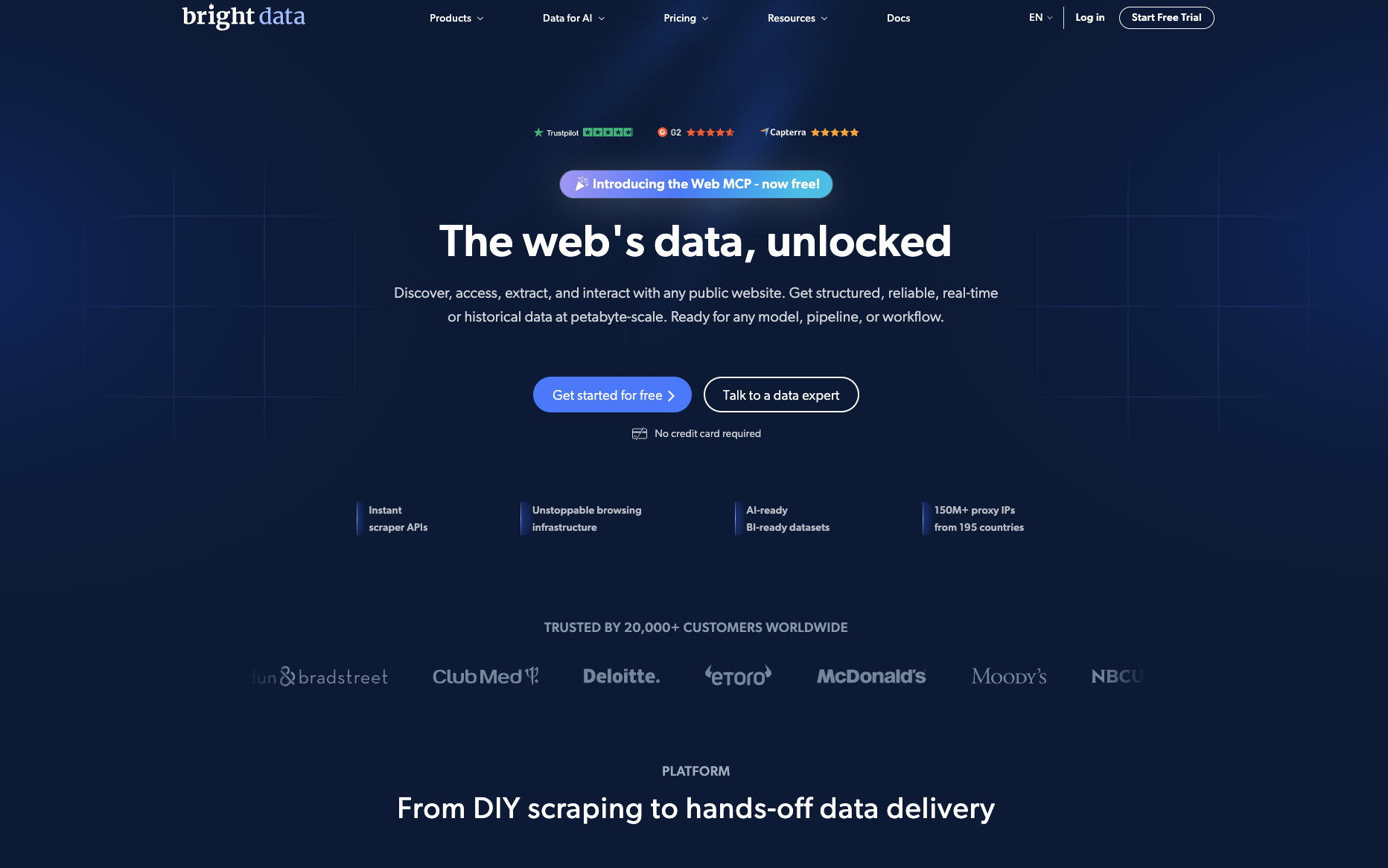
Bright Data is a comprehensive web data platform, offering a full suite of data collection solutions. It is widely recognized for its massive, highly reliable proxy network, which includes over 100 million real-peer IPs Bright Data.
Key AI Features and Capabilities:
Core Use Cases:
Bright Data excels in real-time, high-quality data needs, such as competitive intelligence, financial market data, and large-scale AI training data. Its robust infrastructure supports continuous, high-volume data streams for enterprise analytics.
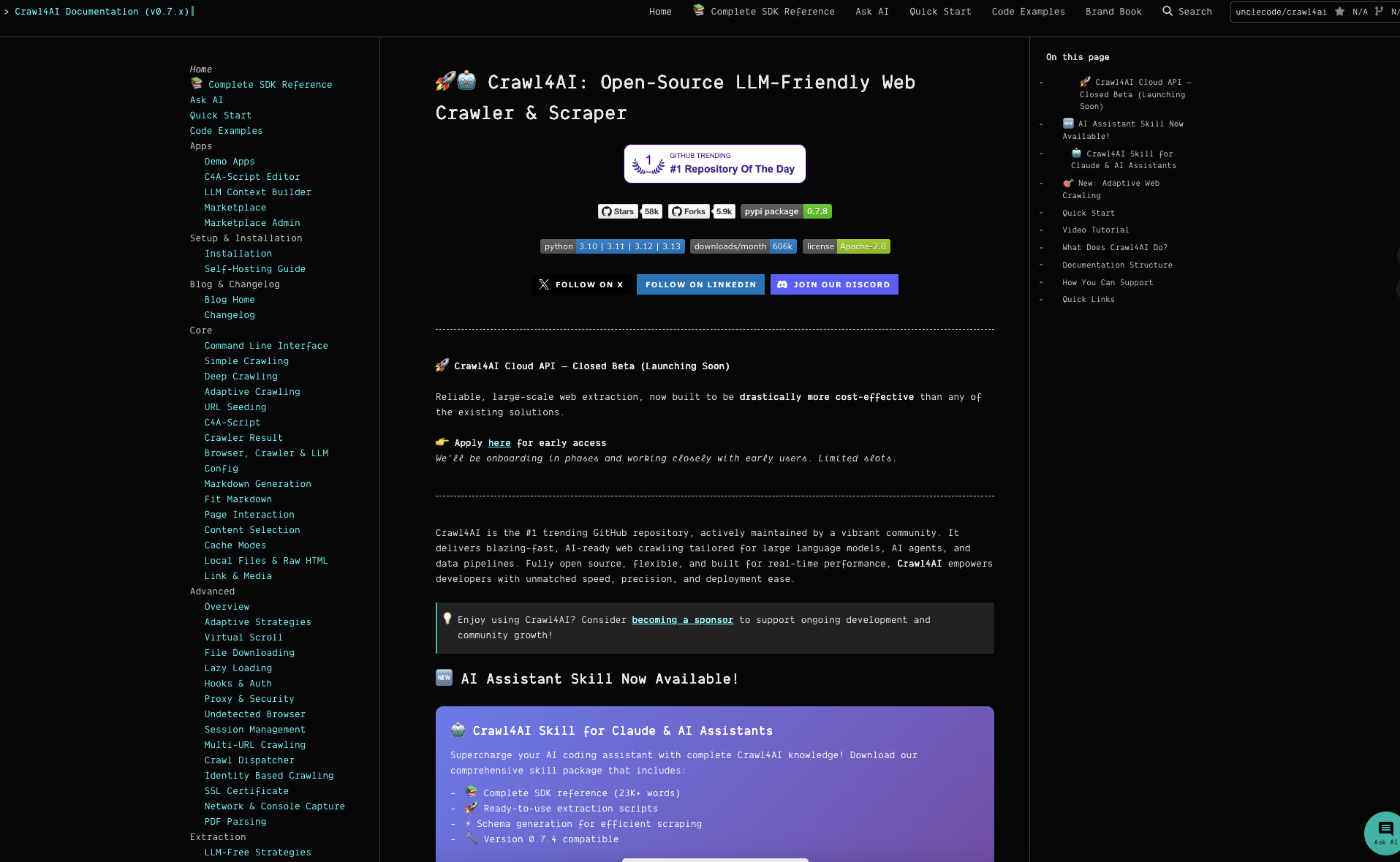
Crawl4AI is a popular open-source Python library specifically engineered for AI agents and LLM data pipelines. It has rapidly gained traction in the developer community due to its focus on performance and clean output.
Key AI Features and Capabilities:
Core Use Cases:
Crawl4AI suits developers building custom AI agents or specialized data pipelines. It's used for academic research, prototyping, and integrating web data into ML workflows. Its open-source nature allows deep customization, making it the Best AI Scraping tool for Python developers needing granular control.
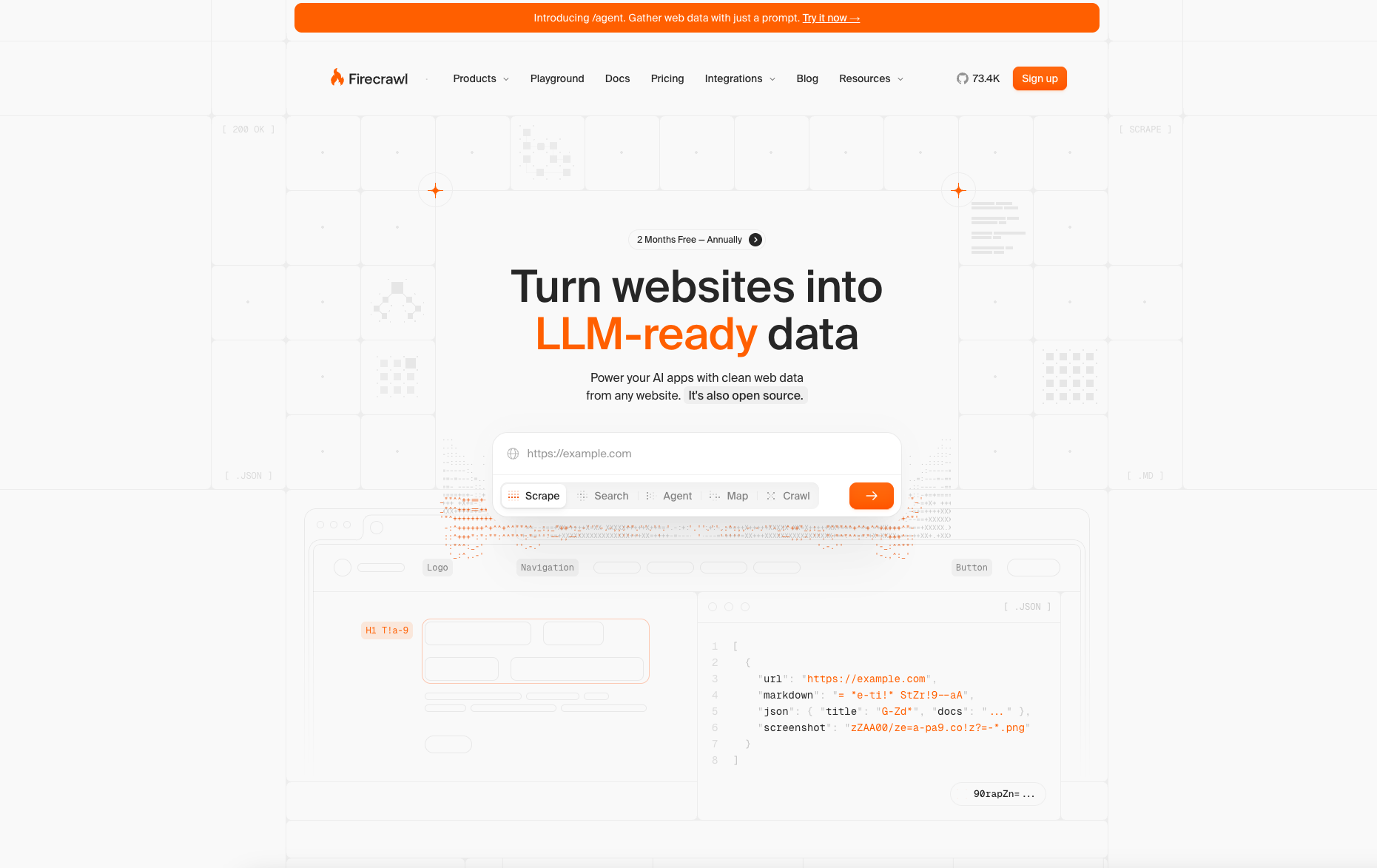
Firecrawl is a specialized tool that focuses on simplifying the process of converting any website into LLM-ready content. It is a favorite for teams building RAG applications and knowledge bases.
Key AI Features and Capabilities:
Core Use Cases:
Firecrawl excels where LLMs need quick web content ingestion, such as RAG systems for chatbots, internal knowledge bases, or news summarization. Its LLM-ready output makes it the Best AI Scraping tool for AI engineers and content strategists.
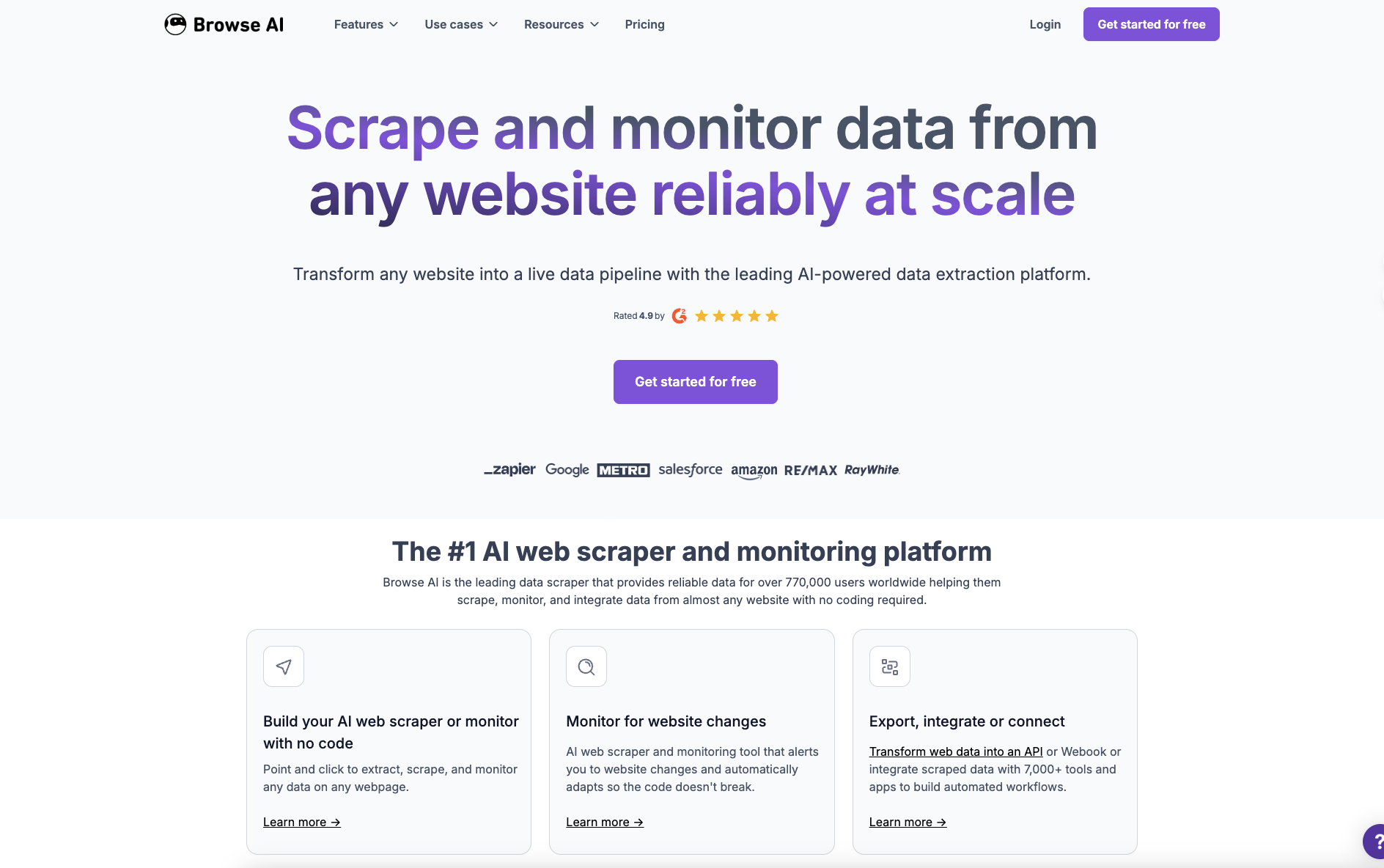
Browse AI is a no-code platform that empowers non-technical users, such as marketers and business analysts, to build and manage scrapers visually.
Key AI Features and Capabilities:
Core Use Cases:
Browse AI is ideal for continuous web data monitoring without code, like tracking competitor launches, job postings, lead collection, or page change alerts. Its ease of use makes it the Best AI Scraping tool for business users needing quick, actionable insights.
ScrapeGraphAI is an open-source Python library that introduces a novel, graph-based approach to web scraping. It is designed for building complex, multi-step AI agents that can autonomously navigate and extract data.
Key AI Features and Capabilities:
Core Use Cases:
ScrapeGraphAI suits advanced AI-driven data extraction R&D. It builds sophisticated agents that explore websites, gather multi-page info, and make content-based decisions. This makes it the Best AI Scraping tool for intelligent data collection beyond simple extraction.
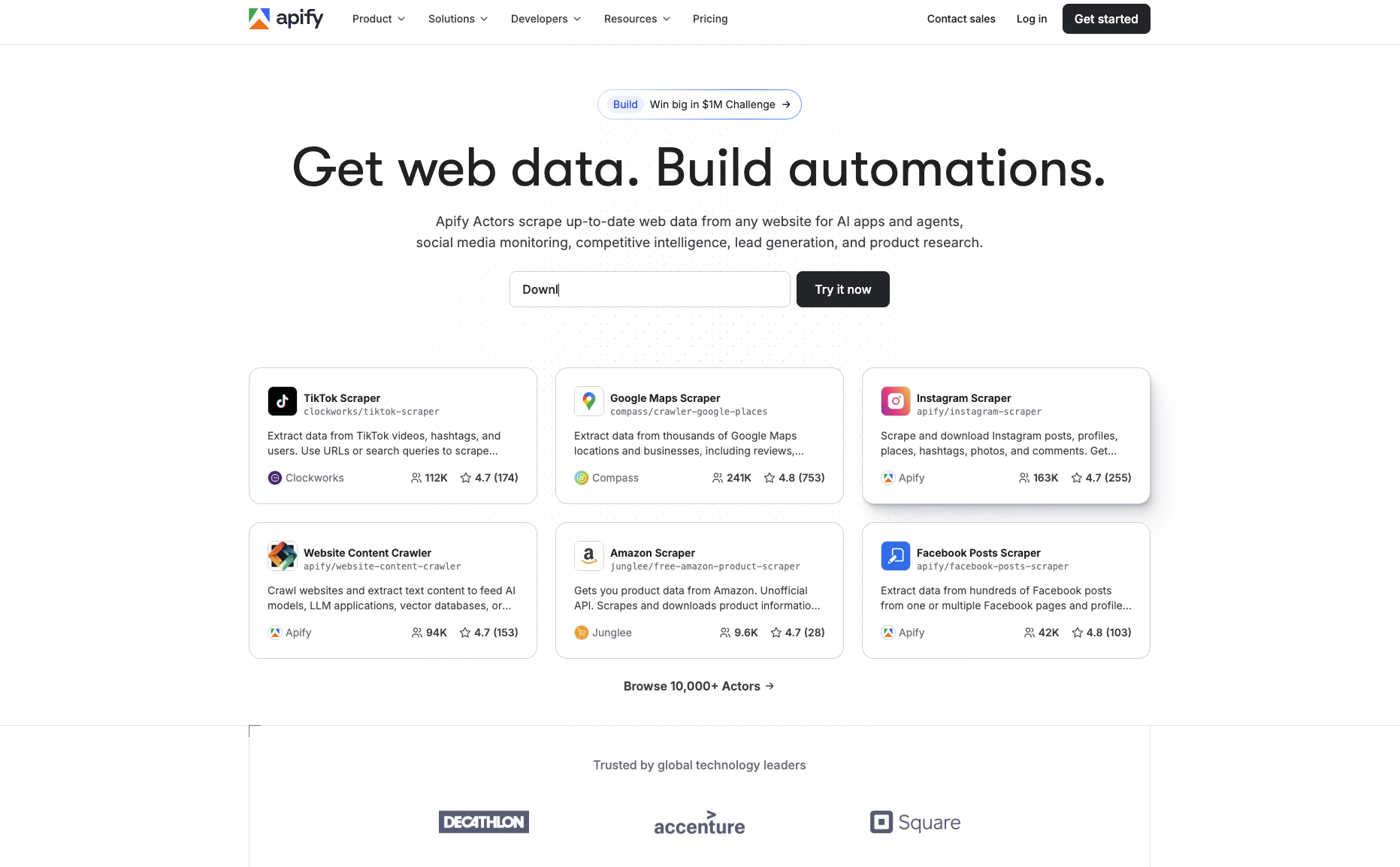
Apify is a robust cloud platform for web scraping and automation. It hosts thousands of ready-to-use scraping tools called "Actors." Apify has heavily invested in its AI capabilities, offering a flexible, managed environment.
Key AI Features and Capabilities:
Core Use Cases:
Apify is used for scalable data collection needing customizability and managed cloud infrastructure, such as e-commerce product data, social media sentiment analysis, or news aggregation. Its flexibility makes it the Best AI Scraping tool for teams managing diverse scraping tasks efficiently.
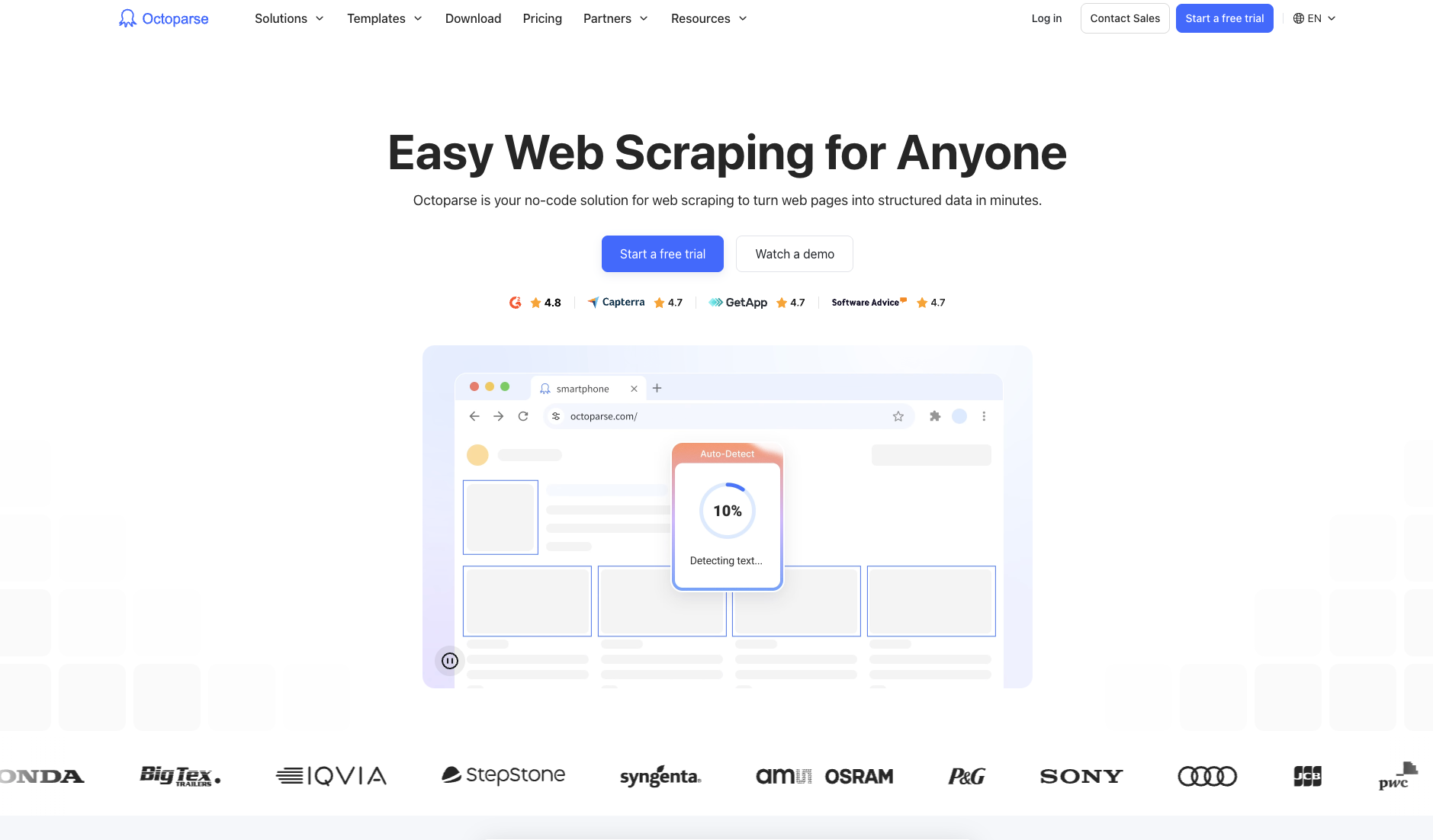
Octoparse is a veteran in the visual scraping space that has successfully integrated AI features into its core product. It remains a leading no-code solution with a strong focus on user experience.
Key AI Features and Capabilities:
Core Use Cases:
Octoparse is excellent for businesses and individuals needing structured data extraction without coding. Applications include lead generation, market research, and content aggregation. Its intuitive visual interface makes it the Best AI Scraping tool for non-technical users automating repetitive data collection.
The following table provides a quick comparison of the top tools, helping you align a solution with your technical skill and project scale.
| Tool | Primary Focus | No-Code/Code | AI Focus | Access Management | Starting Price (Paid, Monthly) | Best For |
|---|---|---|---|---|---|---|
| Bright Data | Enterprise Data | Code/API | Full Suite | Advanced Resolution | $3.50/1K pages (PAYG) | Large-scale, high-volume, security-heavy projects |
| Crawl4AI | Developer Library | Code (Python) | LLM-Ready Output | External Proxy | Free (plus LLM costs) | Python developers, custom AI agent builders |
| Firecrawl | RAG/LLM Input | API/GUI | Markdown Conversion | Integrated | $19/month (10K pages) | AI engineers, RAG application development |
| Browse AI | Monitoring/Automation | No-Code | Visual Training | Integrated | $48.75/month (2K credits) | Marketers, business analysts, simple monitoring |
| ScrapeGraphAI | Agent Orchestration | Code (Python) | Graph Logic | External Proxy | Free (plus LLM costs) | Advanced AI researchers, complex multi-step tasks |
| Apify | Cloud Platform | Code/No-Code | AI SDK | Integrated Smart Proxy | $39/month (includes usage) | Teams needing cloud hosting and customizability |
| Octoparse | Visual Scraping | No-Code | Auto-Detection | Integrated | $69/month (100 tasks) | Non-technical users, simple data extraction |
The title of Best AI Scraping tool is dynamic. It evolves with web technology. In 2026, a tool must excel in three critical areas to be considered a leader.
The tool must automatically adjust to minor website changes without manual intervention. It should not rely on fixed selectors. The Best AI Scraping tool uses AI to infer the data schema. It can create a structured JSON output even from a completely new webpage layout. This feature dramatically reduces the "breakage" rate of scrapers. It shifts the focus from maintenance to data analysis.
Reliable data collection requires successfully navigating sophisticated security challenges. This includes JavaScript execution, browser fingerprinting, and rate limiting. The Best AI Scraping tool integrates a robust proxy and unblocking solution. It also must handle CAPTCHA challenges seamlessly. Without this capability, any scraping project will eventually fail at scale.
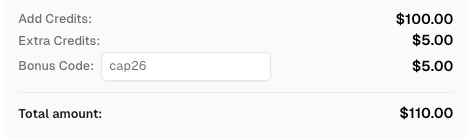
Use code
CAP26when signing up at CapSolver to receive bonus credits!
The final output must be immediately usable by AI models. This means clean, structured data with minimal noise. The tool should support direct integration with AI orchestration frameworks. Examples include LangChain and CrewAI. This allows the scraped data to be instantly fed into RAG systems or AI agents. The future of scraping is not just extraction. It is the immediate, intelligent use of the extracted data. For more on the technical side, check out The Best Coding Language for Web Scraping in 2026.
The era of simple web scraping is over. The future belongs to AI-powered tools. These solutions offer the resilience, speed, and structured output required for modern AI applications. Whether you choose the enterprise power of Bright Data or the open-source flexibility of Crawl4AI, the time to upgrade is now. Investing in the Best AI Scraping tool ensures your data pipeline remains robust and reliable.
Start by assessing your project's complexity and your team's technical skill. For large-scale, mission-critical data, a managed service like Bright Data is the clear choice. For developers building custom AI agents, Crawl4AI or ScrapeGraphAI provide the necessary foundation. The right tool will not only collect data. It will transform raw web information into actionable intelligence.
A: The legality of web scraping is complex and highly dependent on context. It generally depends on the data being collected and the website's terms of service. Scraping publicly available data is often permissible. Scraping personal or proprietary data is usually restricted. Always respect robots.txt files and check the site's terms of service. Consult legal counsel for specific guidance.
A: Costs vary widely based on the tool's nature. Open-source tools like Crawl4AI are free, but you pay for the LLM API usage (e.g., $5.00 per million tokens). Managed services like Browse AI and Octoparse use monthly subscriptions ranging from $48.75 to $249 per month. Enterprise solutions like Bright Data use a consumption-based model, starting at $1.50 per 1,000 successful pages.
A: No single tool can guarantee a 100% success rate against all security challenges. However, AI scrapers are significantly more effective than traditional ones. They use behavioral mimicry and advanced access management techniques. The most persistent challenges, like complex CAPTCHAs, require specialized, integrated services. The Best AI Scraping tool minimizes block rates but does not eliminate them entirely.
A: Web scraping for LLMs involves extracting raw text and data used to train or fine-tune the language model. RAG (Retrieval-Augmented Generation) uses scraped data as an external knowledge base. The LLM queries this knowledge base to generate more accurate, context-specific answers. Tools like Firecrawl are specifically designed to prepare data for RAG systems.
A: The future points toward fully autonomous AI agents. These agents will not only collect data. They will also analyze it, make decisions, and self-correct their data collection logic. The next generation of the Best AI Scraping tool will be less about configuration and more about goal-setting. For a comparison of other data collection methods, see Best Web Scraping APIs in 2026.
Emma Foster
Machine Learning Engineer
Where machine learning meets practical AI tooling.
ABOUT THE AUTHOR
Learn scalable Rust web scraping architecture with reqwest, scraper, async scraping, headless browser scraping, proxy rotation, and compliant CAPTCHA handling.

Learn the best techniques to scrape job listings without getting blocked. Master Indeed scraping, Google Jobs API, and web scraping API with CapSolver.