🎉NEWCapSolver for AI agents-MCP, agent tools, and SDK integrations

Emma Foster
Machine Learning Engineer
Published Feb 10, 2026
Updated Feb 12, 2026 · min read
Did you know that the global big data and business analytics market is projected to reach $654.2 billion by 2029 (Source: Statista). This staggering figure highlights the immense value businesses place on data. But simply having data isn't enough; it needs to be accessible, usable, and actionable. This is where Data as a Service (DaaS) steps in, revolutionizing how organizations leverage their most valuable asset.
In the rapidly evolving digital landscape of 2026, DaaS is no longer a niche offering but a fundamental pillar for competitive advantage. It represents a paradigm shift, moving data management from complex, on-premises infrastructure to a flexible, cloud-based model. This article will delve deep into what DaaS is, its core components, the compelling reasons it matters, its diverse applications, and what the future holds for this transformative technology.
At its core, Data as a Service (DaaS) is a cloud computing model that provides data on demand to users, regardless of their location or the devices they are using. Think of it like subscribing to a service, but instead of streaming movies or music, you're accessing and utilizing curated datasets. These datasets can range from internal company information to external market intelligence, demographic data, financial records, and much more.
DaaS abstracts the complexities of data storage, management, and processing, making data readily available through various interfaces, typically APIs (Application Programming Interfaces). This allows applications and users to access and integrate data seamlessly into their workflows without needing to build or maintain their own data infrastructure.
While specific implementations vary, most DaaS solutions share common architectural components:
It's important to distinguish DaaS from related concepts:
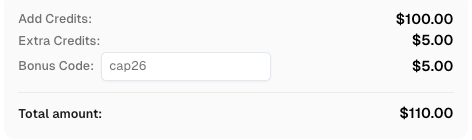
Use code
CAP26when signing up at CapSolver to receive bonus credits!
The increasing reliance on data for decision-making, coupled with the complexities of managing it, makes DaaS indispensable in today's business environment. By 2026, these forces will only intensify:
We are generating data at an unprecedented rate. The Internet of Things (IoT), social media, mobile devices, and digital transactions all contribute to a constant influx of information. Managing this sheer volume and diversity of data on-premises becomes prohibitively expensive and complex. DaaS offers a scalable and cost-effective solution, allowing businesses to tap into this data without the burden of infrastructure management.
In a fast-paced market, decisions made yesterday might be obsolete today. Businesses need real-time or near-real-time access to data to react quickly to market changes, customer behavior, and operational issues. DaaS platforms are designed for efficient data delivery, enabling quicker analysis and more agile decision-making.
Traditionally, accessing and analyzing data was the domain of specialized IT teams or data scientists. DaaS aims to democratize data access, making relevant datasets available to a broader range of users within an organization – from marketing and sales to product development and customer support. This empowers more individuals to make data-driven decisions.
Building and maintaining an in-house data infrastructure requires significant capital expenditure and ongoing operational costs. DaaS operates on a pay-as-you-go or subscription model, offering greater cost predictability and flexibility. As data needs grow or shrink, businesses can easily scale their DaaS usage up or down, optimizing resource allocation. This is a key advantage for businesses looking to efficiently manage their data-as-a-service consumption.
By offloading data management tasks to a DaaS provider, organizations can free up internal IT resources to focus on core business functions and strategic initiatives. This agility allows businesses to experiment with new data sources, develop innovative data-driven products and services, and respond more rapidly to market opportunities.
Reputable DaaS providers invest heavily in data quality, standardization, and governance. They often employ API Automation Tools and processes to ensure the accuracy, completeness, and consistency of the data they offer. This can significantly improve the reliability of business insights compared to managing disparate internal data sources.
DaaS is a versatile solution applicable across numerous industries and business functions. Here are some prominent use cases:
Businesses can subscribe to DaaS solutions that provide up-to-date market trends, competitor activities, pricing information, and customer sentiment data. This enables them to understand their market position, identify emerging opportunities, and adapt their strategies accordingly.
Integrating external demographic, psychographic, and behavioral data with internal CRM data can create a richer, 360-degree view of customers. This allows for more personalized marketing campaigns, improved customer service, and more effective sales strategies.
Financial institutions utilize DaaS for access to real-time market data, credit scoring information, fraud detection patterns, and regulatory compliance data. This is crucial for making informed investment decisions, managing risk, and preventing financial crime.
DaaS can provide real-time data on logistics, inventory levels, weather patterns, and geopolitical events that might impact the supply chain. This allows businesses to optimize routes, manage inventory efficiently, and mitigate disruptions.
In healthcare, DaaS can provide access to anonymized patient data for research, clinical trial management, public health trend analysis, and personalized medicine initiatives. This aids in advancing medical research and improving patient outcomes.
Retailers use DaaS to access consumer behavior data, product demand forecasts, competitor pricing, and inventory data. This helps in optimizing product offerings, personalizing promotions, and managing stock levels effectively.
Providing access to location-based data, mapping information, and satellite imagery for applications in urban planning, real estate, agriculture, and disaster management.
While the benefits of DaaS are clear, successful implementation requires careful planning and consideration:
The evolution of DaaS is closely tied to advancements in cloud computing, artificial intelligence (AI), and machine learning (ML). We can expect:
According to Gartner, "By 2026, organizations will be able to access data from any cloud or edge environment through a unified data fabric, enabling a more seamless and efficient data management experience."
While DaaS focuses on delivering structured, high-quality datasets through APIs and cloud infrastructure, the upstream challenge often lies in reliably collecting that data at scale. In many real-world scenarios—such as competitive intelligence, price monitoring, financial data aggregation, or public records extraction—data sources are protected by sophisticated anti-bot systems including reCAPTCHA, Cloudflare, Imperva, and other behavioral detection mechanisms.
This is where CapSolver plays a critical operational role.
For organizations building internal DaaS pipelines or sourcing external web data, automated access can be blocked by CAPTCHA challenges and advanced anti-automation defenses. CapSolver enables compliant automation workflows by providing programmatic CAPTCHA-solving APIs that integrate directly into scraping, RPA, or browser automation systems. By bridging the gap between data extraction infrastructure and anti-bot protection layers, CapSolver helps ensure stable, scalable, and uninterrupted data acquisition.
In the broader DaaS ecosystem, reliable data collection is foundational. Without consistent upstream access, downstream analytics, AI models, and business intelligence systems cannot function effectively. By reducing friction in data retrieval pipelines, CapSolver supports organizations in maintaining data freshness, improving pipeline resilience, and accelerating time-to-insight.
As DaaS continues evolving toward real-time intelligence and AI-driven analytics, the importance of resilient data acquisition infrastructure will only increase—and solutions like CapSolver become an essential part of that foundation.
In the dynamic business environment of 2026, Data as a Service (DaaS) is not just a technological trend; it's a strategic imperative. It empowers organizations to overcome data management challenges, unlock the full potential of their data, and gain a significant competitive edge. By providing scalable, cost-effective, and accessible data solutions, DaaS enables businesses to make smarter, faster decisions, drive innovation, and thrive in an increasingly data-centric world. Embracing DaaS means embracing agility, intelligence, and a future powered by insights.
The primary benefit of DaaS is simplified access to high-quality, curated data without the need for significant internal infrastructure or expertise. It allows businesses to focus on utilizing data for insights rather than managing the underlying data complexities.
Reputable DaaS providers invest heavily in robust security measures, including encryption, access controls, and compliance with data privacy regulations. However, the ultimate security also depends on how the client organization manages access and integrates the data.
DaaS reduces costs by shifting from a capital expenditure (CapEx) model for infrastructure to an operational expenditure (OpEx) model with pay-as-you-go or subscription pricing. It also saves on the costs associated with data storage, maintenance, and specialized IT personnel.
Yes, most DaaS solutions are designed for seamless integration with existing enterprise systems through APIs (Application Programming Interfaces). This allows data to be easily incorporated into current applications and workflows.
DaaS can provide access to a wide variety of data types, including structured data (e.g., financial records, sales figures), semi-structured data (e.g., JSON, XML), and even unstructured data (e.g., text from social media, images), depending on the specific DaaS offering and provider.
DaaS is used by a broad range of users, including business analysts, data scientists, marketing professionals, sales teams, researchers, and IT departments across various industries. Essentially, anyone within an organization who needs timely and reliable data for decision-making can benefit from DaaS.
Emma Foster
Machine Learning Engineer
Where machine learning meets practical AI tooling.
ABOUT THE AUTHOR
Learn scalable Rust web scraping architecture with reqwest, scraper, async scraping, headless browser scraping, proxy rotation, and compliant CAPTCHA handling.

Learn the best techniques to scrape job listings without getting blocked. Master Indeed scraping, Google Jobs API, and web scraping API with CapSolver.