
🎉NEWCapSolver for AI agents-MCP, agent tools, and SDK integrations

Ethan Collins
AI Agent Workflow Engineer
Published Dec 25, 2025
Updated Dec 25, 2025 · min read
TLDR
Healthcare license verification is critical for compliance but is often slowed by manual processes and persistent CAPTCHA challenges. The most effective solution is to implement an AI-powered CAPTCHA solving service, such as CapSolver, to seamlessly integrate with automation tools. This approach ensures rapid, accurate, and compliant verification, significantly reducing administrative burden and improving credentialing speed.
The integrity of patient care hinges on accurate and timely provider credentialing. Healthcare license verification workflows are a non-negotiable part of this process. However, these essential workflows are frequently hampered by a seemingly simple obstacle: the CAPTCHA. This article is for compliance officers, credentialing managers, and automation specialists seeking reliable strategies to overcome these persistent digital roadblocks. We will explore why CAPTCHAs are prevalent in state licensing portals and detail a compliant, high-efficiency approach to automate license verification without compromising security or regulatory adherence.
Provider credentialing is a complex, multi-state, and ongoing requirement. Healthcare organizations must verify that every practitioner is licensed and in good standing with the relevant state boards. This process is mandated to protect patient safety and ensure compliance with federal regulations, including those set by the U.S. Department of Health & Human Services (HHS) .
The sheer volume of checks required for initial credentialing and continuous monitoring is immense. Organizations must frequently check the primary source verification (PSV) sites of various state boards. When dealing with mobile workforces, like travel nurses operating under the National Council of State Boards of Nursing (NCSBN) Nurse Licensure Compact, the complexity multiplies
Manual verification is slow, error-prone, and resource-intensive. Automation is the clear path forward, but automation tools inevitably encounter security measures designed to block non-human traffic. This is where the CAPTCHA challenge enters the healthcare license verification workflows.
State licensing boards use CAPTCHAs for legitimate security reasons. They aim to prevent malicious actors from scraping large volumes of sensitive data or launching denial-of-service attacks. These security layers are not intended to stop legitimate credentialing efforts. However, they create a significant bottleneck for organizations trying to implement healthcare compliance automation
The challenge is that automated verification, while necessary for efficiency, often mimics the behavior of web scrapers. The security systems cannot distinguish between a compliance bot performing essential healthcare license verification workflows and a malicious bot. This results in the frequent deployment of advanced CAPTCHA systems.
Two types of CAPTCHA are most commonly encountered when attempting to automate license verification across state portals:
Google’s reCAPTCHA is the most ubiquitous form of human verification online.
Websites hosted on Amazon Web Services (AWS) often use AWS Web Application Firewall (WAF) to protect their endpoints. AWS WAF can deploy its own CAPTCHA challenge. This challenge is specifically designed to integrate with the AWS security ecosystem. It requires a token to be generated and submitted alongside the verification request. Handling this challenge requires a specialized approach that understands the AWS WAF token mechanism.
Successfully navigating these license verification CAPTCHA challenges is the key to unlocking true automation efficiency.
Relying on human intervention to solve CAPTCHAs in healthcare license verification workflows introduces several critical problems:
| Challenge | Manual Handling Impact | Automated Solution Benefit |
|---|---|---|
| Speed | Each CAPTCHA adds 10–30 seconds, multiplying across thousands of verifications. | Instant, API-driven resolution, enabling real-time checks. |
| Accuracy | Human error in data entry or challenge solving leads to failed verification attempts. | High-accuracy AI models ensure correct token generation every time. |
| Cost | Requires dedicated staff time, increasing operational expenses. | Low-cost, pay-per-solve model scales efficiently with demand. |
| Scalability | Cannot handle peak loads or large backlogs of verification requests. | Scales instantly to handle thousands of concurrent requests. |
| Compliance | Delays in verification can lead to non-compliance penalties. | Ensures timely, auditable completion of all verification tasks. |
The goal is not to eliminate the CAPTCHA, but to integrate a compliant, automated solution that solves the challenge instantly and accurately.
The most effective and compliant method for handling CAPTCHAs in healthcare license verification workflows is to use a dedicated, high-performance CAPTCHA solving service. This approach is superior to attempting to bypass the security measures, which can lead to IP bans and legal issues. A solver service works by integrating directly into your automation script (e.g., Python, Node.js) and acting as an intermediary.
This method ensures that the CAPTCHA is solved as intended by the website's security, maintaining compliance while achieving full automation. For those looking to integrate this into their existing systems, understanding how to How to Integrate CAPTCHA Solving in Your AI Scraping Workflow is a crucial first step.
When selecting a CAPTCHA solver for critical healthcare license verification workflows performance and reliability are paramount. CapSolver is engineered to handle the specific, complex challenges found on government and licensing websites.
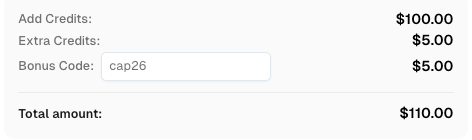
Use code CAP26 when signing up at CapSolver to receive bonus credits!
CapSolver offers specialized solutions for the most common obstacles:
Integrating a solver service into your Python automation script is straightforward. We provide examples for both reCAPTCHA v2 and AWS WAF.
This first example demonstrates how to solve a reCAPTCHA v2 challenge, which is common on many state licensing portals.
import requests
import json
import time

# CapSolver API endpoint and key
API_URL = "https://api.capsolver.com/createTask"
API_KEY = "YOUR_CAPSOLVER_API_KEY"

def get_task_result(task_id):
    """Polls the API for the task result."""
    payload = {"clientKey": API_KEY, "taskId": task_id}
    while True:
        response = requests.post("https://api.capsolver.com/getTaskResult", json=payload).json()
        if response.get("status") == "ready":
            return response.get("solution", {}).get("gRecaptchaResponse")
        elif response.get("status") == "processing":
            time.sleep(5)
        else:
            print("Error getting task result:", response)
            return None

def solve_recaptcha_v2(website_url, site_key):
    """Submits a reCAPTCHA v2 challenge to CapSolver and retrieves the token."""

    # 1. Define the task payload for reCAPTCHA V2
    task_payload = {
        "clientKey": API_KEY,
        "task": {
            "type": "ReCaptchaV2TaskProxyLess", # Use ProxyLess for simple v2
            "websiteURL": website_url,
            "websiteKey": site_key
        }
    }

    # 2. Send the task to the CapSolver API
    response = requests.post(API_URL, json=task_payload)
    task_id = response.json().get("taskId")

    if not task_id:
        print("Error creating task:", response.text)
        return None

    # 3. Poll for the result
    result_token = get_task_result(task_id)

    return result_token

# Example usage (replace with actual values from the licensing portal)
# website_url = "https://state-medical-board.gov/verification"
# site_key = "RECAPTCHA_SITE_KEY"
# token = solve_recaptcha_v2(website_url, site_key)
# print(f"Received reCAPTCHA Token: {token}")

# The token is then submitted to the website to complete the verification request.This second example demonstrates how to use a service API to solve an AWS WAF challenge.
import requests
import json

# CapSolver API endpoint and key
API_URL = "https://api.capsolver.com/createTask"
API_KEY = "YOUR_CAPSOLVER_API_KEY"

def solve_aws_waf_captcha(website_url, website_key):
    """Submits an AWS WAF challenge to CapSolver and retrieves the token."""

    # 1. Define the task payload
    task_payload = {
        "clientKey": API_KEY,
        "task": {
            "type": "AwsWafClassification",
            "websiteURL": website_url,
            "websiteKey": website_key,
            "proxy": "http://user:pass@ip:port" # Recommended for stability
        }
    }

    # 2. Send the task to the CapSolver API
    response = requests.post(API_URL, json=task_payload)
    task_id = response.json().get("taskId")

    if not task_id:
        print("Error creating task:", response.text)
        return None

    # 3. Poll for the result (simplified for brevity)
    # In a real application, you would poll the getTaskResult endpoint
    # until the status is "ready" and extract the token.
    print(f"Task submitted. Polling for result for Task ID: {task_id}...")
    # Assume a function to poll and get the result token
    # result_token = get_result_token(task_id)

    # Placeholder for the actual token
    result_token = "aws_waf_token_from_solver"

    return result_token

# Example usage (replace with actual values from the licensing portal)
# website_url = "https://state-medical-board.gov/verification"
# website_key = "AWS_WAF_CHALLENGE_KEY"
# token = solve_aws_waf_captcha(website_url, website_key)
# print(f"Received Token: {token}")

# The token is then submitted to the website to complete the verification request.
This code snippet illustrates the programmatic approach to solving these challenges. For a detailed guide on implementation, refer to our article on How to Solve AWS Captcha / Challenge with Python.
To ensure your healthcare license verification workflows remain stable and compliant, follow these best practices:
The friction caused by CAPTCHAs in healthcare license verification workflows is a solvable problem. By moving away from manual intervention and adopting a specialized CAPTCHA solving service, healthcare organizations can achieve the speed, accuracy, and scalability required for modern credentialing. This strategic shift transforms a compliance bottleneck into a streamlined, efficient process.
Ready to accelerate your credentialing process and eliminate manual CAPTCHA delays?
CapSolver provides the reliable, high-speed solution necessary for continuous CAPTCHA solving for credentialing. Our AI-powered service handles reCAPTCHA, AWS WAF, and other complex challenges with industry-leading accuracy.
Start your journey toward seamless automate license verification today.
A: Yes, using a CAPTCHA solver is compliant when the purpose is legitimate healthcare license verification workflows. The goal is to perform mandated primary source verification efficiently. The solver acts as a tool to complete the human verification step, allowing the essential compliance check to proceed. It is not an attempt to access unauthorized data or circumvent security for malicious purposes.
A: Invisible reCAPTCHA v3 assigns a risk score based on user behavior. CapSolver's solution works by analyzing the necessary parameters and generating a high-score token that mimics genuine human interaction. This token is then submitted by your automation script, allowing the automate license verification process to continue without triggering a visible challenge.
A: Absolutely. Continuous license monitoring requires frequent, often daily, checks of state board websites. This high volume of requests makes manual solving impossible. Integrating a CAPTCHA solver is essential for scalable healthcare compliance automation and ensuring that all provider licenses are checked in a timely manner.
Ethan Collins
AI Agent Workflow Engineer
Building clearer handoffs between AI agents and tools.
ABOUT THE AUTHOR
Learn scalable Rust web scraping architecture with reqwest, scraper, async scraping, headless browser scraping, proxy rotation, and compliant CAPTCHA handling.

Learn the best techniques to scrape job listings without getting blocked. Master Indeed scraping, Google Jobs API, and web scraping API with CapSolver.