🎉NEWCapSolver for AI agents-MCP, agent tools, and SDK integrations

Ethan Collins
AI Agent Workflow Engineer
Published Nov 19, 2025
Updated Nov 19, 2025 · min read
Key Takeaways
| Area | Best Practice for AI Search Automation |
|---|---|
| Root Cause | Analyze behavioral triggers (speed, mouse movements, IP reputation) before solving. |
| Solution | Integrate a high-accuracy, low-latency CAPTCHA solving API like CapSolver. |
| Integration | Use a robust, modern API that supports behavioral challenges (Cloudflare, AWS WAF). |
| Success Rate | Maintain a high IP reputation (residential/mobile proxies) and ensure IP consistency. |
| Efficiency | Implement smart retry logic and fallbacks to minimize task interruption. |
Scaling AI search tasks is essential for modern data-driven applications. AI search automation, used for everything from training large language models (LLMs) to real-time market intelligence, demands uninterrupted access to vast amounts of web data. However, this process is frequently blocked by sophisticated anti-bot systems and CAPTCHAs. These barriers interrupt data flow, increase latency, and ultimately lead to task failure.
This article is for AI engineers, data scientists, and automation specialists who need to build stable, high-throughput AI search systems. We will move beyond basic scraping techniques to explore the core reasons CAPTCHAs are triggered in large-scale AI operations. By implementing a strategic combination of best practices and advanced CAPTCHA solving integration, you can achieve a more stable, higher-success-rate automation system. The key is understanding that modern CAPTCHAs are not just image puzzles; they are behavioral security checks.
AI search tasks, especially those operating at scale, are inherently prone to triggering anti-bot defenses. The sheer volume and speed of requests mimic malicious bot activity. This is a critical problem, as automated bot traffic now accounts for over half of all internet traffic, with "bad bots" making up a significant portion . Websites are forced to deploy aggressive defenses.
When your AI agent is blocked, it is usually due to one of three primary factors, all of which lead to a CAPTCHA challenge:
The most common trigger is a poor IP reputation. Data center IPs, which are often used for cloud-based AI tasks, are easily flagged. Websites maintain extensive blacklists of known scraping and bot IP ranges.
Modern anti-bot systems, such as those from Cloudflare and AWS WAF, analyze user behavior far beyond simple request headers. They look for human-like interaction patterns.
If an AI agent encounters a CAPTCHA and fails to solve it quickly, the anti-bot system often escalates the challenge difficulty or issues a temporary ban. This creates a vicious cycle of blocking.
To ensure your AI search tasks run without interruption, you must adopt a multi-layered defense strategy. This approach focuses on minimizing the chance of a CAPTCHA appearing and maximizing the success rate when one does.
Effective IP management is the foundation of scaling AI search tasks.
Since modern CAPTCHAs are behavioral, your AI agent must act like a human user.
When a CAPTCHA is unavoidable, a fast and accurate solving service is the only way to prevent task failure. The choice of service and the method of integration are paramount.
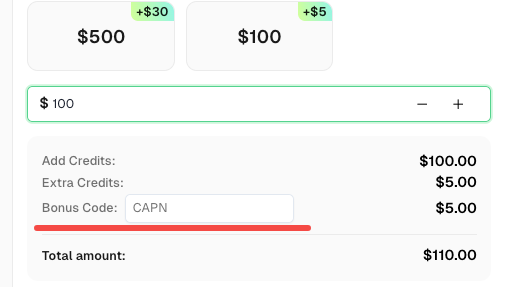
Redeem Your CapSolver Bonus Code
Don’t miss the chance to further optimize your operations! Use the bonus code CAPN when topping up your CapSolver account and receive an extra 5% bonus on each recharge, with no limits. Visit the CapSolver to redeem your bonus now!
CapSolver provides a unified API to handle a wide range of CAPTCHA types, making it an ideal choice for scaling AI search tasks. Its AI-driven approach is specifically designed to handle the behavioral analysis required by modern anti-bot systems.
| CAPTCHA Type | Primary Defense Mechanism | CapSolver Solution | Key Integration Requirement |
|---|---|---|---|
| reCAPTCHA v2 | Image recognition, click-based challenge. | ReCaptchaV2Task |
websiteURL, websiteKey |
| reCAPTCHA v3 | Behavioral analysis, risk scoring (0.0 to 1.0). | ReCaptchaV3Task |
websiteURL, websiteKey, pageAction, minScore |
| Cloudflare | JavaScript challenge, browser fingerprinting, behavioral check. | CloudflareTask |
websiteURL, proxy (must match request IP) |
| AWS WAF | Behavioral analysis, token-based challenge. | AwsWafTask |
websiteURL, websiteKey, context |
For AI search automation, reCAPTCHA v3 is common because it runs silently and blocks low-score traffic. Achieving a high score (e.g., 0.7 to 0.9) is vital for uninterrupted data collection. The following Python example demonstrates how to integrate CapSolver to obtain a high-score token.
import requests
import time

# CapSolver API Endpoint and Key
CAPSOLVER_API_URL = "https://api.capsolver.com"
CAPSOLVER_API_KEY = "YOUR_CAPSOLVER_API_KEY"

# Target website details
WEBSITE_URL = "https://example.com/search"
WEBSITE_KEY = "RECAPTCHA_SITE_KEY"
PAGE_ACTION = "search_query" # The action name defined on the target site
MIN_SCORE = 0.7 # Requesting a high score for better success

def create_task():
    """Creates a reCAPTCHA v3 task with a minimum score requirement."""
    payload = {
        "clientKey": CAPSOLVER_API_KEY,
        "task": {
            "type": "ReCaptchaV3TaskProxyLess",
            "websiteURL": WEBSITE_URL,
            "websiteKey": WEBSITE_KEY,
            "pageAction": PAGE_ACTION,
            "minScore": MIN_SCORE,
            "is
        }
    }
    response = requests.post(f"{CAPSOLVER_API_URL}/createTask", json=payload)
    return response.json()

def get_task_result(task_id):
    """Polls the API for the CAPTCHA token."""
    payload = {
        "clientKey": CAPSOLVER_API_KEY,
        "taskId": task_id
    }
    while True:
        response = requests.post(f"{CAPSOLVER_API_URL}/getTaskResult", json=payload)
        result = response.json()

        if result.get("status") == "ready":
            return result.get("solution", {}).get("gRecaptchaResponse")
        elif result.get("status") == "processing":
            print("Task is still processing, waiting...")
            time.sleep(5)
        else:
            raise Exception(f"CAPTCHA solving failed: {result.get('errorDescription')}")

# --- Main Execution Flow ---
try:
    print("1. Creating reCAPTCHA v3 task...")
    task_response = create_task()
    task_id = task_response.get("taskId")

    if not task_id:
        raise Exception(f"Failed to create task: {task_response.get('errorDescription')}")

    print(f"2. Task created with ID: {task_id}. Polling for result...")
    token = get_task_result(task_id)

    print("\n3. Successfully obtained reCAPTCHA v3 token.")
    print(f"Token: {token[:50]}...")

    # Use the token in your final AI search request to the target website
    # Example: requests.post(WEBSITE_URL, data={'g-recaptcha-response': token, 'query': 'ai search'})

except Exception as e:
    print(f"An error occurred during CAPTCHA solving: {e}")
This integration ensures that your AI agent can quickly and reliably obtain the necessary token to proceed with its search task, minimizing downtime.
The rise of AI search automation has led to the deployment of highly sophisticated anti-bot measures. Simply solving a reCAPTCHA is often not enough.
Cloudflare and AWS WAF are two of the most common gatekeepers. They use machine learning to analyze hundreds of data points about the connecting client.
AwsWafTask requires the context parameter, which is a unique identifier from the challenge page, ensuring the token is valid for that specific session.For a deeper dive into these modern challenges, consider reading about the 2026 Guide to Solving Modern CAPTCHA Systems for AI Agents.
The success of solving these behavioral challenges is inextricably linked to the quality of your IP address. A residential IP is less likely to be flagged as suspicious, meaning the anti-bot system will present an easier, or even a completely silent, challenge. This is why investing in premium proxy services is often more cost-effective than dealing with constant blocks and retries.
Scaling AI search tasks requires a shift in strategy: move from reactive CAPTCHA bypass to proactive anti-blocking best practices. By focusing on IP reputation, simulating human behavior, and integrating a high-performance CAPTCHA solving service, you can build an automation system that is both stable and highly successful. The era of simple image recognition CAPTCHAs is over; the future of AI search automation depends on handling complex, behavioral challenges.
Don't let CAPTCHAs be the bottleneck in your data pipeline. CapSolver offers the speed and accuracy needed to keep your AI agents running 24/7.
Ready to achieve 99% success rates in your AI search tasks?
A: reCAPTCHA v2 is a visible, click-based challenge (e.g., "Select all squares with traffic lights"). reCAPTCHA v3 is invisible and assigns a risk score (0.0 to 1.0) based on user behavior. For AI search, v3 is more challenging because a low score (below 0.3) will silently block the request. A high-quality solver must be able to return a token with a high score (e.g., 0.7 or higher).
A: Residential proxies significantly reduce the frequency of CAPTCHA challenges, but they do not eliminate them. Anti-bot systems still deploy challenges based on behavioral anomalies or specific request patterns. A solver acts as the essential fallback to ensure task continuity when a challenge is unavoidable.
A: Cloudflare's challenges often involve complex JavaScript execution and browser environment checks. CapSolver's CloudflareTask uses an advanced AI model to simulate a full browser environment, execute the necessary JavaScript, and obtain the clearance token, all without requiring you to manage the underlying browser automation.
A: No. CAPTCHA tokens are single-use and time-sensitive. Once a token is used to submit a form or complete a request, it is immediately invalidated. You must obtain a new token for every subsequent request that requires CAPTCHA verification.
Ethan Collins
AI Agent Workflow Engineer
Building clearer handoffs between AI agents and tools.
ABOUT THE AUTHOR
Learn scalable Rust web scraping architecture with reqwest, scraper, async scraping, headless browser scraping, proxy rotation, and compliant CAPTCHA handling.

Learn the best techniques to scrape job listings without getting blocked. Master Indeed scraping, Google Jobs API, and web scraping API with CapSolver.