🎉NEWCapSolver for AI agents-MCP, agent tools, and SDK integrations

Lucas Mitchell
Automation Engineer
Published Jan 26, 2026
Updated Jan 26, 2026 · min read
IP bans remain a significant challenge for internet users and automated systems in 2026. This guide provides a comprehensive look at modern IP blocking mechanisms. We will detail the practical steps you can take to regain access. The most reliable strategy involves combining high-quality proxy rotation with advanced anti-detection techniques. This approach is necessary because simple methods are no longer effective against modern web defenses. Understanding the current state of web security is essential for anyone needing to know how to bypass ip ban restrictions. This article is for developers, data scientists, and power users who require uninterrupted access to web resources.
An IP ban is a firewall rule that blocks traffic from a specific IP address. Websites use this security measure to protect their resources. The primary goal is to prevent malicious activity or excessive automated requests. In 2026, the reasons for an IP ban are more complex than ever. High-volume data collection is a common trigger. Repeated failed login attempts can also lead to a temporary or permanent block. Server overload protection is another frequent cause. Understanding the root cause is the first step in learning how to bypass ip ban restrictions effectively. For a foundational understanding of what IP address blocking entails, you can refer to this definition from TechTarget.
The triggers for an IP block have become increasingly sensitive with the rise of sophisticated bot management.
X-Forwarded-For header, for instance, is often scrutinized to determine the true origin of a request, as detailed in the MDN Web Docs.Modern web defenses look far beyond the IP address alone. They employ sophisticated fingerprinting techniques to identify unique users. This multi-layered approach makes learning how to bypass ip ban measures much more challenging than in previous years.
TLS fingerprinting analyzes the handshake details of your connection. This reveals the specific client library or browser you are using. A standard browser has a predictable TLS signature. An automated script using a library like requests will have a different, easily identifiable signature. If your IP changes but your fingerprint remains the same, the block will persist. This is why simple VPNs often fail when trying to figure out how to bypass ip ban measures on major sites. The technical details of this process are often discussed in security forums and research.
HTTP/2 and HTTP/3 headers also provide unique identifiers. The order and values of these headers create a unique profile for your client. Discrepancies between the expected browser profile and the actual request headers lead to immediate flagging. A comprehensive solution must address all these detection layers.
Websites now analyze user behavior patterns. They look for mouse movements, scroll speed, and typing cadence. Automated scripts that click buttons too quickly or navigate too predictably are easily detected. This behavioral data is often combined with IP and browser fingerprinting for a highly accurate bot score. The W3C's Fingerprinting Guidance provides context on the various ways users can be tracked.
CAPTCHAs are increasingly used as a final verification step before an IP is blocked entirely. They serve as a temporary block, forcing the user to prove they are human. If the CAPTCHA is solved, the IP is often whitelisted for a short period. If it is failed repeatedly, the IP block becomes permanent. This highlights the critical need for reliable CAPTCHA solving tools.
Several methods exist for users seeking to regain access to a blocked resource. The effectiveness of each method depends heavily on the sophistication of the target website's defenses.
Restarting your home router is the simplest way to change your IP address. Most Internet Service Providers (ISPs) assign dynamic IP addresses. Power cycling the router often forces the ISP to assign a new one. This method is quick and free. It is only effective against basic IP-based blocks. It will not work if the website is using advanced fingerprinting or behavioral analysis.
A VPN encrypts your traffic and routes it through a server in a different location. This changes your public IP address. VPNs are excellent for privacy and accessing geo-restricted content. However, many commercial VPN IP ranges are well-known and already blocked by major websites. They also often use a consistent TLS fingerprint, which makes them easy to detect as non-residential traffic.
Proxy servers act as an intermediary between your device and the target website. They mask your original IP address with the proxy's IP. Proxies offer more flexibility than VPNs, especially when using a pool of rotating IPs. Residential proxies, which use real IP addresses assigned by ISPs, are the most effective type. They are crucial for anyone serious about how to bypass ip ban measures for data collection. The global web scraping market is projected to grow significantly, making reliable access a high-value commodity.
Specialized anti-detection browsers manage and rotate browser fingerprints. They ensure that every connection appears as a unique, legitimate user. This includes managing WebGL, Canvas, and WebRTC fingerprints. This technique is vital for maintaining multiple accounts or performing complex automation tasks. It directly counters the advanced fingerprinting methods discussed earlier.
Choosing the right tool depends on your goal and the level of security you face. For simple browsing, a VPN may suffice. For professional data collection, proxies and anti-detection are mandatory.
| Feature | Router Reset | VPN | Datacenter Proxy | Residential Proxy |
|---|---|---|---|---|
| Cost | Free | Low to Medium | Medium | High |
| IP Quality | Dynamic Home IP | Shared/Known | Commercial/Known | Real ISP IP |
| Fingerprint | Unchanged | Often Consistent | Unchanged | Unchanged |
| Detection Risk | Low (if new IP) | Medium to High | High | Low |
| Best Use Case | Personal, one-time access | Privacy, Geo-unblocking | High-speed, low-security tasks | High-security, large-scale data |
| Effectiveness in 2026 | Low | Medium | Low | High |
For professional use cases like market research or large-scale data gathering, a robust proxy network is the only viable solution. This strategy focuses on mimicking human behavior at scale.
Residential proxies are IP addresses belonging to real users. They are seen as legitimate traffic by target websites. Using a large pool of these IPs ensures that your requests are distributed across many different locations and networks. This makes it nearly impossible for a target to identify and block a single source.
Effective proxy management involves intelligent IP rotation. This means changing the IP address after a set number of requests or after a specific time interval. The rotation logic should also consider the target website's rate limits. This prevents any single IP from triggering a block. The goal is to make the traffic look like many different users browsing naturally.
While rotation is key, some tasks require session consistency. A good proxy manager can maintain a sticky session, keeping the same IP for a single user journey. This is essential for logging in or completing multi-step transactions. Balancing rotation and session stickiness is a critical part of knowing how to bypass ip ban systems.
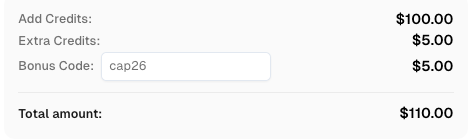
Use code
CAP26when signing up at CapSolver to receive bonus credits!
Even with the best proxies, modern web defenses frequently deploy CAPTCHAs. These challenges are the final line of defense against automation. This is where a specialized service like CapSolver becomes indispensable.
Many websites, especially those protected by advanced bot management systems, will serve a CAPTCHA instead of an outright IP block. Successfully solving this challenge is often the only way to proceed. Failure to solve it will result in a hard IP block. This is a common scenario when trying to figure out how to bypass ip ban measures.
CapSolver provides an automated, high-accuracy solution for various CAPTCHA types. This includes reCAPTCHA, AWS WAF, and Turnstile. By integrating CapSolver into your automation workflow, you ensure that CAPTCHA challenges are resolved quickly and reliably. This prevents the chain reaction that leads to a permanent IP ban.
CapSolver's advanced AI recognition models offer a crucial advantage. They provide the speed and accuracy needed to handle high-volume requests without detection. This integration is a necessary component of any modern anti-detection stack. You can learn more about handling these challenges in our related articles, such as How to Avoid IP Bans when Using Captcha Solver in 2026 and How to Bypass Cloudflare Challenge While Web Scraping in 2026.
IP bans in 2026 are no longer a simple matter of changing an IP address. They are complex, multi-layered security measures that require a sophisticated response. Success in regaining access depends on addressing all detection vectors: IP, fingerprint, and behavior. High-quality residential proxies and advanced anti-detection techniques are the foundation of any effective strategy. Furthermore, integrating a reliable CAPTCHA solver like CapSolver is essential to prevent temporary blocks from escalating.
Do not let outdated methods limit your access to critical web data. Upgrade your automation stack today to include intelligent proxy rotation and advanced CAPTCHA solving. For more detailed guides on specific challenges, explore our articles on How to Solve Cloudflare in 2026 and Top 10 Proxy Providers to Use in 2026. Start your journey toward uninterrupted web access now.
A VPN encrypts all your device's traffic and is primarily for privacy. A proxy only handles traffic for a specific application or browser. Proxies, especially residential ones, offer more control over IP rotation and are generally more effective for large-scale data tasks. VPNs are often easier to detect and block.
Clearing cookies and cache can help with session-based or temporary blocks. It removes local identifiers that the website uses to track you. However, it will not change your IP address or your browser's underlying fingerprint. This means it is only a partial solution.
The optimal rotation frequency varies significantly by target website. For high-volume scraping, rotation may be necessary every few requests. For tasks requiring session continuity, you might use a "sticky" IP for several minutes. Intelligent proxy managers automate this process based on the target's response codes.
IP bans can be temporary or permanent, depending on the reason for the block. Blocks due to excessive requests are often temporary, lasting a few hours to a few days. Blocks for malicious activity, like spamming, are more likely to be permanent. Changing your IP address is the quickest way to find how to bypass ip ban measures, regardless of their duration.
Free proxies are highly discouraged for any serious task. They are often slow, unreliable, and their IP addresses are almost always blacklisted. Using a free proxy significantly increases your risk of immediate detection and a permanent block. Investing in a high-quality, paid residential proxy service is essential.
Lucas Mitchell
Automation Engineer
Helping browser automation recover and continue.
ABOUT THE AUTHOR
Learn scalable Rust web scraping architecture with reqwest, scraper, async scraping, headless browser scraping, proxy rotation, and compliant CAPTCHA handling.
Learn the best techniques to scrape job listings without getting blocked. Master Indeed scraping, Google Jobs API, and web scraping API with CapSolver.