🎉NEWCapSolver for AI agents-MCP, agent tools, and SDK integrations

Ethan Collins
AI Agent Workflow Engineer
Published Nov 18, 2025
Updated Nov 18, 2025 · min read
Key Takeaways
The promise of fully autonomous AI agents is often halted by a single obstacle: the CAPTCHA wall. Automation pipelines face an escalating challenge from anti-bot systems that have evolved far beyond simple image recognition. The 2026 landscape demands a new strategy for solving modern CAPTCHA systems for AI agents. This guide is for developers and automation engineers who need reliable, scalable methods to maintain uninterrupted data flow. We will analyze why general AI fails and provide the technical blueprint for integrating specialized solvers into your pipeline.
Modern CAPTCHA systems are no longer just visual puzzles. They are sophisticated behavioral analysis engines designed to detect non-human interaction patterns: A research paper detailing the success rates of generalized visual CAPTCHA solvers.
. These systems analyze hundreds of data points, including mouse movements, device fingerprinting, and network latency. General-purpose AI agents, while powerful for reasoning, often lack the precise, low-level control required to mimic human browser behavior in real-time. This fundamental mismatch is why a specialized approach is necessary for solving modern CAPTCHA systems for AI agents.
The anti-bot landscape is dominated by a few key players, each employing distinct, layered security models. Understanding these models is the first step toward solving modern CAPTCHA systems for AI agents.
Cloudflare Turnstile represents a significant shift away from user-facing challenges. It is a non-intrusive, privacy-preserving CAPTCHA alternative that verifies visitors without requiring them to click images. Turnstile uses a suite of client-side challenges, including proof-of-work, browser fingerprinting, and behavioral heuristics, to generate a validation token. The challenge is often invisible, making it particularly difficult for simple automation scripts to detect and bypass. Specialized solvers must simulate a complete, legitimate browser environment to acquire the necessary token.
Amazon Web Services (AWS) Web Application Firewall (WAF) offers a robust Bot Control feature. This system identifies and manages bot traffic, often presenting a CAPTCHA challenge as a final defense layer. AWS WAF challenges are tightly integrated with the AWS ecosystem, requiring a solution that can handle both the initial detection and the subsequent token-based challenge.
reCAPTCHA v3 and its Enterprise counterpart operate entirely in the background, assigning a risk score (0.0 to 1.0) to each user interaction. A low score triggers a block or a secondary challenge. The score is based on the user's entire browsing history and real-time behavior. To achieve a high score (e.g., >0.7), an AI agent must exhibit near-perfect human-like behavior, a task that is practically impossible without a dedicated, behavioral-based solver API. This is the core difficulty in solving modern CAPTCHA systems for AI agents using traditional methods.
General AI agents and naive automation scripts consistently fail at modern CAPTCHA for predictable reasons. These failure modes highlight the need for specialized tools when solving modern CAPTCHA systems for AI agents.
| Failure Mode | Description | Impact on Automation |
|---|---|---|
| Non-Human Fingerprinting | The agent's browser profile (user-agent, screen resolution, WebGL data) is inconsistent or blacklisted. | Immediate block or low reCAPTCHA score (0.0-0.1). |
| Deterministic Mouse Movement | Mouse paths are too direct, lack natural jitter, or click elements too quickly. | Flagged as robotic behavior by behavioral analysis engines. |
| Lack of Token Management | Failure to correctly extract, manage, and submit the invisible validation tokens (e.g., cf_clearance, g-recaptcha-response). |
Automation pipeline stalls at the verification step. |
| Inability to Adapt | The agent cannot dynamically handle challenge changes (e.g., reCAPTCHA image reload, Turnstile proof-of-work increase). | Leads to high error rates and task timeouts. |
Specialized CAPTCHA solvers, such as CapSolver, bypass these failure modes by focusing on the output token, not the visual puzzle. This token-based approach is the most effective method for solving modern CAPTCHA systems for AI agents.
The solver service maintains a pool of real, high-reputation browser profiles. When a request is received, the service simulates a human user navigating the target page. This includes generating realistic mouse movements, keyboard inputs, and network timing. This simulation is designed to pass the behavioral checks of systems like reCAPTCHA and Turnstile.
The solver's primary goal is to obtain the required validation token. For reCAPTCHA, this is the g-recaptcha-response. For Cloudflare, it is the cf_clearance cookie or the Turnstile response token. The service handles the entire interaction, including any background proof-of-work challenges, and returns only the final, valid token to the user's automation pipeline.
The entire process is abstracted behind a simple API call. The AI agent or automation script sends the target URL and site key to the solver API. The API returns the token, which the agent then injects into its subsequent request headers or form data. This decouples the complex solving logic from the core automation task.
When evaluating the best tool for solving modern CAPTCHA systems for AI agents, the choice is clear: specialized services offer superior reliability and efficiency.
| Feature | General AI Agent (e.g., GPT-5, Claude) | Specialized Solver (e.g., CapSolver) |
|---|---|---|
| Core Mechanism | Image recognition, reasoning, and discrete action commands. | Full browser environment simulation and token generation. |
| Success Rate | Low (20-60%), highly dependent on challenge type and model reasoning [2]. | High (90%+), optimized for specific anti-bot systems. |
| Latency | High (seconds to minutes) due to reasoning and action loops. | Low (sub-10 seconds) due to optimized, parallel processing. |
| Cost Model | High cost per token/API call for reasoning and vision. | Low, predictable cost per successful token. |
| Adaptability | Slow to adapt; requires new prompts/logic for every CAPTCHA update. | Fast, internal adaptation; logic is updated by the service provider. |
| Best For | One-off, complex reasoning tasks; not for high-volume automation. | High-volume, real-time, and scalable automation pipelines. |
Integrating a specialized solver like capsolver requires adherence to specific best practices to maximize success and minimize costs.
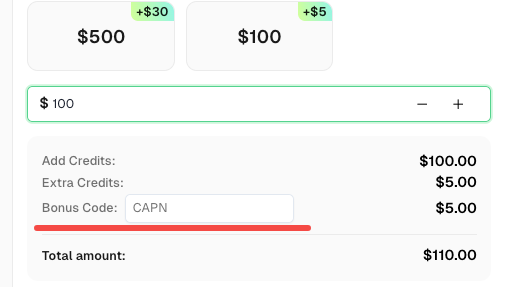
Redeem Your CapSolver Bonus Code
Don’t miss the chance to further optimize your operations! Use the bonus code CAPN when topping up your CapSolver account and receive an extra 5% bonus on each recharge, with no limits. Visit the CapSolver to redeem your bonus now!
The IP address used for the automation request must match the IP address used to solve the CAPTCHA. Always use high-quality residential or mobile proxies. Low-quality datacenter IPs are often pre-flagged by anti-bot systems, rendering the CAPTCHA token useless.
Modern anti-bot systems are dynamic. Even the best solvers will occasionally fail. Your pipeline must be designed to retry failed tasks, potentially with a different proxy or after a short delay. This resilience is key to maintaining a high overall success rate.
CAPTCHA tokens have a short lifespan, typically 90 to 120 seconds. Your automation pipeline must be fast enough to use the token immediately after it is generated. Do not request a token until the exact moment it is needed for the final request.
Do not use a generic reCAPTCHA endpoint for a Cloudflare Turnstile challenge. Services like capsolver offer specific API endpoints for each anti-bot system (e.g., TurnstileTask, RecaptchaV3Task). Using the correct endpoint ensures the solver applies the most optimized logic. For more details on this, see our guide on How to Solve Cloudflare in 2024.
This Python example demonstrates how an AI agent or automation script integrates with a specialized solver API to handle a token-based challenge. This is the practical reality of solving modern CAPTCHA systems for AI agents in 2026.
We will use the requests library and a placeholder for the CapSolver API to solve a hypothetical Cloudflare Turnstile challenge.
import requests
import time
import json

# --- Configuration ---
CAPSOLVER_API_KEY = "YOUR_CAPSOLVER_API_KEY"
TARGET_URL = "https://example.com/protected-page"
SITE_KEY = "0x4AAAAAAABcdeFGHijKLmNopQRstUVwXyZ12345" # Example Turnstile Site Key
CAPSOLVER_ENDPOINT = "https://api.capsolver.com/createTask"
CAPSOLVER_RESULT_ENDPOINT = "https://api.capsolver.com/getTaskResult"

def solve_turnstile_captcha(url, site_key):
    """
    Submits a Turnstile task to CapSolver and waits for the token.
    """
    print("1. Creating Turnstile task...")

    # Task payload for Cloudflare Turnstile
    task_payload = {
        "clientKey": CAPSOLVER_API_KEY,
        "task": {
            "type": "TurnstileTask",
            "websiteURL": url,
            "websiteKey": site_key,
            # Optional: Add proxy and userAgent for better success rate
            # "proxy": "http://user:pass@ip:port",
            # "userAgent": "Mozilla/5.0 (Windows NT 10.0; Win64; x64) AppleWebKit/537.36 (KHTML, like Gecko) Chrome/126.0.0.0 Safari/537.36"
        }
    }

    response = requests.post(CAPSOLVER_ENDPOINT, json=task_payload).json()

    if response.get("errorId") != 0:
        print(f"Error creating task: {response.get('errorDescription')}")
        return None

    task_id = response.get("taskId")
    print(f"Task created with ID: {task_id}. Waiting for result...")

    # Polling for result
    while True:
        time.sleep(5) # Wait 5 seconds before polling
        result_payload = {
            "clientKey": CAPSOLVER_API_KEY,
            "taskId": task_id
        }
        result_response = requests.post(CAPSOLVER_RESULT_ENDPOINT, json=result_payload).json()

        if result_response.get("status") == "ready":
            # The token is the g-recaptcha-response equivalent for Turnstile
            token = result_response["solution"]["response"]
            print("2. CAPTCHA solved successfully.")
            return token
        elif result_response.get("status") == "processing":
            print("Task still processing...")
        elif result_response.get("errorId") != 0:
            print(f"Error getting result: {result_response.get('errorDescription')}")
            return None

def access_protected_page(url, token):
    """
    Uses the solved token to access the protected page.
    """
    print("3. Accessing protected page with token...")

    # The token is typically submitted in the request body or a header.
    # For Turnstile, it's often submitted as a form field.
    headers = {
        "User-Agent": "Mozilla/5.0 (Windows NT 10.0; Win64; x64) AppleWebKit/537.36 (KHTML, like Gecko) Chrome/126.0.0.0 Safari/537.36",
        "Content-Type": "application/x-www-form-urlencoded"
    }

    # Simulate a POST request with the token
    data = {
        "cf-turnstile-response": token,
        # other form data...
    }

    # Note: In a real scenario, you might need to find the exact endpoint
    # and method the website uses to submit the token.
    response = requests.post(url, headers=headers, data=data)

    if "CAPTCHA" not in response.text and response.status_code == 200:
        print("4. Success! Protected content accessed.")
        # print(response.text[:500]) # Print first 500 chars of content
    else:
        print(f"4. Failure. Status Code: {response.status_code}. Response suggests CAPTCHA is still present.")
        # print(response.text)

# --- Execution ---
# solved_token = solve_turnstile_captcha(TARGET_URL, SITE_KEY)
# if solved_token:
#     access_protected_page(TARGET_URL, solved_token)

print("--- Python Example Output (Simulated) ---")
print("1. Creating Turnstile task...")
print("Task created with ID: 12345. Waiting for result...")
print("Task still processing...")
print("2. CAPTCHA solved successfully.")
print("3. Accessing protected page with token...")
print("4. Success! Protected content accessed.")
print("-----------------------------------------")The arms race between AI agents and anti-bot systems continues to escalate. In 2026, the key to reliable automation is not a smarter general-purpose AI, but a highly specialized, token-based solver. Successful solving modern CAPTCHA systems for AI agents requires shifting the burden of behavioral mimicry to dedicated services. By integrating a robust API like CapSolver, developers can ensure their automation pipelines remain fast, efficient, and uninterrupted.
A: LLM agents fail because they lack real-time, low-level browser control. Modern CAPTCHAs rely on behavioral data and device fingerprinting, not just image recognition. LLMs are excellent at reasoning but poor at the precise, human-like execution required to pass these checks. This is the primary reason why solving modern CAPTCHA systems for AI agents requires specialized tools.
A: An image-based solver attempts to visually identify objects in a puzzle. A token-based solver, like those used by CapSolver, simulates a full human interaction to acquire an invisible validation token. Token-based methods are necessary for modern systems like Turnstile and reCAPTCHA v3, which rarely show image puzzles.
A: Most websites' terms of service prohibit automated access and bot activity. Using a solver is a technical means to bypass an anti-bot measure. Users should always review the target website's policies and ensure their automation complies with all legal and ethical guidelines.
A: Specialized services like capsolver employ dedicated engineering teams that constantly monitor and adapt to anti-bot updates. When a new challenge is deployed, the solver's internal logic is updated, often within hours, ensuring continuous reliability for solving modern CAPTCHA systems for AI agents. For example, our guide on The Best AWS WAF CAPTCHA Solver for Automation is regularly updated to reflect the latest changes.
A: Achieving a score of 0.9 is extremely difficult and usually reserved for highly trusted, logged-in users. Specialized solvers aim for a high score (e.g., 0.7 to 0.9) by using high-reputation IPs and advanced behavioral simulation. While 0.9 is possible, a score above 0.7 is generally sufficient to pass most checks. You can learn more in our article on How to solve reCaptcha v3 and get a human like (>0.7–0.9) score.
Ethan Collins
AI Agent Workflow Engineer
Building clearer handoffs between AI agents and tools.
ABOUT THE AUTHOR
Learn scalable Rust web scraping architecture with reqwest, scraper, async scraping, headless browser scraping, proxy rotation, and compliant CAPTCHA handling.

Learn the best techniques to scrape job listings without getting blocked. Master Indeed scraping, Google Jobs API, and web scraping API with CapSolver.