🎉NEWCapSolver for AI agents-MCP, agent tools, and SDK integrations

Ethan Collins
AI Agent Workflow Engineer
Published Dec 11, 2025
Updated Dec 11, 2025 · min read
The data landscape in 2026 is more competitive than ever, making reliable web data extraction a critical business advantage. Anti-bot defenses have evolved from simple IP blocks to sophisticated, AI-driven fingerprinting and behavioral analysis. This arms race means that traditional, self-managed scraping setups are increasingly inefficient and costly. Web Scraping APIs offer the essential, all-in-one solution, handling proxies, CAPTCHAs, and JavaScript rendering behind a single, simple endpoint. This guide cuts through the noise, providing a definitive ranking of the Best Web Scraping APIs for 2026, based on rigorous performance metrics and future-proofing features. By the end, you will know exactly which tool to choose to secure your data pipeline.
The era of simple HTTP requests is over; modern websites employ complex defenses that require specialized tools. In 2026, the primary challenges for data extraction are dynamic content and advanced bot detection.
First, most modern websites rely on JavaScript to load critical data, necessitating a Headless Browser API capability. A dedicated API manages the resource-intensive process of running a full browser instance for every request. Second, anti-bot systems like use machine learning to identify and block non-human traffic. The Best Web Scraping APIs integrate intelligent proxy rotation and sophisticated header management to mimic genuine user behavior. Relying on a robust API ensures high success rates and allows your team to focus on data analysis, not infrastructure maintenance.
Our ranking of the Best Web Scraping APIs is based on five core criteria, reflecting the demands of the 2026 data extraction environment. These metrics move beyond simple cost to focus on true operational efficiency and future scalability.
Based on our 2026 methodology, these five services stand out as the market leaders, each excelling in different areas of data extraction.
Zyte API is the gold standard for enterprise-level data extraction, offering unparalleled reliability and success rates. Its Smart Proxy Manager is continuously updated to defeat new anti-bot techniques.
In-Depth Analysis:
Zyte's core strength lies in its reliability and predictability. Unlike many competitors that charge for every API call, Zyte operates on a unique, complexity-based pricing model, charging only for successful requests. This model is a significant advantage for scraping highly volatile or protected websites, as it eliminates the cost of failed attempts. Furthermore, Zyte maintains deep integration with the open-source Scrapy framework, making it the natural choice for teams already using Scrapy for their data pipelines. Its AI-driven extraction tools, which automatically convert unstructured HTML into clean data, further solidify its position as the enterprise-grade solution. When a 1% failure rate is unacceptable, Zyte's infrastructure provides the necessary peace of mind.
Bright Data offers the most comprehensive suite of specialized scraping products, including dedicated APIs for SERP, e-commerce, and social media. Their vast proxy network is the largest in the industry.
In-Depth Analysis:
Bright Data is the market leader in terms of scale and specialization. Its massive, diverse proxy network—spanning residential, data center, and mobile IPs—is unmatched, providing the necessary firepower to target virtually any website globally. Where Zyte offers a general-purpose API, Bright Data provides highly specialized scrapers (e.g., SERP API, E-commerce API) that are pre-configured to handle the unique structures and aggressive defenses of specific, high-traffic websites like Google, Amazon, and LinkedIn. While its pay-as-you-go pricing can be complex and potentially costly for high-volume, low-success tasks, its comprehensive ecosystem, including superior data visualization and management tools, makes it the preferred choice for users who need highly targeted data and robust data management capabilities.
Scrape do is recognized for its exceptional speed and low latency, particularly for users targeting non-geo-restricted content. It focuses on delivering fast, clean HTML responses with a high success rate.
In-Depth Analysis:
Scrape do has carved out a niche as the performance-focused contender. Recent benchmarks show that Scrape.do achieves a high success rate (often 98%+) even on difficult domains, directly challenging the reliability of the market leaders. Its architecture is optimized for low latency, making it the ideal choice for time-sensitive scraping tasks, such as real-time price monitoring or financial data feeds, where every millisecond counts. Its pricing is straightforward and competitive, positioning it as a powerful, no-frills alternative for developers who prioritize raw speed and consistent performance over the extensive ecosystems offered by Zyte or Bright Data.
Scrapingdog provides a balanced mix of performance and affordability, making it a favorite among startups and mid-sized development teams. It offers a simple API for general-purpose scraping.
In-Depth Analysis:
Scrapingdog's primary appeal is its simplicity and cost-effectiveness. It offers one of the most generous free tiers and highly competitive pricing plans, making it the perfect entry point for startups, students, or projects with limited budgets. The API is designed for ease of use, allowing developers to integrate it quickly without navigating complex configuration settings. While its success rate may be slightly lower than Zyte on the most aggressively protected sites, it performs reliably for general-purpose scraping tasks across a wide range of websites. It is the fastest way to get a reliable scraping operation off the ground without a massive initial investment.
Firecrawl represents the future of Web Scraping APIs, focusing heavily on AI-powered content extraction and conversion. It excels at turning complex web pages into clean Markdown or JSON, making it a powerful tool for LLM training data.
In-Depth Analysis:
Firecrawl's unique value proposition is its focus on data cleanliness and AI readiness. In the age of Large Language Models (LLMs) and Retrieval-Augmented Generation (RAG) systems, the quality of training data is paramount. Firecrawl uses AI to automatically clean and structure web content, converting messy HTML into clean Markdown or structured JSON. This capability drastically reduces the time spent on post-processing and data cleaning, which is often the most time-consuming part of a scraping project. While it is a newer player and its anti-bot bypass capabilities are still maturing compared to the established giants, its cutting-edge AI parsing makes it an indispensable tool for AI developers and teams focused on content extraction for LLM data preparation.
Choosing the right API requires a side-by-side look at the technical specifications. The table below compares the key features of the Best Web Scraping APIs for 2026.
| Feature | Zyte API | Bright Data | Scrape.do | Scrapingdog | Firecrawl |
|---|---|---|---|---|---|
| Success Rate (Challenging Sites) | 99%+ | 98% | 98%+ | 95% | 90% (Parsing Focus) |
| AI Parsing/Extraction | Yes (Advanced) | Yes (Specialized) | No | No | Yes (Core Feature) |
| Headless Browser Support | Yes | Yes | Yes | Yes | Yes |
| Proxy Network Size | Large | Largest | Medium | Medium | Small |
| Ideal Pricing Model | Success-Based | Volume/Specialized | Volume-Based | Budget-Friendly | Content-Based |
| Ecosystem Integration | Scrapy, AI Tools | Specialized APIs, Visualization | Simple API | Simple API | LLM/RAG Tools |
Every API in the table above is running a real browser somewhere on your behalf. For teams that have outgrown a self-hosted setup but still need control over what happens inside the page, that browser layer can now be bought on its own.
Browserless occupies this middle ground. It exposes managed Chrome — along with Firefox and WebKit — over the protocols your code already speaks: Puppeteer, Playwright, standard CDP and MCP. Swapping launch() for connect() is enough to migrate an existing script, which the company sums up as three lines, no rewrite. Stealth routes, residential proxies and authenticated profiles are all handled inside the managed session, and so is CAPTCHA solving, which auto-detects the challenge type and clears Cloudflare, DataDome, and PerimeterX as they appear mid-run. Browsers can also be kept alive and reconnected to preserve session cache and cookies, which Browserless reports cuts proxy usage by around 90% compared with loading each page in a fresh browser. Teams that do want parsed output can call its Smart Scrape API and get JSON back from a single request.
The single biggest bottleneck in any scraping operation is the CAPTCHA. While the Web Scraping APIs listed above offer automatic CAPTCHA handling, the underlying technology varies. Most APIs use a combination of proxy rotation and behavioral mimicry to avoid triggering CAPTCHAs in the first place. However, when a CAPTCHA is unavoidable, a reliable solving service is essential.
For advanced, high-volume CAPTCHA challenges, many top-tier scrapers integrate with specialized services. This is where tools like CapSolver become invaluable. CapSolver provides a robust, high-speed solution for solving various CAPTCHA types, including reCAPTCHA v2 and reCAPTCHA v3. Integrating a dedicated solver ensures that even when the primary API's internal mechanism fails, your request is not lost. This dual-layer approach maximizes the success rate, which is paramount for maintaining a consistent data flow. You can explore how to integrate advanced CAPTCHA solving into your workflow by reading this guide on CapSolver's reCAPTCHA v2 solutions.
For those dealing with Google's latest anti-bot measures, understanding how to effectively handle the invisible reCAPTCHA v3 is crucial. A detailed guide on solving reCAPTCHA v3 can provide the necessary technical depth to maintain high scraping scores. Furthermore, a strong proxy infrastructure is the foundation of any successful scraping operation. To learn more about setting up the optimal network, check out our comparison of the Best Proxy Company Services for web scraping.
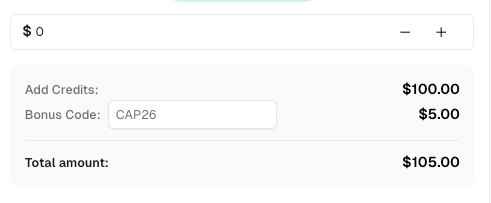
Bonus Code: Use code CAP26 at CapSolver Dashboard to get an extra 5% bonus on every recharge.
The "best" solution depends entirely on your specific needs. For any scenario, the key to success lies in combining a powerful Web Scraping API with an efficient Captcha Solver. This combination provides the flexibility to overcome the complex anti-scraping measures of modern websites, ensuring a stable and effective data pipeline.
Here is a guide to tackling different use cases:
For E-commerce and SERP Data:
Websites in this category (like Amazon and Google) typically employ aggressive anti-scraping defenses. A web scraping API that can intelligently rotate proxies, mimic real user behavior, and render dynamic JavaScript is essential. When a CAPTCHA or behavioral challenge is triggered, an integrated captcha solver can automatically intervene to ensure a high success rate.
For LLM Training and Content Curation:
When preparing high-quality data for AI models, the main challenge is extracting clean, structured content from vast amounts of unstructured web pages. A scraping API with AI-driven parsing capabilities can automatically clean HTML and convert it into structured formats like Markdown or JSON. Paired with a captcha solver, this ensures uninterrupted scraping across numerous content sources, drastically reducing data cleaning time.
For Startups and Small Projects:
For projects with limited budgets and resources, the focus is on getting started quickly and validating ideas. Choosing a web scraping API with simple integration and transparent pricing allows you to build a reliable data scraping process without a massive initial investment in infrastructure. Combining this with a pay-as-you-go captcha solving service keeps costs manageable.
For Financial or Real-Time Data:
In scenarios where data freshness is critical, such as financial trading or real-time monitoring, low latency is paramount. You need a data scraping API with fast response times and a high-speed proxy network. Since these tasks often involve high-frequency requests, a solution that can solve CAPTCHAs quickly is crucial to avoid missing critical data due to delays.
For Maximum Reliability (Enterprise):
When the required success rate for data extraction is over 99% and any failure could result in significant losses, an enterprise-grade solution is necessary. This means using a scraping API with top-tier infrastructure, the ability to handle the most sophisticated anti-bot systems, and guarantees for successful requests. Integrating a high-availability, high-concurrency captcha solver as a dual-layer defense is essential to ensure uninterrupted operations.
The landscape of Web Scraping APIs in 2026 is defined by intelligence, speed, and specialization. The top tools are no longer just proxy rotators; they are sophisticated anti-bot bypass engines powered by AI. While Zyte API takes the top spot for overall reliability and success rate, the market offers excellent specialized alternatives. By prioritizing success rate and considering the emerging AI features, you can select an API that future-proofs your data extraction strategy. Don't let anti-bot measures slow you down; choose one of the Best Web Scraping APIs and focus on extracting the value from your data.
A: A regular proxy service only provides an IP address. A Web Scraping API is an all-in-one solution that manages the entire process: proxy rotation, header management, headless browser rendering, and anti-bot bypass, all through a single API call.
A: The legality of web scraping depends on the data being extracted and the method used. Generally, scraping publicly available data is legal, but scraping private data or violating a website's terms of service can lead to legal issues. Always adhere to ethical scraping practices and check the site's robots.txt file. For more information on web data standards, you can refer to the World Wide Web Consortium (W3C) guidelines.
A: Pricing varies significantly. Most Web Scraping APIs use a pay-per-successful-request model. Entry-level services like Scrapingdog start around $1,000 per million requests, while enterprise solutions like Zyte API can be higher but offer better success guarantees.
A: For any serious, large-scale, or long-term project, using a dedicated Web Scraping API is almost always more cost-effective and reliable. Building your own scraper requires constant maintenance to manage proxies, IP bans, and evolving anti-bot systems, which quickly becomes a full-time job.
A: A Headless Browser API uses a real web browser (like Chrome) running in the background without a graphical interface. This is essential for scraping modern websites that load content using JavaScript, as it allows the API to fully render the page before extracting the data.
Ethan Collins
AI Agent Workflow Engineer
Building clearer handoffs between AI agents and tools.
ABOUT THE AUTHOR
Learn scalable Rust web scraping architecture with reqwest, scraper, async scraping, headless browser scraping, proxy rotation, and compliant CAPTCHA handling.

Learn the best techniques to scrape job listings without getting blocked. Master Indeed scraping, Google Jobs API, and web scraping API with CapSolver.