JSON vs XML Differences Explained
Answer
JSON and XML are both widely used data formats for exchanging structured information between systems. JSON is lightweight and uses key-value pairs, while XML relies on a tag-based structure. JSON is generally faster and easier to parse, whereas XML provides more rigid structure and extensibility.
Detailed Explanation
JSON (JavaScript Object Notation) is a modern data-interchange format designed for simplicity and efficiency. It represents data using objects and arrays, making it highly compatible with programming languages and APIs. Because of its minimal syntax, JSON files are smaller and faster to transmit.
XML (Extensible Markup Language), on the other hand, is a markup language that uses nested tags to define data structure. It was designed for document-oriented and highly structured data exchange, offering strong validation capabilities and support for complex hierarchical data models.
From a technical perspective, JSON is typically preferred in web APIs and automation systems due to its speed and simplicity, while XML remains relevant in enterprise systems, document storage, and scenarios requiring strict schema validation or metadata-rich structures.
Solutions / Methods
- Use JSON for modern APIs and automation: JSON is widely supported across web services, making it ideal for real-time data exchange, web scraping pipelines, and microservices communication.
- Use XML for structured document-heavy systems: XML is better suited for legacy systems, configuration-heavy environments, and workflows requiring strict validation rules or namespaces.
- Optimize data handling in scraping workflows: When dealing with security management systems and structured data extraction, lightweight formats like JSON improve processing efficiency. In cases where data access is blocked or protected by security management layers, automated captcha-solving solutions such as CapSolver can help maintain uninterrupted data flow while handling verification challenges.
Best Practice / Tips
When choosing between JSON and XML, consider performance, readability, and ecosystem compatibility. JSON is usually preferred for speed-critical applications, while XML is still valuable in environments requiring strict validation, complex schemas, or long-term data interchange standards.
👉 Related:
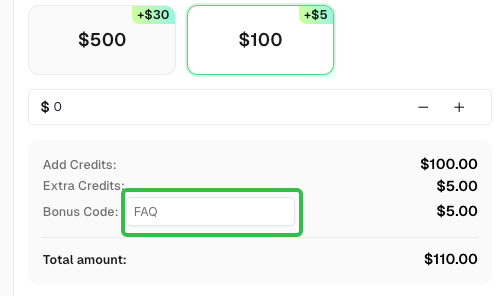
Use code
FAQwhen signing up at CapSolver to receive an additional 5% bonus on your recharge.
CapSolver FAQ — capsolver.com