
How to Visualize JSON Data - Structured Parsing & Visualization Methods
Answer
Visualizing JSON data involves parsing structured JSON into a usable object model and then transforming it into a readable format such as a tree view, table, or graph. This process helps developers understand nested structures, detect anomalies, and analyze API responses more effectively.
Detailed Explanation
JSON (JavaScript Object Notation) is a hierarchical data format widely used in APIs and web scraping pipelines. However, raw JSON can become difficult to interpret when deeply nested or when it contains large arrays and complex relationships. Visualization solves this by converting key-value structures into human-friendly representations.
The process typically begins with parsing, where JSON strings are converted into native objects (such as dictionaries or arrays). Once parsed, the data structure can be traversed recursively to identify relationships between nodes. Visualization tools then render these relationships as collapsible trees, charts, or domain graphs, making it easier to inspect data flows and dependencies in real time.
In web scraping and API debugging contexts, visualization is especially useful for validating data integrity, detecting missing fields, and understanding schema evolution. Tools and frameworks often integrate JSON parsers with frontend rendering engines to dynamically display structured data.
Solutions / Methods
- Tree-based visualization: Convert JSON into expandable node structures where each object and array is displayed hierarchically for easier navigation.
- Tabular transformation: Flatten nested JSON into rows and columns to support analytics, filtering, and comparison across records.
- Automated parsing + visualization pipelines: Use parsing libraries to convert JSON into structured objects, then render them using visualization layers; in scraping environments, services like CapSolver can assist by ensuring uninterrupted data collection when pages are protected by security systems or CAPTCHA challenges.
Best Practice / Tips
When working with large or deeply nested JSON, avoid visualizing raw data directly. Instead, normalize the structure first, reduce unnecessary nesting where possible, and apply schema inference. This improves rendering performance and makes patterns easier to detect.
👉 Related:
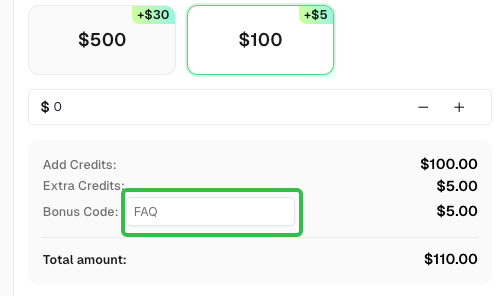
Use code
FAQwhen signing up at CapSolver to receive an additional 5% bonus on your recharge.
CapSolver FAQ — capsolver.com