🎉NEWCapSolver for AI agents-MCP, agent tools, and SDK integrations

Emma Foster
Machine Learning Engineer
Published Jan 15, 2026
Updated Jan 15, 2026 · min read
robots.txt and the website's terms of service to avoid legal issues.Data is the lifeblood of modern business, and the ability to collect it efficiently determines competitive advantage. This guide will show you exactly what is a scraping bot and how to build one that is robust, scalable, and compliant with modern web standards. A well-designed scraping bot is an essential tool for web scraping at scale, transforming raw web pages into actionable, structured datasets. This comprehensive tutorial is for developers, data scientists, and business analysts looking to master automated data extraction from the internet. We will cover everything from core definitions and technology stacks to the crucial security navigation techniques needed for success in 2026.
A scraping bot is an autonomous software application designed to navigate websites and extract specific, structured data. These programs are more complex than simple scripts, as they are built to operate continuously, handle complex website structures, and often mimic human behavior to avoid detection. The core function of a scraping bot is to automate the repetitive task of gathering information, allowing for data collection that is both faster and more consistent than any manual process.
A scraping bot operates by sending HTTP requests to a target website, receiving the HTML content, and then parsing that content to locate and extract the desired data points. The key difference from a basic script is the bot's ability to maintain state, manage sessions, and interact with dynamic elements.
The process generally follows these steps:
Not all scraping bots are created equal; their design depends heavily on the target website's complexity and the required scale of operation.
| Bot Type | Description | Best Use Case | Key Technology |
|---|---|---|---|
| Simple Script | Executes a single request and parses static HTML. Not a true "bot." | Small, static websites with no JavaScript. | requests, BeautifulSoup |
| Browser Automation Bot | Uses a headless browser to render JavaScript and simulate human interaction. | Dynamic websites, single-page applications (SPAs), login required. | Selenium, Puppeteer, Playwright |
| Distributed Bot | A network of bots running across multiple machines or cloud functions, managed by a central orchestrator. | Large-scale, high-volume web scraping projects requiring speed. | Scrapy, Kubernetes, Cloud Functions |
| AI-Enhanced Bot | Integrates Large Language Models (LLMs) to intelligently parse unstructured data or resolve complex security challenges. | Extracting data from highly variable or unstructured text content. | LLM APIs, Model Context Protocol (MCP) |
The use of scraping bots is a massive and growing industry, driven by the demand for real-time market intelligence. According to recent industry reports, the global web scraping market is projected to reach over $10 billion by 2027, growing at a compound annual growth rate (CAGR) exceeding 15% Grand View Research: Web Scraping Market Size, Share & Trends Analysis Report. Furthermore, a significant portion of all internet traffic—estimated at over 40%—is non-human, with a large percentage attributed to legitimate and sophisticated bots, including search engine crawlers and commercial scraping bots. This data underscores the necessity of building highly effective and resilient bots to compete in the modern data landscape.
The decision to build a scraping bot is typically driven by the need for data that is either unavailable through APIs or requires real-time monitoring.
Businesses use scraping bots to gain a competitive edge. For example, an e-commerce company can monitor competitor pricing, stock levels, and product descriptions in real-time. This allows for dynamic pricing adjustments, ensuring they remain competitive. This is a core application of web scraping for market research.
Media companies and specialized platforms use bots to aggregate content from various sources, creating a centralized, valuable resource for their users. Similarly, sales teams use bots to extract contact information and company details from public directories, fueling their lead generation pipelines.
A scraping bot can perform tasks in minutes that would take a human hundreds of hours. This efficiency is critical for tasks like financial data collection, academic research, and monitoring compliance across thousands of web pages. The ability to automate this process is the primary reason why companies invest in learning how to build a scraping bot. The landmark case of hiQ Labs, Inc. v. LinkedIn Corp. further clarified the legality of scraping publicly available data.
Learning how to build a scraping bot involves a structured approach, moving from initial planning to deployment and maintenance.
Before writing any code, clearly define the data points you need and the target websites. Crucially, you must check the website's robots.txt file, which specifies which parts of the site crawlers are allowed to access. Always adhere to the site's terms of service. Ignoring these guidelines can lead to IP bans, legal action, or ethical violations. For a detailed understanding of compliance, consult Google's official guide on robots.txt.
The technology stack is determined by the target website's complexity. For modern sites, a browser automation framework is mandatory.
| Component | Static Sites (Simple) | Dynamic Sites (Complex) |
|---|---|---|
| Language | Python, Node.js | Python, Node.js |
| HTTP Client | requests (Python) |
Handled by the browser automation tool |
| Parser | BeautifulSoup, lxml |
Playwright, Puppeteer (using their built-in DOM access) |
| Framework | None/Custom Script | Scrapy, Scrapy-Playwright |
| Security | Basic User-Agent rotation | Proxies, CAPTCHA Solvers, Fingerprint Management |
For a robust scraping bot tutorial 2026, we recommend Python due to its rich ecosystem of Top Python Web Scraping Libraries 2026. Scrapy, in particular, is a powerful framework for large-scale projects.
This is the most challenging part of web scraping. Websites actively employ security measures to prevent unauthorized automated data extraction.
To avoid rate limiting, your bot must introduce random delays between requests. More importantly, you must use a reliable proxy network to rotate your IP address. This makes it appear as if requests are coming from many different users. Learn effective strategies to How to Avoid IP Bans when Using Captcha Solver in 2026.
Use a headless browser like Playwright to ensure JavaScript is executed, rendering the page exactly as a human user would see it. Playwright Official Documentation shows it is often preferred over older tools like Selenium because it offers better control over browser fingerprinting, which is a key method security systems use to identify bots.
When a CAPTCHA challenge appears, your bot cannot proceed. You must integrate a specialized service to resolve it. These services use AI to solve image and text challenges automatically. Choosing the right CAPTCHA solver is crucial for maintaining the bot's uptime. You can compare The Best 5 Captcha Solvers for Web Scraping in 2026 to find the most reliable option. For instance, you can integrate a Best reCAPTCHA Solver 2026 for Automation & Web Scraping to handle common challenges.
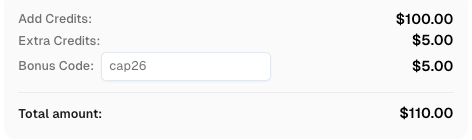
Use code
CAP26when signing up at CapSolver to receive bonus credits!
Once the data is extracted, it must be cleaned (e.g., removing HTML tags, standardizing formats) and stored. For continuous operation, the bot must be scheduled to run periodically using tools like Cron jobs or cloud-native schedulers. This ensures your data remains fresh and relevant for web scraping for market research.
Websites change their structure frequently. Your scraping bot will inevitably break. Implement robust logging and monitoring to alert you when the bot fails. Regular maintenance and adapting your selectors to new website layouts are ongoing tasks for any successful scraping bot operator.
A medium-sized electronics retailer needed to monitor the prices of their top 500 products across three major competitor websites every hour.
Understanding what is a scraping bot and how to build one is no longer optional; it is a fundamental skill in the data-driven economy. A sophisticated scraping bot is a powerful tool for automated data extraction, offering unparalleled efficiency and depth in market intelligence. Success hinges on robust security navigation techniques, a modern tech stack, and a commitment to ethical scraping practices.
To ensure your bot remains operational against the most advanced security defenses, you need reliable tools. Explore how a professional CAPTCHA solver can integrate seamlessly into your bot's workflow, guaranteeing continuous data flow even when faced with complex challenges.
The legality of web scraping is complex and highly dependent on jurisdiction, the website's terms of service, and the nature of the data. Generally, scraping publicly available data is often permissible, but scraping data behind a login or violating a site's robots.txt file is risky. Always seek legal counsel and prioritize ethical practices.
A web crawler (like Googlebot) is designed to index the entire web or a large part of it, focusing on discovering links and mapping the internet structure. A scraping bot is highly targeted, focusing on extracting specific data points from a limited set of pages or websites. A scraping bot often incorporates crawling functionality, but its primary goal is data extraction, not indexing.
The most effective strategy is to mimic human behavior: use a headless browser, rotate IP addresses with high-quality proxies, introduce random delays between requests, and manage your browser's fingerprint. When challenges like CAPTCHA or Cloudflare appear, integrate a specialized security challenge resolution service to resolve them automatically.
AI is transforming web scraping in two main ways: first, in resolving security challenges (AI-powered CAPTCHA solvers); and second, in data parsing. LLMs can be used to extract structured data from highly unstructured text (e.g., product reviews or news articles), a task that traditional selector-based bots struggle with.
Free proxies are highly unreliable, slow, and often already blacklisted by major websites. They will significantly increase your block rate and compromise the integrity of your data. For any serious web scraping project, you must invest in a premium residential or ISP proxy service.
Emma Foster
Machine Learning Engineer
Where machine learning meets practical AI tooling.
ABOUT THE AUTHOR
Learn scalable Rust web scraping architecture with reqwest, scraper, async scraping, headless browser scraping, proxy rotation, and compliant CAPTCHA handling.

Learn the best techniques to scrape job listings without getting blocked. Master Indeed scraping, Google Jobs API, and web scraping API with CapSolver.