🎉NEWCapSolver for AI agents-MCP, agent tools, and SDK integrations

Emma Foster
Machine Learning Engineer
Published Jun 25, 2026
Updated Jun 24, 2026 · min read
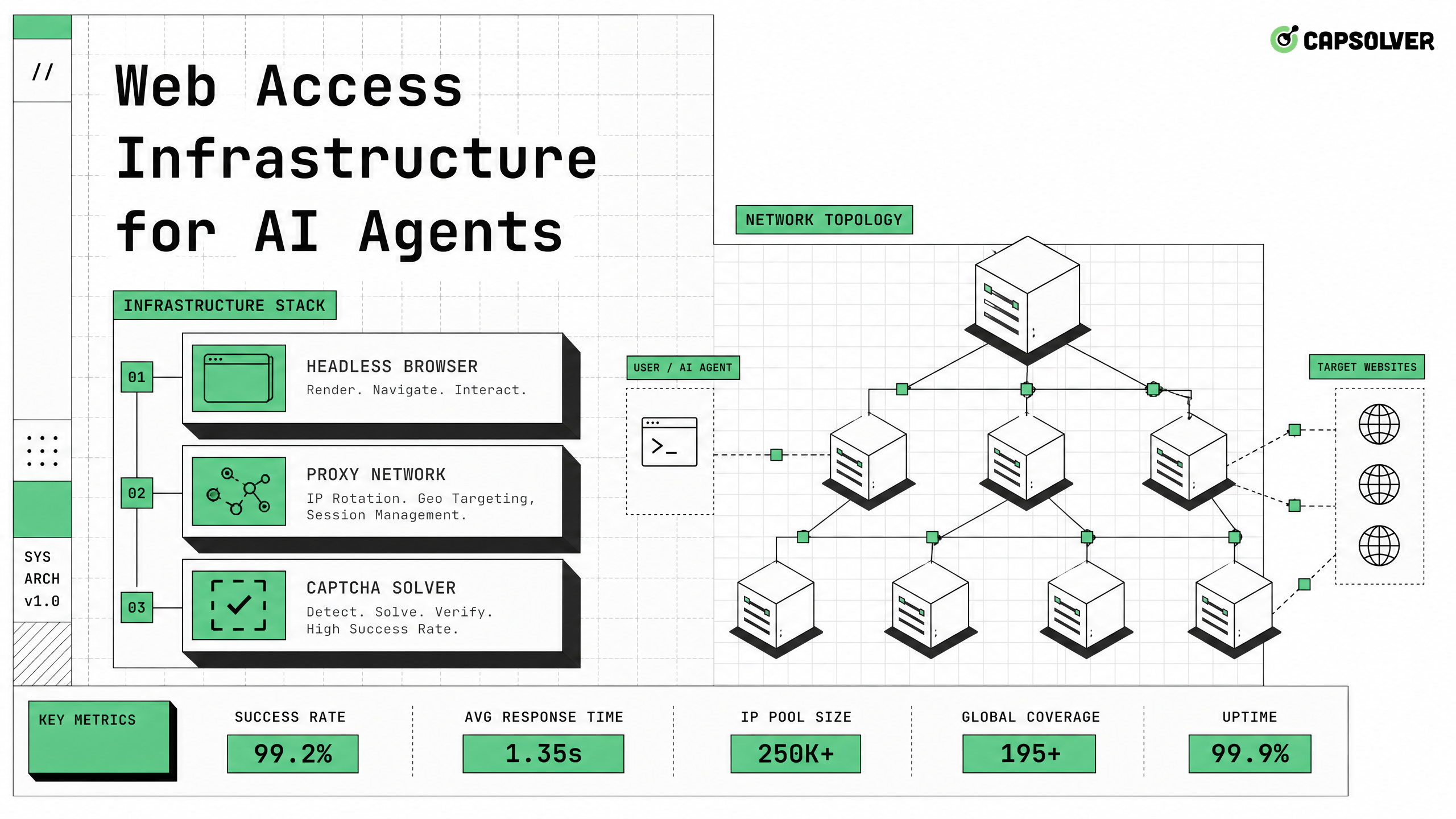
In the rapidly evolving landscape of artificial intelligence, AI agents are becoming indispensable for automating complex online tasks, from data collection and market research to customer service and content generation. However, the efficacy of these agents hinges critically on their ability to reliably access and interact with the vast and dynamic environment of the World Wide Web. This necessitates a robust web access infrastructure for AI agents, a foundational layer that enables them to navigate websites, extract information, and perform actions without encountering barriers designed for human users. Without a well-designed infrastructure, AI agents can be easily detected and blocked by sophisticated bot protection systems, rendering them ineffective. Therefore, understanding and implementing the right web access strategies is paramount for any AI agent deployment. For solutions that empower AI agents to overcome these challenges, consider exploring CapSolver.
Building an effective web access infrastructure for AI agents involves several critical components working in concert to mimic human browsing behavior and avoid detection.
At the heart of AI agent web interaction are headless browsers. These are web browsers without a graphical user interface, allowing programmatic control over web pages. Tools like Puppeteer, Playwright, and Selenium enable agents to:
However, even headless browsers can be detected. Out-of-the-box configurations often leak distinctive signatures, such as the webdriver property in the navigator object, or specific font rendering characteristics. Advanced techniques for web automation infrastructure stack for AI agents involve mimicking human-like delays, mouse movements, and keystrokes to avoid detection. For a deeper dive into this, understanding the agentic browser automation layer is crucial. This layer acts as an intermediary, injecting specialized scripts to normalize the browser fingerprint and orchestrating realistic interaction patterns that confound heuristic analysis engines.
To prevent IP blocking and enable geo-specific access, AI agents rely on proxy networks. These networks route agent traffic through different IP addresses, making it appear as if requests are originating from various locations and devices. The quality and diversity of the proxy pool directly dictate the agent's ability to operate at scale without triggering rate limits or outright bans. Key types include:
Choosing the right proxy solution is vital for maintaining uptime and avoiding detection. A sophisticated infrastructure often employs a "waterfall" approach, starting with cheaper datacenter proxies and falling back to premium residential or mobile proxies only when a block is encountered. For more on how proxies fit into a broader strategy, explore bot protection infrastructure for AI agents.
CAPTCHAs (Completely Automated Public Turing test to tell Computers and Humans Apart) are a primary barrier for AI agents. Overcoming them requires specialized solutions. This is where services like CapSolver become indispensable, offering:
Redeem Your CapSolver Bonus Code
Boost your automation budget instantly!
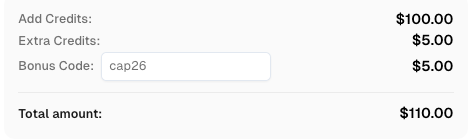
Use bonus code CAP26 when topping up your CapSolver account to get an extra 5% bonus on every recharge — with no limits.
Redeem it now in your CapSolver Dashboard
Websites employ sophisticated bot detection systems that analyze various signals, including browser fingerprints, network patterns, and behavioral anomalies. Providers like Cloudflare, Akamai, and DataDome continuously update their algorithms to identify non-human traffic. A robust web access infrastructure must incorporate evasion techniques such as:
puppeteer-extra-plugin-stealth) to hide automation indicators. This involves patching JavaScript APIs that are commonly used by security scripts to detect the presence of WebDriver or other automation frameworks.For more on this, see scalable CAPTCHA solving for production agents. The continuous maintenance of these evasion techniques requires dedicated engineering effort, as security vendors are constantly finding new ways to identify synthetic traffic.
While building powerful web access infrastructure, it's crucial to adhere to ethical guidelines and legal frameworks. Responsible AI agent deployment involves balancing the need for data and automation with respect for the target websites' resources and terms of service. Key practices include:
robots.txt: Adhering to website crawling policies defined in the robots.txt file, which specifies which parts of the site are permissible to access programmatically.For further reading on ethical web scraping, consult sources like the Electronic Frontier Foundation [1] and W3C Web Standards [2]. Adhering to these principles not only mitigates legal risks but also fosters a more sustainable and cooperative ecosystem for web automation.
| Feature | DIY Web Access Infrastructure | Managed Web Access Solutions (e.g., CapSolver) |
|---|---|---|
| Setup & Maintenance | High effort, requires deep technical expertise, ongoing updates | Low effort, plug-and-play, managed by provider |
| Scalability | Complex to scale, requires significant resource allocation | Highly scalable, on-demand resources |
| Bot Evasion | Requires constant research and implementation of new techniques | Continuously updated by experts to counter new detection methods |
| CAPTCHA Solving | Manual integration of open-source tools, often unreliable | Automated, high success rates, supports various CAPTCHA types |
| Cost | Variable, includes infrastructure, development, and maintenance | Predictable, subscription-based, often more cost-effective at scale |
| Reliability | Dependent on internal expertise and monitoring | High, backed by SLAs and dedicated support |
Building a resilient and effective web access infrastructure is no longer an option but a necessity for AI agents to thrive in the modern digital ecosystem. From mastering headless browser automation and using diverse proxy networks to implementing advanced bot evasion tactics and robust CAPTCHA solving mechanisms, each component plays a vital role in ensuring uninterrupted operation. While a DIY approach offers flexibility, the complexities and continuous arms race against bot detection often make managed solutions a more viable and scalable option for serious AI agent deployments. By investing in a solid infrastructure, businesses can realize the full potential of their AI agents, driving efficiency, accuracy, and innovation. To empower your AI agents with unparalleled web access capabilities and overcome the most challenging bot protection, visit CapSolver today.
A1: It refers to the combination of technologies and strategies (like headless browsers, proxy networks, and CAPTCHA solvers) that enable AI agents to interact with websites and online services effectively, handling bot detection and other barriers.
A2: Without it, AI agents can be easily detected, blocked, or slowed down by bot protection systems and CAPTCHAs, preventing them from performing their intended tasks efficiently and reliably.
A3: AI agents typically integrate with specialized CAPTCHA solving services like CapSolver, which use a combination of AI and human intelligence to solve various CAPTCHA types automatically.
A4: Headless browsers are web browsers without a graphical user interface, controlled programmatically. They are used by AI agents to render dynamic web content, execute JavaScript, and simulate human-like interactions on websites.
A5: Yes, bot detection technologies are constantly evolving. A good infrastructure requires continuous updates, advanced evasion techniques (like browser fingerprint spoofing and behavioral mimicry), and reliable proxy networks to minimize detection risks.
Emma Foster
Machine Learning Engineer
Where machine learning meets practical AI tooling.
ABOUT THE AUTHOR
Fix CAPTCHA handling that works locally but fails in a cloud AI agent. Compare browser setup, dependencies, credentials, network access, and page state.
Estimate CAPTCHA solving costs in Browser Use by separating agent runs, challenge types, billable solves, retries, and verified outcomes from browser costs.