🎉NEWCapSolver for AI agents-MCP, agent tools, and SDK integrations

Ethan Collins
AI Agent Workflow Engineer
Published Jun 22, 2026
Updated Jun 22, 2026 · min read
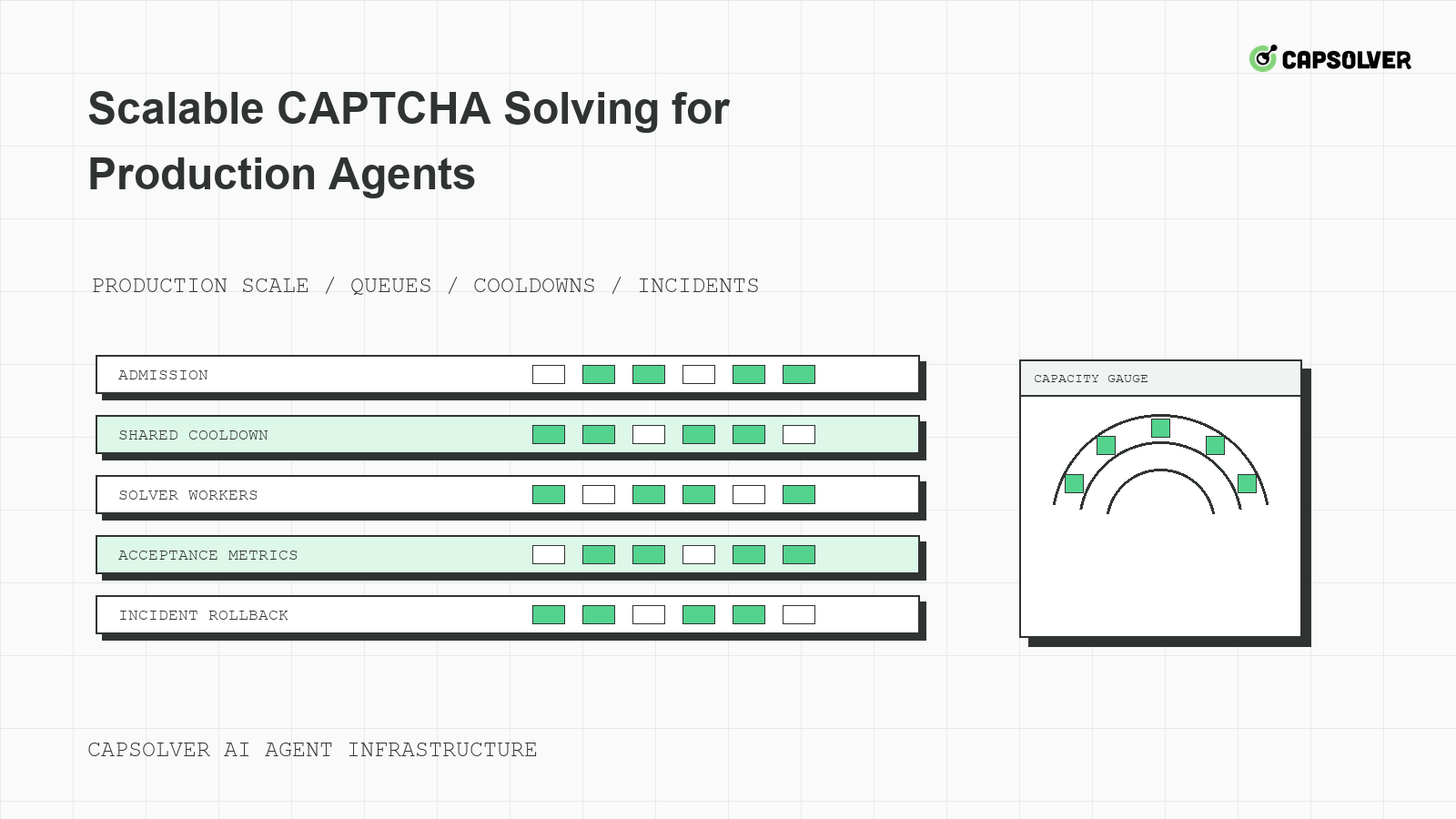
Scalable CAPTCHA solving for production agents is an operations problem before it is a throughput problem. CapSolver can support approved challenge handling, but production fleets need admission control, cooldowns, capacity metrics, and incident response to avoid noisy retry patterns. The goal is not to maximize solver calls. The goal is to complete permitted protected actions with stable state, clear evidence, and a bounded impact on target systems.
Scalable CAPTCHA solving for production agents starts by deciding which tasks should enter the protected workflow queue. Admission control should reject tasks outside the allowed domain, tasks with unclear permission, tasks on cooled-down routes, and tasks that already exhausted their challenge budget. This avoids spending browser and solver capacity on work that should stop.
CapSolver's HTTP 429 rate limit guidance is relevant because rate pressure should be reduced before more agents launch. MDN defines HTTP 429 Too Many Requests as a client sending too many requests in a given time. In an agent fleet, that signal must be shared across workers.
The queue should store domain, path class, account class, route pool, challenge family, attempt budget, first-seen time, cooldown key, and allowed purpose. It should also store the final application assertion expected from the task. Scalable CAPTCHA solving for production agents depends on knowing which protected action the fleet is trying to complete.
protected_queue_admission:
  domain: "example.com"
  path_class: "public_listing"
  route_pool: "managed-us"
  challenge_budget_remaining: 1
  cooldown_key: "example.com:public_listing:managed-us"
  reject_when:
    - "cooldown_active"
    - "permission_unclear"
    - "challenge_budget_empty"
This is local queue configuration, not a CapSolver API payload. The stop condition is the point: the queue should refuse work that would turn one signal into fleet-wide pressure.
Solver capacity should be planned around accepted protected actions, not raw task count. A high number of solver tasks with low backend acceptance means the fleet is paying for friction without completing work. CapSolver's rate limiting glossary helps name one common pressure pattern, but capacity planning also needs browser health, route quality, and application acceptance.
Measure queue age, browser launch rate, challenge detection rate, solver task count, median polling time, backend acceptance rate, 403 rate, 429 rate, duplicate submit count, and manual review count. OpenTelemetry's metrics signal model is a useful external model because each service in the pipeline should emit comparable measurements.
Use CapSolver's getBalance documentation when finance or operations needs to connect account-level capacity checks to documented API behavior. Do not turn balance checks into a substitute for admission control. A funded account does not mean a task is allowed, healthy, or ready to scale.
Scalable CAPTCHA solving for production agents requires shared cooldowns. If one worker receives a 429 or a server-provided wait hint, all workers using the same domain and route class should honor it. RFC 9110's Retry-After header defines a standard way for servers to communicate wait timing. The fleet should preserve that signal instead of hiding it inside a local sleep.
Backoff keys should combine domain, path class, account class, route pool, and task type. CapSolver's rate backoff algorithms entry gives language for controlled waiting. Recovery should be gradual. Let a small number of tasks resume after cooldown, measure acceptance, and then widen only if 403, 429, and challenge rates stay stable.
Redeem Your CapSolver Bonus Code
Boost your automation budget instantly!
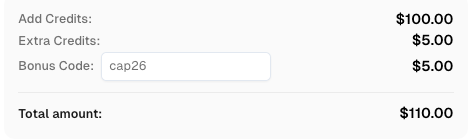
Use bonus code CAP26 when topping up your CapSolver account to get an extra 5% bonus on every recharge — with no limits.
Redeem it now in your CapSolver Dashboard
Observability should connect every solver task to the protected action that justified it. The trace should include admission decision, browser lease, challenge detection evidence, solver task reference, polling duration, result consumption, protected request status, and final assertion. Scalable CAPTCHA solving for production agents fails when the team can see solver volume but not outcome quality.
Build dashboards around ratios. Solver tasks per accepted action shows waste. Backend rejections after solver ready shows session or form-state problems. Challenge loops per domain show target-side or route pressure. Queue age by cooldown key shows whether workers are waiting responsibly. CapSolver's proxy benchmark criteria can help teams separate route quality from solver behavior.
The dashboard should also show review stops. A production system that records zero review stops may not be safe. It may simply be retrying everything. Scalable CAPTCHA solving for production agents requires visible refusal points.
Roll out scalable CAPTCHA solving for production agents in stages. Start with one domain, one account class, one browser profile, and one protected action. Expand only after traces show stable acceptance and bounded challenge attempts. Google's overload handling guidance is useful because graceful degradation is a better response than unchecked retries.
When challenge rate spikes, reduce concurrency, pause new protected actions, preserve traces, and compare current browser, route, and site versions against the last healthy baseline. CapSolver's rate-limited AI agent diagnosis is relevant when teams need to separate cooldown issues from solver issues.
The incident owner should answer four questions. Did permission or terms change? Did route health change? Did browser fingerprint or version change? Did the application begin rejecting solver-ready submissions? If the answer is unclear, stop widening traffic. Production reliability comes from reducing uncertainty, not from creating more attempts.
After recovery, write a short post-incident record. Include trigger, affected domains, cooldown actions, solver task volume, backend acceptance change, customer impact if any, and the rollback owner. This turns scalable CAPTCHA solving for production agents into an observable system rather than a collection of hidden scripts.
Cost controls should be part of scalable CAPTCHA solving for production agents from the beginning. Solver spend, browser CPU, trace storage, proxy or route cost, and human review all increase when protected workflows become noisy. A fleet that appears cheap at low volume may become expensive if challenge rate rises or if many solver-ready actions are rejected by the backend. The cost model should therefore connect spend to accepted outcomes, not only to requests.
Set budget guardrails by domain, workflow, account class, and route pool. A public monitoring task might have a low maximum solver spend per day. A high-value owned-account workflow might have a larger review budget but a stricter duplicate-submit rule. A new domain should start with a small exploration budget until traces prove that the workflow is stable and permitted. Scalable CAPTCHA solving for production agents should widen budgets only after acceptance rates justify the additional traffic.
The guardrails should stop work automatically when ratios drift. If solver tasks per accepted action doubles, pause the workflow and review traces. If review stops exceed staffing capacity, reduce admission before operators are pressured to approve unclear cases. If trace storage grows faster than accepted outcomes, narrow capture to protected transitions. These controls prevent scale from hiding waste.
Cost review should be shared across engineering, operations, finance, and policy. Engineering can explain backend rejection and session defects. Operations can explain cooldowns and route health. Finance can explain spend patterns. Policy can decide whether a task still belongs in automation. The best cost control is not always a lower solver budget. Sometimes it is a narrower workflow, a slower queue, or a decision to stop automating a protected path.
Load testing for protected workflows should be conservative. Do not point a new agent fleet at live protected pages just to measure maximum throughput. Use synthetic pages, owned test environments, or explicitly approved sandboxes to validate queue behavior, browser worker limits, trace storage, cooldown propagation, and wrapper stability. Scalable CAPTCHA solving for production agents should never depend on creating unnecessary pressure on third-party systems.
Measure browser memory per context, trace size per protected action, queue latency, cooldown write latency, duplicate suppression, solver wrapper timeout handling, and review queue capacity. Then run a small live pilot only where the task is permitted and the expected protected action is clear. Compare the pilot against synthetic baselines. If the live run uses far more solver tasks per accepted action, the issue may be target-side friction, session state, or route policy rather than raw capacity.
Set expansion gates. Increase one variable at a time: worker count, domain count, route pool, or workflow type. If two variables change together, the team will not know why challenge rate moved. Keep a rollback switch that stops new protected actions while allowing active tasks to finish or stop cleanly. This is the practical difference between scaling and flooding.
The final boundary is human review capacity. If the fleet can create review events faster than people can evaluate them, the system will pressure operators into poor decisions. Scalable CAPTCHA solving for production agents should scale only as fast as governance can keep up.
Document the load-test decision in the release note. Include the synthetic results, the live pilot size, the expansion gate, and the rollback owner. This gives incident responders a clean record of what the team expected before scale changed real operating conditions. It also makes future capacity reviews more grounded.
Capacity should be lowered as deliberately as it is raised. If a workflow no longer needs frequent protected actions, reduce workers, shorten trace retention, and lower solver budgets. Scalable CAPTCHA solving for production agents includes controlled contraction, because stale capacity can hide noisy tasks that no longer deserve priority.
This also keeps operational attention focused. Smaller, cleaner queues make abnormal challenge patterns easier to notice before they become incidents.
Scalable CAPTCHA solving for production agents should be governed by admission control, shared cooldowns, real outcome metrics, traceable solver tasks, and incident response. Solver throughput helps only when protected actions are permitted, session-bound, and accepted by the application. Teams that need approved challenge support can use CapSolver while keeping capacity, rate control, and reliability ownership in their own production platform.
It means handling eligible challenges through controlled queues, shared cooldowns, documented solver paths, observable outcomes, and clear stop rules across an agent fleet.
Accepted protected actions per domain is more useful than solver task count because it connects cost and traffic to real workflow completion.
It should create a shared cooldown key for the affected domain, route pool, and task class so other workers wait instead of repeating the same pressure.
Pause when challenge rates spike, backend rejection rises, authorization is unclear, route health collapses, or the team cannot explain why solver-ready submissions are failing.
Ethan Collins
AI Agent Workflow Engineer
Building clearer handoffs between AI agents and tools.
ABOUT THE AUTHOR
Fix CAPTCHA handling that works locally but fails in a cloud AI agent. Compare browser setup, dependencies, credentials, network access, and page state.

Estimate CAPTCHA solving costs in Browser Use by separating agent runs, challenge types, billable solves, retries, and verified outcomes from browser costs.