🎉NEWCapSolver for AI agents-MCP, agent tools, and SDK integrations

Sora Fujimoto
AI Solutions Architect
Published Jun 22, 2026
Updated Jun 22, 2026 · min read
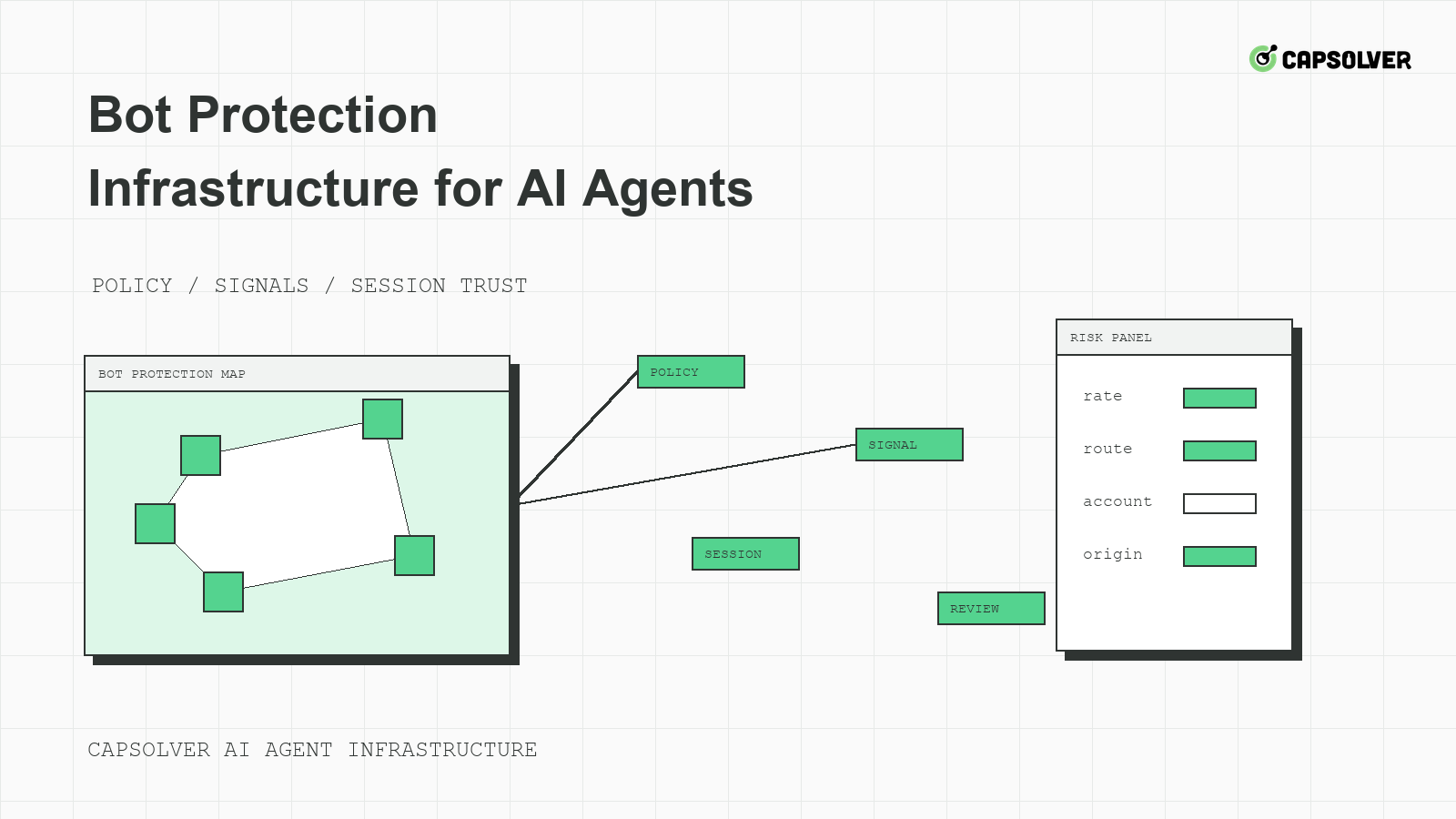
Bot protection infrastructure for AI agents should be treated as a governance layer, not a trick inside a browser script. CapSolver can support approved CAPTCHA handling, but the surrounding system must decide when an agent is allowed to proceed, wait, or stop. The important design question is not how many challenges can be solved. It is whether the agent can recognize traffic validation, keep identity state coherent, respect limits, and produce evidence for every protected action. That is the foundation for bot protection infrastructure for AI agents in production.
Bot protection infrastructure for AI agents begins before a browser opens. Each run needs an allowed domain, lawful purpose, account class, data boundary, maximum action count, and stop condition. Without that contract, the agent may interpret a warning, login prompt, or access refusal as another navigation problem. Technical capability does not grant permission to access private, restricted, sensitive, or unauthorized data.
The boundary should be machine-readable. Store it beside the task request, not only in a human policy document. The runtime can then reject actions that move outside the approved domain, ask for private records, or attempt a protected workflow after the budget is exhausted. NIST's AI risk management framework is a useful planning reference because it puts controls and accountability ahead of deployment speed. CapSolver's article on AI agent CAPTCHA blocking also gives teams a practical vocabulary for distinguishing agent behavior from ordinary browser use.
Use explicit domain and data gates in the scheduler. A task that is allowed to monitor public product pages should not quietly move into account settings, checkout, or private messages. A task that is approved for a test account should not borrow another account profile because it has warmer cookies. Bot protection infrastructure for AI agents is safer when the scheduler denies unclear work before the browser layer creates more signals.
agent_access_contract:
  allowed_domains: ["example.com"]
  approved_data_class: "public_catalog"
  account_class: "owned_test_account"
  max_protected_actions: 1
  stop_if:
    - "private_data_prompt"
    - "account_lock_warning"
    - "permission_unclear"
This local contract is not a CapSolver API payload. It is an admission rule for your own runtime. The output that matters is a clear allow, wait, review, or stop decision before the agent touches a protected action.
Bot protection infrastructure for AI agents should map traffic validation signals into separate categories. A 403 refusal, a 429 rate limit, a JavaScript challenge, a visible CAPTCHA widget, and a missing form token should not all become "CAPTCHA failed." MDN describes HTTP 403 Forbidden as a refusal to authorize a request, while RFC 9110 defines Retry-After response timing for server-directed waiting. Those signals imply different next steps.
Create a taxonomy that the planner can understand. review_required means the run needs human or policy review. cooldown_started means no more browser launches for that domain until the timer expires. challenge_detected means the workflow may be eligible for documented challenge handling. backend_rejected means the protected request did not succeed even if a widget disappeared. CapSolver's guidance on reducing CAPTCHA rate supports the same operational idea: lower the conditions that trigger challenges instead of repeating attempts.
For implementation details, engineers should select only documented CapSolver task families from CapSolver task types. If the official documentation does not confirm a specific field or task type for the challenge you see, keep the article-level design high level and verify the integration before release. Bot protection infrastructure for AI agents should not invent API fields to satisfy a deadline.
Identity coherence includes cookies, storage, route class, user-agent family, viewport, timezone, locale, and account state. A model prompt cannot preserve those signals reliably across retries. The browser runtime should own them as a named session object. RFC 6265 defines HTTP cookie state management, and the domain/path rules matter when a challenge is rendered on one subdomain but the final action posts to another.
CapSolver's explanation of browser fingerprinting is useful because many bot protection events are not about one request. They are about a pattern of browser, network, and account signals. A session that changes language, route pool, and viewport between challenge rendering and form submission may fail even when the user-facing page looks correct.
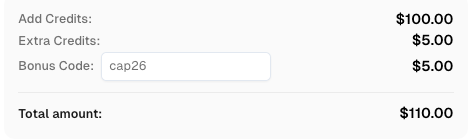
Redeem Your CapSolver Bonus Code
Boost your automation budget instantly!
Use bonus code CAP26 when topping up your CapSolver account to get an extra 5% bonus on every recharge — with no limits.
Redeem it now in your CapSolver Dashboard
Governance controls turn protected workflow events into accountable decisions. Bot protection infrastructure for AI agents should record who owns the task, why the task is allowed, which domain was accessed, what signal appeared, which queue rule fired, and why the run continued or stopped. OWASP's automated threat taxonomy is a helpful external lens because repeated automated actions can become harmful even when each individual request looks small.
Keep event records specific but redacted. Store route class, not raw proxy credentials. Store account class, not passwords or session tokens. Store form state hashes, not private form contents. Store challenge family, attempt count, status sequence, and final outcome. CapSolver's TLS fingerprinting entry helps teams understand why low-level network consistency belongs in the evidence model, but ordinary logs should not expose secrets.
Governance should also define review queues. A repeated 429 belongs to operations. A private-data prompt belongs to policy review. A solver task that returns a result but leads to backend rejection belongs to engineering. A target that changes terms or access requirements belongs to business ownership. Bot protection infrastructure for AI agents works when these cases stop being buried inside retry loops.
Release testing should prove that one allowed source item creates one accepted target outcome. The test should run with trace capture, network status history, challenge event history, and a final application assertion. W3C WebDriver's element interactability language is a useful reminder that a click is valid only when the element state actually supports it.
Use a one-action replay before widening traffic. The replay should show that the domain gate passed, the same browser session owned the protected action, the challenge handler fired no more than the configured budget, and the final backend response accepted the action. CapSolver's article on web automation CAPTCHA failures gives additional context for why browser evidence matters.
If the replay creates duplicate submits, hidden retries, or a second challenge loop, the release is not ready. If the replay succeeds only when engineers manually clear cookies, the infrastructure has not solved session coherence. If the replay succeeds but policy cannot explain why the automation is allowed, the task should not be scaled. Bot protection infrastructure for AI agents is production-ready only when authorization, state, rate control, and outcome evidence agree.
Baseline reviews make bot protection infrastructure for AI agents easier to maintain after launch. Review the same small set of signals every week: protected actions by domain, 403 refusals, 429 cooldowns, challenge events, solver dispatches, backend rejections, and review stops. The trend matters more than one isolated run. A steady rise in challenge events may mean the workflow is becoming noisier. A sudden rise in backend rejection after challenge handling may mean the page changed, the form token changed, or session continuity broke.
Ask five questions during the review. Which domain produced the highest challenge rate? Which route pool produced the most cooldowns? Which protected action created solver-ready but backend-rejected outcomes? Which account class triggered warnings? Which workflow had the largest gap between attempts and accepted outcomes? These questions connect bot protection infrastructure for AI agents to actual operating behavior. They also give each team a concrete owner: operations handles cooldowns, engineering handles session defects, policy handles unclear access, and product owners decide whether the workflow is still worth automating.
The review should end with one action, not just a dashboard screenshot. Reduce concurrency, narrow the workflow, update the session lease, change the admission rule, or retire the task. If no action is needed, record why the current baseline is acceptable. This creates an evidence trail for future incidents. When a target site redesign, browser upgrade, or route-policy change happens later, the team can compare the new signal pattern with a known healthy baseline instead of guessing from memory.
Change management should treat protected automation as a higher-risk release path. A prompt edit, browser upgrade, route-policy change, queue rule, or solver mapping can change the signal profile. The release note should name the expected effect before deployment. For example, a new locator strategy should reduce element readiness failures, not increase challenge dispatch. A new route policy should reduce cooldown events, not hide them. Bot protection infrastructure for AI agents should make those expectations testable.
Define rollback criteria before the change ships. Roll back if backend rejection rises above the baseline, if solver tasks per accepted action increase sharply, if review stops exceed staffing capacity, or if 403 and 429 signals move together. Keep a previous known-good browser profile, queue rule, and solver wrapper version available. The safest rollback is the one that can be executed without editing prompts during an incident.
Change management also protects teams from false confidence. A deployment may improve one metric while damaging another. Lower challenge rate is not useful if accepted protected actions fall. Faster browser execution is not useful if form-state timing breaks. Bot protection infrastructure for AI agents should be judged by the whole protected workflow, from permission gate to final application outcome.
Bot protection infrastructure for AI agents should classify signals, preserve identity state, enforce permission boundaries, and stop on unclear authorization or repeated protected failures. CAPTCHA handling is only one service inside that control plane. Teams that need approved challenge support can use CapSolver while keeping policy, rate gates, session ownership, and release evidence in their own infrastructure.
It is the set of runtime controls that governs allowed domains, traffic validation signals, browser identity state, challenge handling, cooldowns, logging, and stop decisions for web agents.
A 403 is usually an authorization refusal, while a CAPTCHA widget is an interactive challenge. Treating both as the same failure can cause unsafe retries and poor diagnostics.
No. The model can receive typed state, but retry budgets, cooldowns, domain permissions, and review rules should be enforced by infrastructure.
A one-action replay should show one allowed task, one coherent browser session, bounded challenge handling, no duplicate side effects, and a successful application-level result.
Sora Fujimoto
AI Solutions Architect
Connecting agents, browsers, and APIs into one workflow.
ABOUT THE AUTHOR
Estimate CAPTCHA solving costs in Browser Use by separating agent runs, challenge types, billable solves, retries, and verified outcomes from browser costs.

Set up CapSolver MCP in Claude Code, check the available CAPTCHA tools, and choose token or page solving for a supported, authorized browser task.