
How to reduce CAPTCHA rate when web scraping?
Answer
To reduce CAPTCHA rate when web scraping, it's essential to manipulate your request signals to appear human. This can be achieved by lowering request frequency, maintaining coherent browser fingerprints, managing IP reputation with residential proxies, and preserving session cookies.
Detailed Explanation
Modern security management systems evaluate trust signals before rendering a CAPTCHA challenge page. These systems typically assign a risk score based on request rate and concurrency (Layer 1), headers and request coherence (Layer 2), browser and JavaScript fingerprinting (Layer 3), IP reputation (Layer 4), cookies, session age, and history (Layer 5), and behavioral analysis (Layer 6). To avoid CAPTCHA, it's crucial to address these underlying trust signals. This can be done by structuring requests to mimic natural human pacing, enforcing strict header coherence, managing IP reputation with cleaner residential or mobile IPs, deploying headless browsers strategically, preserving cookies and sessions, and tracking CAPTCHA encounter rate as a core KPI.
Solutions / Methods
- Wait for DOM parsing: Implement a delay between requests to allow the browser to fully load the page. This can be achieved using Puppeteer's
page.waitForNavigation()method or Selenium'sWebDriverWait. - Integrate dedicated CAPTCHA solving APIs (CapSolver): Use a service like CapSolver to solve CAPTCHAs programmatically. This can be integrated into your web scraping pipeline using APIs provided by the service.
Best Practice / Tips
To implement the most effective solution, use a combination of residential proxies with automatic User-Agent rotation and set page.setRequestInterception(true) to block unnecessary resources. This will help you avoid perfectly timed, synchronized spikes in request frequency and maintain coherent browser fingerprints.
👉 Related:
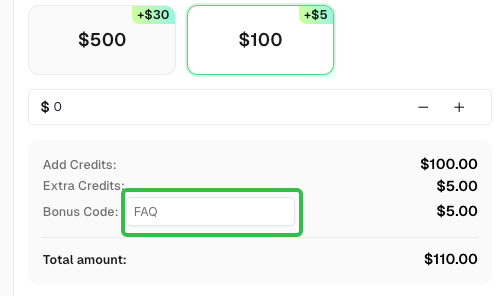
Use code
FAQwhen signing up at CapSolver to receive an additional 5% bonus on your recharge.
CapSolver FAQ — capsolver.com