🎉NEWCapSolver for AI agents-MCP, agent tools, and SDK integrations

Rajinder Singh
Deep Learning Researcher
Published Jun 18, 2026
Updated Jun 18, 2026 · min read
The best CAPTCHA API for AI agents in 2026 is not the API with the broadest marketing list; it is the API that fits your rendered challenge, browser session, queue policy, and verification loop. CapSolver is relevant for teams that need approved CAPTCHA-solving support, but the evaluation should be concrete. Match documented task types to runtime evidence, test async polling under a strict budget, and verify final backend acceptance. A good CAPTCHA API helps the agent continue lawful work; it does not replace permission, pacing, or stop rules.
The best CAPTCHA API for AI agents in 2026 must support the challenge type your page actually renders. Do not choose based on a generic promise that every CAPTCHA is handled. Capture provider family, version, widget parameters, iframe context, protected request, and whether the result is synchronous recognition or asynchronous token solving.
CapSolver's official supported task types page says task type is distinguished under task > type, and it lists recognition and token task families. That official documentation should be the source of truth for implementation details. CapSolver's top CAPTCHA solver comparison can help with market context, but API payloads must still come from official docs.
Ask five concrete questions. Does the API support the rendered challenge family? Does it support the mode your browser uses, such as token or image recognition? Are required parameters documented? Is the result synchronous or asynchronous? Does the API explain error conditions clearly enough for an agent runtime to stop? The best CAPTCHA API for AI agents in 2026 should make these answers inspectable before production.
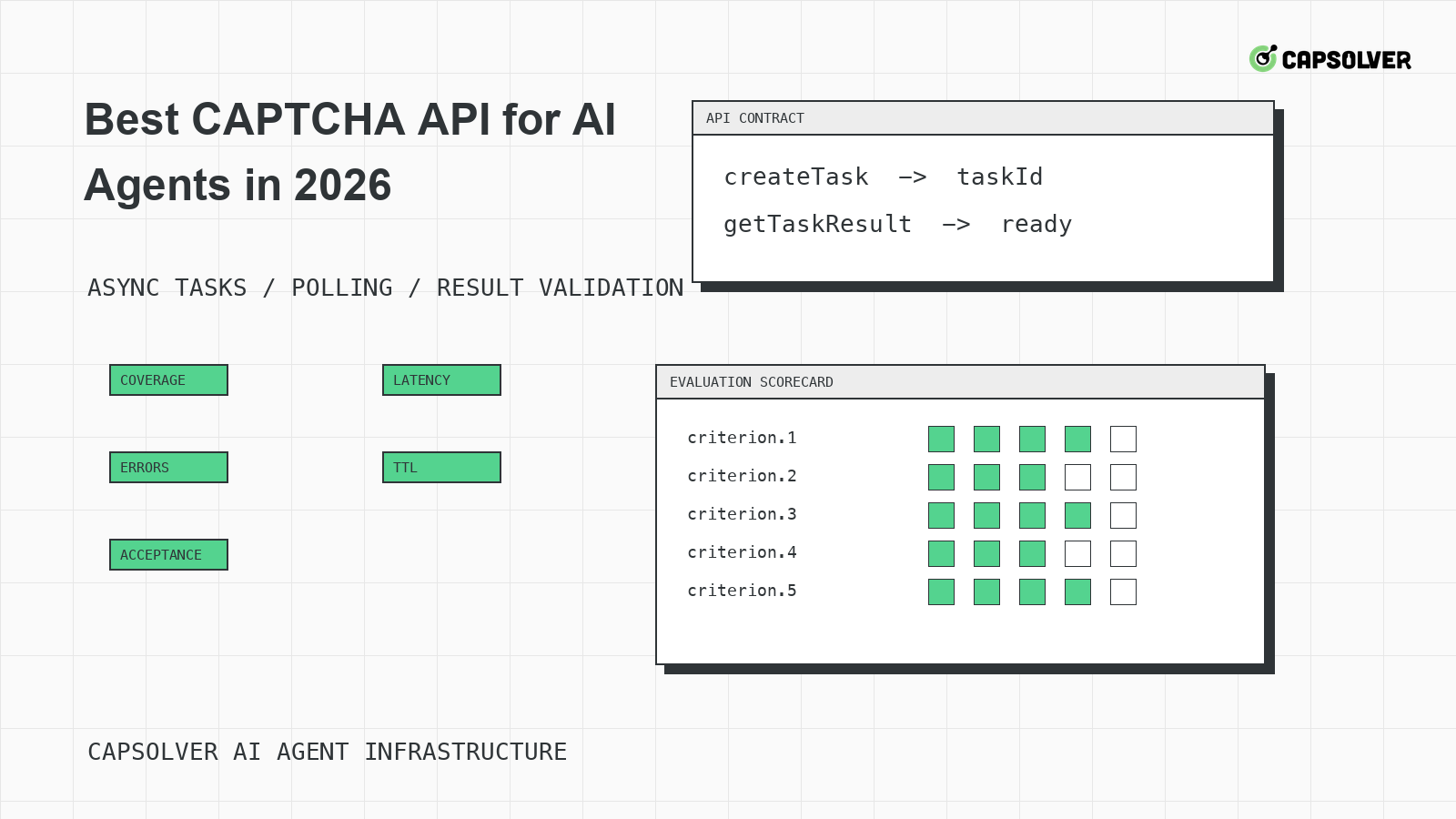
AI agents need a polling contract because planners are impatient. CapSolver's official getTaskResult documentation states that asynchronous task results are obtained through getTaskResult, that each task can be queried within five minutes after creation, and that exceeding 120 query requests loses the result. Those numbers should shape your runtime budget.
{
  "createTask": {
    "method": "POST",
    "url": "https://api.capsolver.com/createTask",
    "body": {
      "clientKey": "YOUR_API_KEY",
      "task": {
        "type": "DOCUMENTED_TASK_TYPE",
        "documented_fields": "Use the official page for the selected task family"
      }
    }
  },
  "getTaskResult": {
    "method": "POST",
    "url": "https://api.capsolver.com/getTaskResult",
    "body": {
      "clientKey": "YOUR_API_KEY",
      "taskId": "TASK_ID_FROM_CREATE_TASK"
    },
    "stop_conditions": ["accepted", "failed", "five_minutes_elapsed", "poll_budget_reached"]
  }
}
This example is an implementation checklist based on CapSolver's official createTask and getTaskResult pages, not a complete task payload. Replace DOCUMENTED_TASK_TYPE and the task fields only after checking the official page for the selected CAPTCHA family. The stop conditions prevent an AI planner from creating duplicate jobs while one task is still pending.
Measure median, p90, and timeout rates separately by task family. A single average hides the failures that agent planners feel most. Also measure duplicate task creation, poll budget exhaustion, and backend rejection after a result was returned. The best CAPTCHA API for AI agents in 2026 should be evaluated by completed protected actions, not only returned solver results.
Token consumption is where many integrations fail. A token may be returned successfully but applied to the wrong form, consumed after a rerender, detached from cookies, or submitted to a backend route that expects a different action. The HTML standard's form submission data model helps explain why the final payload at submit time matters.
CapSolver's CAPTCHA solver response API article is useful as a conceptual companion for response handling. In production, your runtime should verify the protected request status and application result. The best CAPTCHA API for AI agents in 2026 should fit a one-attempt consumption model: result received, attached to current session, protected request sent once, backend accepted or rejected.
Price matters, but it should not be the first filter. Compare documented task coverage, error semantics, result polling rules, timeout behavior, SDK maturity, dashboard observability, and support for your browser or protocol workflow. CapSolver's JavaScript CAPTCHA API implementation is relevant for teams working in Node.js stacks, but agents should still keep challenge handling behind runtime controls.
The IETF's RFC 9110 describes HTTP semantics for status codes and request behavior, which is useful when classifying backend outcomes. MDN's HTTP 429 rate limits page helps separate API polling problems from target-site rate pressure. The best CAPTCHA API for AI agents in 2026 should expose enough signal for infrastructure to decide wait, retry, review, or stop.
Redeem Your CapSolver Bonus Code
Boost your automation budget instantly!
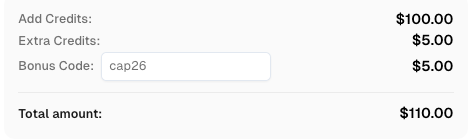
Use bonus code CAP26 when topping up your CapSolver account to get an extra 5% bonus on every recharge — with no limits.
Redeem it now in your CapSolver Dashboard
A test harness should replay a small set of permitted challenge scenarios. Include one image-recognition task if relevant, one token task if relevant, one intentionally invalid parameter case, one timeout case, and one backend rejection case. Do not test against private systems or targets where automation is not authorized.
Use the same output fields for every provider: challenge family, documented task type, create success, task ID returned, first-result latency, final status, solver error, protected request status, application outcome, attempts used, and stop reason. OWASP's automated threat categories is a useful reminder that repeated automated testing can create risk if it is not scoped and controlled.
The harness should mark a run successful only when the application accepts the protected request and no duplicate side effect occurs. CapSolver's automating CAPTCHA in headless browsers can help browser teams think through the surrounding flow. Still, the harness should be yours, because your domains, sessions, and compliance rules define success.
Agent-specific controls include allowed domains, challenge budgets, duplicate suppression, session binding, cooldown gates, audit logs, and human review. The best CAPTCHA API for AI agents in 2026 should fit these controls without forcing solver logic into prompts. A model should receive typed outcomes such as pending, accepted, rejected, cooldown, or review, not raw API responses.
Accessibility is also part of responsible design. WCAG describes web accessibility requirements that many human users depend on; automation teams should avoid workflows that degrade public services or user access. A CAPTCHA API is a tool for approved automation, not a permission grant.
Procurement should require engineering metrics, not only a feature table. The best CAPTCHA API for AI agents in 2026 should be tested with the exact browser or protocol runtime that will consume results. A sandbox demo that returns a token does not prove that the API will work inside a multi-agent queue with cooldowns, route ownership, and audit requirements.
Score each candidate on action-level evidence: documented task match, first-result latency, timeout rate, clear error reason, duplicate job prevention, backend acceptance rate, trace completeness, support response quality, and policy fit. Separate solver success from application success. If the API returns results quickly but the protected request is rejected by the target application, the agent infrastructure still failed.
Procurement teams should also check how the API behaves during partial outages. Does the provider return errors that can be mapped to retry, wait, review, or stop? Can your runtime cap polling before documented limits are reached? Can you pause protected actions without losing ordinary browsing tasks? These questions matter more for AI agents than for one-off scripts because planners can generate repeated attempts if the runtime does not constrain them.
Finally, require an exit path. Store provider-specific logic behind an adapter, keep task evidence in your own trace format, and define a rollback switch for the solver route. The best CAPTCHA API for AI agents in 2026 should improve reliability without trapping the whole browser stack inside one integration pattern.
Procurement should include cost-per-accepted-action, not only cost-per-solve. Count solver spend, browser minutes, route cost, failed attempts, human review time, and duplicate cleanup. An API with a lower listed price can be more expensive if it creates more backend rejections or harder incidents. The best CAPTCHA API for AI agents in 2026 should reduce total operating ambiguity.
Security review should examine secret handling too. API keys should live in a secret manager, not in prompts, trace files, browser storage, or downloadable artifacts. The runtime should redact provider responses before exposing them to model context. It should also separate production keys from test keys so procurement experiments cannot affect live queues. These controls are ordinary engineering hygiene, but they matter more when autonomous agents can produce many calls quickly.
Ask support teams for failure examples during evaluation. A mature provider should be able to explain common misconfiguration categories, unsupported task patterns, and evidence needed for troubleshooting. That conversation reveals whether the API team can help with agent infrastructure problems rather than only single-script examples.
The final procurement artifact should be a short decision memo. Include the tested challenge families, official documentation links, task latency distribution, acceptance rate, unresolved failures, budget controls, security review, and rollback plan. The best CAPTCHA API for AI agents in 2026 should win that memo with evidence, not familiarity.
Run the memo through an engineering sign-off and an operations sign-off. Engineering confirms that documented fields, polling limits, and session binding were tested. Operations confirms that dashboards, alerts, budget limits, and rollback steps are usable during an incident. This double sign-off prevents a vendor choice from becoming an unsupported production dependency.
Revisit the decision after live traffic. The best CAPTCHA API for AI agents in 2026 for a benchmark may not remain best after target pages, browser versions, or agent prompts change. Schedule a review after the first month of production data.
The best CAPTCHA API for AI agents in 2026 is selected with evidence: documented task coverage, strict async polling, session-bound token consumption, clear errors, operational metrics, and responsible stop rules. Test with permitted workflows and measure backend acceptance rather than widget disappearance. For teams that need approved CAPTCHA support and want documented API contracts inside an agent runtime, CapSolver is a strong option to evaluate.
It must match documented task types to rendered challenges, support predictable polling, return clear errors, fit session-bound token consumption, and expose outcomes that the agent runtime can audit.
No. Price should be compared after task coverage, latency distribution, error clarity, backend acceptance rate, observability, and responsible control fit.
Without a polling budget, an agent may create duplicate jobs or keep asking for a result after the task window has expired. The runtime should enforce clear stop conditions.
Use a permitted harness that records task type, create success, result latency, solver error, protected request status, final application outcome, attempts used, and stop reason.
Rajinder Singh
Deep Learning Researcher
Making CAPTCHA solving more reliable in automated workflows.
ABOUT THE AUTHOR
Find CapSolver MCP in the Official MCP Registry, install version 0.1.3 with uvx or pip, configure a local client, and verify the stdio tools.

Add CAPTCHA tools to Pydantic AI using the official CapSolver adapter, test tool execution locally, and handle typed inputs and structured solver results.