Selenium Agent Blocked by Cloudflare: What to Do Next

Lucas Mitchell
Automation Engineer
TL;DR
- A Selenium agent blocked by Cloudflare should first identify whether the page is a challenge, Turnstile widget, rate limit, or hard 403.
- Browser fingerprints, unstable sessions, rapid retries, and poor network reputation can all trigger traffic validation.
- Fix Selenium waits and state handling before changing CAPTCHA tooling.
- Only automate sites where you have permission; stop when a block indicates access is not allowed.
Introduction
A Selenium agent blocked by Cloudflare needs a careful diagnosis, not a louder retry loop. Cloudflare can present a managed challenge, Turnstile widget, JavaScript validation, rate limit, or a direct 403 response. Each state requires a different fix. CapSolver is relevant when your Selenium workflow is lawful and the page requires a challenge result, but it cannot repair poor automation behavior by itself. Start by capturing the exact block type, then stabilize waits, cookies, user agent, proxy routing, and submit timing.
Identify the Cloudflare State
When a Selenium agent is blocked by Cloudflare, log the response status, final URL, page title, visible challenge text, iframe sources, and whether a Turnstile widget is present. Cloudflare documents its challenge platform in Cloudflare Challenge docs and Turnstile in Cloudflare Turnstile docs.
Do not treat a 403, a Turnstile token rejection, and a managed challenge as the same issue. The first may be an access policy. The second may be a token or session mismatch. The third may require waiting for validation or completing a challenge.
Stabilize Selenium Before Solving
A Selenium agent blocked by Cloudflare often fails because the automation is brittle. Selenium’s WebDriver wait guidance recommends explicit waits for conditions. This matters because Cloudflare pages can change after JavaScript validation. Fixed sleeps can submit too early or after a token expires.
Preserve the same browser profile during a task. Avoid clearing cookies between challenge detection and form submit. Keep the same IP route for the challenge and the protected request. If your agent creates a fresh browser for every tool call, Cloudflare may see repeated cold sessions.
Practical Recovery Checklist
| Symptom | Likely cause | What to do |
|---|---|---|
| 403 immediately | Site policy or blocked network | Stop and verify authorization |
| Challenge page loops | Session or token mismatch | Keep browser context stable |
| Turnstile token rejected | Wrong site key, page URL, or timing | Re-read widget parameters |
| Page never becomes ready | Bad wait condition | Wait for a specific post-challenge element |
| Blocks increase after retries | Retry pressure | Back off and lower request rate |
Selenium recovery should be tied to the exact browser path. If the same account succeeds manually but fails in automation, compare the automated session against a Cloudflare in browser workflow and check whether a Selenium reCAPTCHA JavaScript guide style integration is actually relevant to the page. If the issue appears network-related, review proxy service quality before changing solver logic. If profile continuity is weak, a dedicated browser profile guide can help frame the session-stability problem.
Redeem Your CapSolver Bonus Code
Boost your automation budget instantly!
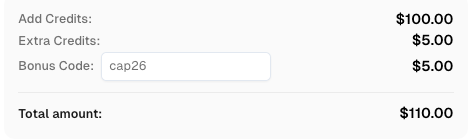
Use bonus code CAP26 when topping up your CapSolver account to get an extra 5% bonus on every recharge — with no limits.
Redeem it now in your CapSolver Dashboard
Fix the Agent Contract
If an LLM is driving Selenium, the agent contract should include blocked_by_cloudflare as a terminal or recoverable state. A Selenium agent blocked by Cloudflare should not keep clicking, refreshing, or resubmitting forms without a plan. Return the block type, retry count, current URL, and next safe action.
Browser automation also creates compliance risk. Authorized QA, monitoring, and internal workflow testing are different from attempting to access restricted systems. If Cloudflare is enforcing access policy, respect it.
Inspect Selenium-Specific Detection Signals
A Selenium agent blocked by Cloudflare should be inspected at the browser layer before you change infrastructure. Capture the user agent, browser version, headless mode, viewport size, locale, timezone, cookie state, and extension list. Then compare the blocked run with a known-good manual run from the same network and account. The goal is to identify what changed, not to stack more retries on top of the same failing session.
The W3C WebDriver specification explains the automation interface that Selenium implements. Cloudflare and other risk systems can evaluate many signals beyond the DOM. The presence of WebDriver alone is not the only issue. Short sessions, repeated failures, unusual navigation order, missing history, and poor IP reputation can all contribute. Selenium’s own browser configuration documentation is worth reviewing so your test environment is deliberate rather than accidental.
For Turnstile pages, collect widget parameters and keep the Selenium context stable throughout the Cloudflare Turnstile workflow. For JavaScript-heavy challenge pages, a Cloudflare Challenge in Node.js implementation can clarify the token and session sequence even if your production runner is Selenium. Browser-profile tools such as MuLogin, AdsPower, and Genlogin are useful references when the root problem is profile continuity rather than a missing click.
Fix Navigation Order and Wait Targets
Many Selenium Cloudflare failures are not caused by the challenge itself. They are caused by the agent acting before the page is ready. A Selenium agent blocked by Cloudflare may click a login button while Cloudflare is still validating JavaScript, or it may scrape the page while the challenge iframe is active. Replace fixed sleeps with explicit wait conditions that target the post-challenge page. A condition like “dashboard header is visible” is better than “sleep 10 seconds.”
Also avoid automatic refresh loops. Refreshing a Cloudflare challenge repeatedly can reset validation and make the session look worse. If the page has not advanced after a reasonable timeout, record the state and stop. If the workflow is your own QA environment, adjust Cloudflare rules for the test environment instead of forcing production controls. Cloudflare documents rule and challenge behavior in Cloudflare WAF documentation, which is useful when the protected site is under your control.
Check Network Reputation and Rate Limits
A Selenium agent blocked by Cloudflare may be carrying network-level risk. Shared datacenter IPs, repeated traffic bursts, and mixed geolocation can all trigger additional checks. Do not rotate IPs randomly during a single browser session. If you use proxies for an authorized workflow, keep routing consistent for the session and document the provider, region, and pool. For web scraping or public-data monitoring, review CapSolver’s best proxy services and web scraping FAQ as supporting context, but still respect the target site’s rules.
Rate control is part of the fix. A Selenium agent blocked by Cloudflare should use a queue, not a tight loop. Add concurrency limits per domain, exponential backoff for 429 or challenge responses, and a hard ceiling on failed attempts per account. These controls protect your own accounts and reduce load on the target system.
When to Use a Solver Step
Use a solver step only after you have confirmed that the workflow is allowed and the challenge type is supported. For Turnstile, collect the widget parameters and keep the same browser session. For a managed challenge or hard block, confirm whether the task should proceed at all. A solver cannot make an unauthorized workflow acceptable, and it cannot fix a site policy that intentionally blocks your network or account.
For teams running internal automation, the cleanest solution may be an allowlisted test environment, a dedicated QA rule, or a service account with documented access. For third-party authorized automation, use the minimum traffic needed, store only necessary logs, and stop when Cloudflare returns a hard denial.
Create a Minimal Reproduction
When a Selenium agent is blocked by Cloudflare, create a minimal reproduction before changing the production workflow. Use one URL, one browser profile, one network route, and one account. Disable unrelated agent actions. Record the page title, final URL, status code if available, screenshot, and browser console errors. Then repeat the same path manually from the same environment. This comparison often exposes simple causes: the agent clicks too early, the browser starts with an empty profile, cookies are not persisted, or a proxy route changes mid-session.
Keep the reproduction small enough to share with the site owner or internal security team when you control the protected property. If Cloudflare is configured by your organization, the security team can inspect events and rule matches. If a partner owns the site, the reproduction gives them clear evidence without dumping credentials or sensitive page content.
Handle Login and Checkout Pages More Carefully
Login and checkout flows trigger stricter risk controls than ordinary pages. A Selenium agent blocked by Cloudflare on these pages should slow down and reduce ambiguity. Confirm that the account is allowed to automate the task. Confirm that the agent is not submitting invalid credentials repeatedly. Confirm that payment, inventory, or personal data rules are respected. Cloudflare’s challenge may be protecting exactly the kind of workflow that should require stronger review.
For authorized QA, use dedicated test accounts and non-production payment paths. For production monitoring, prefer synthetic endpoints or status APIs when the site owner provides them. The Selenium agent should be the last option for protected transactional pages, not the default. That design choice reduces CAPTCHA exposure and makes remaining challenges easier to diagnose.
Conclusion
A Selenium agent blocked by Cloudflare needs diagnosis across browser state, challenge type, waits, network quality, and authorization. Fix Selenium timing first, keep the session stable, and use challenge tooling only when the workflow is permitted. For compliant browser automation that needs CAPTCHA or Cloudflare challenge handling, CapSolver can be part of a controlled recovery path.
FAQ
Why is my Selenium agent blocked by Cloudflare immediately?
It may be a site policy, network reputation issue, missing session history, or browser automation signal. Capture the exact status and page state first.
Can Selenium waits reduce Cloudflare blocks?
They can reduce false failures and premature submissions. They do not override a site’s access policy.
What should the agent do after a Cloudflare 403?
Stop, log the response, and verify authorization. Do not keep retrying a hard block.
Is Cloudflare Turnstile the same as a generic CAPTCHA?
No. Turnstile has its own widget and token flow, so the agent must collect the correct page parameters and preserve session context.
More
CloudflareAug 31, 2026
Cloudflare Challenge Diagnostics: Session Identity and Verification
Diagnose Cloudflare Challenge flows with AntiCloudflareTask, stable proxy and user agent identity, fresh HTML, clearance handling, validation, and safe errors.

CloudflareAug 28, 2026
How to Solve Cloudflare Challenge for Property Price Monitoring
Build reliable property price monitoring with official datasets, comparable observations, Cloudflare Challenge Solving, evidence, and controlled alerts.