🎉NEWCapSolver for AI agents-MCP, agent tools, and SDK integrations

Ethan Collins
AI Agent Workflow Engineer
Published Jul 16, 2026
Updated Jul 16, 2026 · min read
If you are searching for scrapy cloudflare turnstile solver, the reliable pattern is not a loose prompt or an endless retry loop. Use CapSolver behind a narrow automation tool, pass only the challenge evidence required for the documented task type, apply the result in the same workflow context, and verify that the application actually moved forward. That gives searchers the practical answer fast while keeping the rest of the article useful for implementation teams.
Scrapy developers and data teams that run permitted crawls and need a clean way to recover when a Cloudflare Turnstile checkpoint appears. The goal is not to bypass arbitrary access controls. The goal is to make legitimate automation easier to operate when a permitted workflow includes a CAPTCHA or anti-bot verification step.
Scrapy is optimized for HTTP pipelines, not interactive challenge pages. Forcing all recovery into spider code creates brittle retries. A better design is to detect Turnstile in downloader middleware, hand the session to a recovery worker, and resume only after verification. CapSolver is useful here because it can be wrapped as a deterministic service call with clear inputs, a bounded wait period, and a structured output. That is exactly what SEO landing pages for automation topics should explain: the searcher needs both the keyword answer and the operational shape of a workflow they can trust.
A high-quality implementation separates three responsibilities. The agent or workflow detects that the page is blocked. The CapSolver integration solves the specific challenge type. The verifier checks that the target workflow accepted the result. Keeping those responsibilities separate makes the system easier to debug, safer to run, and easier to expand across different CAPTCHA types.
This flow is deliberately conservative. If the challenge repeats, the best next step is not more retries. Record the challenge type, target hostname, elapsed time, attempt count, and final state. Then send the case to a review queue or adjust the integration with fresh evidence.
class TurnstileRecoveryMiddleware:
    async def process_response(self, request, response, spider):
        if b"cf-turnstile" not in response.body and b"turnstile" not in response.body.lower():
            return response

        attempt = request.meta.get("captcha_attempt", 0)
        if attempt >= 1:
            spider.logger.warning("Turnstile repeated for %s", request.url)
            return response

        handoff = build_handoff_packet(request, response)
        solved = await spider.capsolver_worker.solve_turnstile(handoff)
        if solved.state != "resume":
            return response

        retry = request.replace(dont_filter=True)
        retry.meta["captcha_attempt"] = attempt + 1
        retry.meta["captcha_recovery_id"] = solved.recovery_id
        return retry
Treat this code as the workflow skeleton rather than a universal drop-in. Production code should load the CapSolver API key from a secret manager or protected environment variable, validate input hostnames, and centralize provider errors so the rest of the automation system gets one clean state model.
| Quality Gate | What To Check | Why It Matters |
|---|---|---|
| Domain allowlist | Only approved hostnames can call the solver. | Prevents generic or accidental use. |
| Attempt budget | One solve attempt and one workflow retry by default. | Stops loops and makes failures visible. |
| Context consistency | Browser, proxy, user-agent, cookies, and URL stay aligned. | Most CAPTCHA failures come from context drift. |
| Application verification | Route, response, selector, or item extraction proves progress. | Provider success is not the same as business success. |
| Redacted logs | Store state, elapsed time, and reason codes, not secrets. | Keeps debugging useful without leaking tokens. |
These gates also protect the SEO value of the article. Pages about CAPTCHA automation are easy to make thin if they only repeat API names. A useful page needs implementation context, routing decisions, failure handling, and verification criteria. That is why each workflow in this batch includes tool boundaries, example payloads, operational controls, and FAQ sections.
The most important mistake is measuring the wrong success event. A solver can return a ready response while the page still rejects the token, resets the widget, or shows another challenge. Always measure the application result after solve. For browser workflows, that may be a route change, a visible success state, or a network response. For crawler workflows, it may be a successful item extraction. For no-code workflows, it may be a downstream record or HTTP response field.
This page targets the primary keyword scrapy cloudflare turnstile solver while supporting related searches around CapSolver, browser automation, AI agents, no-code workflows, and CAPTCHA recovery. To strengthen the cluster, add contextual internal links to these related articles:
Use descriptive anchors instead of repeating the exact same keyword every time. A healthy cluster should help readers move from broad architecture pages to stack-specific tutorials and provider-comparison pages.
Redeem Your CapSolver Bonus Code
Boost your automation budget instantly!
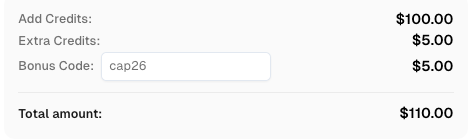
Use bonus code CAP26 when topping up your CapSolver account to get an extra 5% bonus on every recharge - with no limits.
Redeem it now in your CapSolver Dashboard
It can be production-ready when it is limited to permitted workflows, uses a hostname allowlist, protects secrets, and verifies the application result after solving. The unsafe version is a generic solver endpoint that accepts arbitrary URLs and retries indefinitely.
Log challenge type, hostname, correlation ID, attempt count, elapsed time, provider status, and final workflow state. Avoid raw tokens, cookies, passwords, full screenshots with personal data, or unredacted HTML dumps.
Start with one solve attempt and one application retry. If the same challenge appears again, stop and inspect the evidence. Repeated challenges usually indicate wrong task routing, expired tokens, callback issues, or inconsistent browser context.
CapSolver gives the automation stack a purpose-built solver layer. Your code can focus on detection, routing, verification, and operations instead of trying to manually reproduce every CAPTCHA workflow.
Ethan Collins
AI Agent Workflow Engineer
Building clearer handoffs between AI agents and tools.
ABOUT THE AUTHOR
Fix the AntiCloudflareTask dynamic DNS proxy error. Learn why a 10-minute sticky session can use different exit IPs and how to verify both request paths.

Diagnose Turnstile invisible mode problems by checking script loading, execution, token delivery, and validation before adding a solver to automation.