🎉NEWCapSolver for AI agents-MCP, agent tools, and SDK integrations

Aloísio Vítor
Image Processing Expert
Published Jun 17, 2026
Updated Jun 17, 2026 · min read
IP-blocked plus CAPTCHA errors in AI agents are usually network and session incidents before they are CAPTCHA incidents. CapSolver can support permitted challenge handling, but the agent first needs to understand whether the target refused the route, rate-limited the traffic, challenged the browser, or rejected the account. Put those labels in the run log before changing infrastructure. A proxy swap that drops cookies, changes geography, or creates a new device profile may make the next challenge harder. The reliable fix separates route reputation, browser continuity, and stop policy.
Begin by classifying the first negative response. IP-blocked plus CAPTCHA errors in AI agents can start as a 403, a 429, a custom block page, or a visible CAPTCHA widget after several redirects. A CAPTCHA widget is not proof that CAPTCHA was the root cause. The site may be challenging a route, an ASN, a geographic mismatch, a burst of requests, or a session that changed identity mid-run.
MDN defines HTTP 403 Forbidden as a server refusal to authorize access. When an agent receives 403, the next action should be review or stop unless the domain owner has approved an alternative path. CapSolver's 403 response status troubleshooting language helps separate forbidden access from ordinary automation errors.
Write the classification into the agent state: route_refused, rate_limited, captcha_widget, clearance_missing, or account_policy. IP-blocked plus CAPTCHA errors in AI agents become much easier to fix when the planner sees a typed state instead of a screenshot.
Give the agent a route label before it calls any CAPTCHA service. The label should be based on status code, retry timing, target domain, route ID, and account class. It should not infer that a solver failed just because a challenge was visible.
{
  "targetDomain": "example.com",
  "routeId": "residential-us-east-07",
  "status": 429,
  "retryAfter": "120",
  "routeDecision": "cooldown",
  "solverDecision": "not_started"
}
This object prevents IP-blocked plus CAPTCHA errors in AI agents from being mislabeled as token failures. A route under cooldown should stop before the browser asks for another challenge result.
Rate pressure is different from a bad token. If several agents share the same route, retry failed tasks, or reload challenge pages, a site may return 429 or escalate to stronger traffic validation. The fix is to reduce pressure before solving more challenges. A route that is cooling down should not receive new tasks from a different worker just because the original worker stopped.
RFC 6585 introduced HTTP 429 Too Many Requests as a status for rate limiting, and RFC 9110 describes Retry-After response timing for wait guidance. Use those signals to create a shared cooldown key by domain, route pool, account, and task type. CapSolver's request-rate limiting page uses the same operational idea, even when your policy chooses waiting rather than more attempts.
Agents should respect cooldown before opening a browser. That matters because some challenge pages load several assets and scripts, creating extra requests before the agent has even made a decision. IP-blocked plus CAPTCHA errors in AI agents often decline when the fleet stops starting doomed sessions.
Use one cooldown record per domain and route class. The exact datastore can vary, but the contract should be stable enough that every agent checks it before opening a protected page.
{
  "key": "cooldown:example.com:residential-us-east",
  "until": "2026-06-17T02:05:00Z",
  "sourceStatus": 429,
  "sourceHeader": "Retry-After",
  "nextAction": "skip_domain_until_expiry"
}
This code-shaped contract is intentionally outside the CapSolver API. It controls traffic pressure before any CAPTCHA task is created. The solver layer should receive fewer, better-qualified requests rather than a stream of retries from blocked routes.
A proxy change can be valid, but it is not a magic reset. If an AI agent switches IP while keeping the same account cookies, the target may see an impossible travel pattern. If it switches IP and loses cookies, the target may see a new device trying to resume a protected flow. Either way, IP-blocked plus CAPTCHA errors in AI agents can get worse.
Define route scope before the run. One account, one browser context, one proxy route, one user-agent family, and one timezone should stay together through a protected task unless the site owner has approved a different model. CapSolver's proxy setup for automation is relevant because proxy quality, geography, and stability affect the session evidence seen by risk systems.
Cookies and origin state should be treated as part of identity. RFC 6265's cookie scope and storage rules explains why storage is tied to domain and path. Do not solve a challenge on one route and submit a protected request on another unless the target workflow explicitly supports it.
If a route passes your policy check and the page presents a supported challenge, keep the task payload limited to fields documented by CapSolver. The official createTask documentation defines the task wrapper, and CapSolver's reCAPTCHA v2 task documentation shows the approved type, websiteURL, and websiteKey shape.
{
  "clientKey": "YOUR_API_KEY",
  "task": {
    "type": "ReCaptchaV2TaskProxyLess",
    "websiteURL": "https://www.google.com/recaptcha/api2/demo",
    "websiteKey": "6Le-wvkSAAAAAPBMRTvw0Q4Muexq9bi0DJwx_mJ-"
  }
}
Keep route IDs, proxy selection notes, and block reasons in your own agent logs. Do not invent proxy or reputation fields inside the CapSolver payload unless the official documentation for the selected task type requires them.
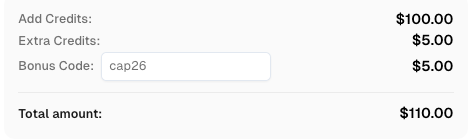
Redeem Your CapSolver Bonus Code
Boost your automation budget instantly!
Use bonus code CAP26 when topping up your CapSolver account to get an extra 5% bonus on every recharge — with no limits.
Redeem it now in your CapSolver Dashboard
Fleet behavior often causes the block. Ten agents executing the same prompt can hit the same login, search, or product page with similar timing. Even if each agent stays below a local retry limit, the combined traffic can look like coordinated automation. IP-blocked plus CAPTCHA errors in AI agents should trigger a fleet-level review, not only a single-session repair.
OWASP's automated threat taxonomy is useful here because it frames repeated automated actions as a risk category. Add concurrency budgets by domain and path. Queue protected actions. Random delay alone is weak; controlled scheduling, backoff, and task deduplication are stronger.
CapSolver's proxy speed and success benchmarks can help teams measure infrastructure honestly. Track success by route, account, challenge type, response status, and cooldown compliance. A route that needs constant challenge handling is not healthy.
Some blocks are not repairable by automation. A site may restrict scraping, require a commercial API, block a region, or refuse an account. IP-blocked plus CAPTCHA errors in AI agents need escalation rules that distinguish permitted recovery from access conflict. The rule should be written before the agent meets the block.
A practical rule has four levels. Level one is a transient challenge with stable session evidence and an approved solver path. Level two is rate pressure with a cooldown. Level three is access refusal requiring human review. Level four is prohibited or unclear access, where the agent must stop. CapSolver's CAPTCHA appearing with a proxy page is useful because it explains why changing route alone may not reduce challenges.
Security programs often prefer explicit access decisions. OWASP ASVS describes application verification controls for predictable handling of authentication and authorization. Apply the same discipline to automation: no hidden retries after refusal, no private data access, and no continuing when permissions are unknown.
The final check is not simply a successful page load. A real recovery reduces IP-blocked plus CAPTCHA errors in AI agents without hiding denials. Measure route-level 403 rate, 429 rate, challenge rate, token acceptance, task completion, cooldown adherence, and stop decisions. If challenge solving rises while completion stays flat, the system is spending more without fixing the root cause.
Run A/B tests carefully. Compare one controlled route and one controlled account under the same permission model. Do not test by spraying more routes at a protected site. Use CapSolver's AI automation use cases to define success as completion with fewer risk events, not just fewer visible errors.
Keep an incident note for every hard refusal. Include domain, route pool, account class, first status, cooldown applied, review outcome, and final agent action. Those records are valuable when the same prompt returns later and the agent wants to repeat a blocked path. The best IP-blocked plus CAPTCHA errors in AI agents fix is one the planner can remember and respect.
Keep a route recovery ledger for every protected domain. It should record route pool, account, task class, first negative status, CAPTCHA appearance, cooldown start, cooldown end, action taken, and final result. IP-blocked plus CAPTCHA errors in AI agents become less mysterious when the team can see that one route pool repeatedly creates 429 events while another creates clean stops.
Store cooldowns where every worker can read them. A local in-memory delay protects only one process. A shared key in Redis, a queue system, or the workflow database prevents a second agent from restarting the same blocked task immediately. Include enough scope in the key to avoid freezing unrelated domains, but keep it broad enough to reduce real pressure.
Create separate counters for challenge attempts and access refusals. A challenge attempt counter limits approved solving. An access-refusal counter prevents the agent from treating 403 as a retryable CAPTCHA problem. When those counters are merged, operators may accidentally spend solver budget against a route that the target has already refused.
Use post-incident labels in training examples and prompts. If a previous run ended with route_refused, the planner should not rediscover that fact through live traffic. It should start with the known stop or review state. This is especially important for recurring AI-agent tasks that revisit the same sites every day.
Review route changes as releases. Changing proxy vendor, geography, ASN mix, or browser connection behavior can alter detection even when the application code is unchanged. Treat that change like a deployment: test one domain, monitor challenge rate, and rollback if IP-blocked plus CAPTCHA errors in AI agents rise across the cohort.
Compare first failure time across agents. If every worker receives a CAPTCHA after the same number of pages, the issue may be task pacing or target policy. If only one route pool fails immediately, the issue is probably infrastructure. If failures follow account reuse, the issue is session or account reputation.
Document what not to retry. Login refusals, restricted records, payment steps, private dashboards, and explicit access denials should not flow into the same retry queue as public pages. A negative list gives the planner a concrete stop rule when IP-blocked plus CAPTCHA errors in AI agents appear near sensitive workflows.
Check successful runs for hidden damage. A run can finish while creating extra challenge events, extra account locks, or duplicate requests. Review server-side callbacks, target response statuses, and task side effects after a recovery change. Completion without clean evidence is not a stable repair.
Add route health to deployment dashboards. A new agent version should not be called healthy if it completes tasks by consuming more challenge attempts or triggering more cooldowns. Health should include lower refusal rates, stable completion, and fewer unresolved IP-blocked plus CAPTCHA errors in AI agents.
Fixing IP-blocked plus CAPTCHA errors in AI agents means separating route refusal, rate pressure, browser continuity, and challenge handling. Classify 403 and 429 before changing infrastructure, keep proxy identity aligned with session scope, reduce fleet concurrency, and stop when authorization is unclear. When approved workflows need CAPTCHA support after those controls are in place, CapSolver can handle the challenge layer while your agent policy controls the route.
The new IP may not match the existing account, cookies, geography, timezone, or browser fingerprint. A route change without session planning can look less coherent than the original blocked route.
No. Frequent rotation can create identity drift and more challenges. Use stable route scope, classify the first failure, and rotate only under a policy that preserves or intentionally resets session state.
The agent should create a shared cooldown for the domain, route pool, account, and task type. It should not immediately retry through another worker that uses the same target pressure pattern.
Stop when the response is a hard refusal, the target policy is unclear, private or restricted data is involved, or the configured challenge budget has been reached.
Aloísio Vítor
Image Processing Expert
Interpreting the visual signals behind web workflows.
ABOUT THE AUTHOR
Compare Browser Use CAPTCHA handling in local and cloud browsers, learn where CapSolver fits, and choose a practical setup for authorized agent workflows.

Find CapSolver MCP in the Official MCP Registry, install version 0.1.3 with uvx or pip, configure a local client, and verify the stdio tools.