
How to Avoid Cloudflare Error 1020 When Web Scraping?
Answer
Cloudflare Error 1020 occurs when a website’s firewall blocks your request due to suspicious activity. To avoid it, reduce request frequency, rotate IPs, and mimic real user behavior. Combining proxy management, browser fingerprinting, and CAPTCHA-solving tools helps handle detection and maintain stable scraping sessions.
Detailed Explanation
Cloudflare Error 1020 is an “Access Denied” response triggered by firewall rules configured on a protected website. It means your request matched a rule designed to block potentially malicious traffic, such as bots or automated scripts.
In web scraping scenarios, this error is commonly caused by abnormal request patterns-such as sending too many requests in a short time, using a single IP repeatedly, or lacking realistic browser headers. Cloudflare’s security management systems analyzes multiple signals including IP reputation, request frequency, TLS fingerprints, and behavioral patterns to determine whether traffic is human or automated.
Additionally, factors like missing cookies, inconsistent session data, or headless browser fingerprints can increase the likelihood of triggering security rules. Unlike simple rate limiting, Error 1020 indicates a direct firewall rule violation, meaning your request has been explicitly denied rather than temporarily throttled.
Solutions / Methods
- Throttle Request Rate:Avoid sending rapid, repetitive requests. Introduce delays, random intervals, and concurrency limits to simulate human browsing behavior and reduce the risk of triggering rate-based firewall rules.
- Use Rotating Proxies and Realistic Headers:Rotate residential or mobile IPs and vary User-Agent strings, cookies, and headers. This helps distribute traffic and prevents detection based on IP reputation or repetitive request signatures.
- Leverage CAPTCHA Solving and security challenge handling Tools:Advanced protections often include CAPTCHA challenges or behavioral checks. Solutions like CapSolver can help automatically solve CAPTCHA challenges and emulate real user interaction, improving success rates when accessing protected pages.
Best Practice / Tips
- Use headless browsers with stealth plugins to reduce fingerprint detection
- Maintain session consistency (cookies, headers, TLS fingerprint)
- Monitor response codes and adapt scraping logic dynamically
- Avoid accessing sensitive endpoints like login or admin paths unnecessarily
👉 Related:
- Bypass Cloudflare
- Web Scraping Without Getting Blocked
- How to Solve Cloudflare Error Codes
- Cloudflare Challenge Solution
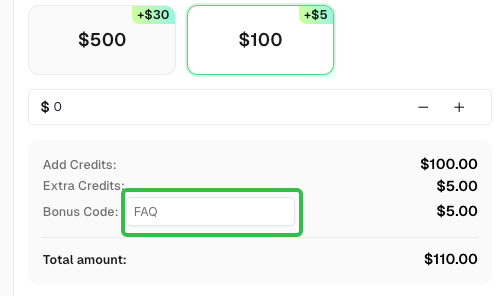
Use code
FAQwhen signing up at CapSolver to receive an additional 5% bonus on your recharge.
CapSolver FAQ — capsolver.com