🎉NEWCapSolver for AI agents-MCP, agent tools, and SDK integrations

Ethan Collins
AI Agent Workflow Engineer
Published Jun 15, 2026
Updated Jun 15, 2026 · min read
Selenium reCAPTCHA failures often look like a visual challenge, but the root cause is frequently earlier in the browser state machine. A stale locator, impatient wait, repeated login request, or changed session can push a normal validation step into a block. CapSolver can help with approved CAPTCHA handling, but a Selenium agent blocked by reCAPTCHA needs structured triage first. Inspect element stability, frame switches, network status, cookie continuity, and retry pacing before treating the CAPTCHA as isolated. The fastest reliable fix is to make Selenium stop acting like every page state is ready.
Start with classification, not another click. A Selenium agent blocked by reCAPTCHA may be seeing one of four states: the reCAPTCHA iframe is present, the site returned a rate-control response, the backend rejected credentials or form state, or the DOM changed and Selenium clicked the wrong element. These states require different fixes. The W3C definition of WebDriver browser automation is command based, so the script only knows what you instruct it to observe.
Create a state classifier after every major action. It should read current URL, top-level title, visible error text, iframe count, last response status, and whether the expected form is still attached. If a reCAPTCHA frame appears, pause and hand off to the approved challenge handler. If a rate-control page appears, cool down. If a stale element exception appears, refresh locators. If the backend returns a credential error, stop the account attempt.
CapSolver's Selenium CAPTCHA integration fits best after classification. It should not be the default response to every failed click. A clear state machine prevents the Selenium agent blocked by reCAPTCHA problem from turning into duplicate submissions and account risk.
Fixed sleeps are a common source of false reCAPTCHA blocks. They are either too short, which makes Selenium click during hydration, or too long, which makes tokens and page state age. Use waits that prove the form is ready: element attached, visible, enabled, stable in position, and backed by the expected route. The CapSolver page on Selenium WebDriver gives the right mental model: Selenium drives browser actions, but your script owns readiness rules.
Wait for the reCAPTCHA iframe deliberately. Some pages inject it only after a field is focused or after a risk check returns. If the iframe appears, switch frame context only when needed, and return to the main document before submitting. If the iframe disappears after a token is produced, confirm the hidden response field or callback fired. A Selenium agent blocked by reCAPTCHA often fails because the script submits while still in the wrong frame or before the callback has updated the page.
Use page-load waits for navigation, but do not confuse page load with application readiness. A single-page app can finish the document load event and still be rendering validation controls. CapSolver's Selenium page-load timing FAQ is a good reminder to wait on the condition that matches the next action.
Network status codes tell the agent when to stop. MDN defines HTTP 429 rate limits as too many requests in a given time window, and a Selenium retry loop can trigger it without noticing because the page still shows a familiar form. A Selenium agent blocked by reCAPTCHA after several fast attempts may be blocked because of request pressure, not because the solver or locator is broken.
Read the last meaningful response after each submit. If the login endpoint returns 429, pause the account and route. If it returns 403, classify whether it is authorization, risk control, or a challenge page. If it returns 200 with an inline error, preserve the error text and stop duplicate submits. The HTTP semantics in RFC 9110 status code behavior make these statuses part of the application contract, not incidental noise.
Backoff should be explicit. Use a retry budget per account, per IP route, and per form action. Do not let the agent keep retrying because the page still has a visible button. The CapSolver HTTP 429 troubleshooting page can inform the operational policy, but your Selenium controller must enforce it.
Record the retry reason as a required field. A retry after stale element, a retry after network timeout, and a retry after challenge detection are not the same event. If the reason is empty, block the retry. This small rule makes dashboards honest and prevents a Selenium agent blocked by reCAPTCHA from hiding rate pressure behind generic automation failures.
Also store the server clock seen in response headers when available, because cooldown math fails when workers disagree about time.
Redeem Your CapSolver Bonus Code
Boost your automation budget instantly!
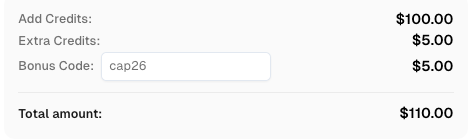
Use bonus code CAP26 when topping up your CapSolver account to get an extra 5% bonus on every recharge — with no limits.
Redeem it now in your CapSolver Dashboard
Session continuity matters more than many teams expect. If Selenium opens the form through one proxy, calls an API through another, clears cookies after a failed field validation, or recreates the browser between token and submit, the backend can see an impossible journey. The Google explanation of reCAPTCHA assessment interpretation shows that risk decisions are contextual. A Selenium agent blocked by reCAPTCHA should therefore be debugged as a full session, not a single widget.
Persist cookies and local storage through the protected flow. If the site uses device binding, keep user agent, viewport, locale, timezone, and route stable. Do not rotate IP addresses between the page that loads the site key and the request that verifies the token. That kind of identity drift is easy to create in distributed test infrastructure and hard to see from Selenium logs alone.
When a session has clearly failed, close it and start a clean attempt after the cooldown policy allows it. Do not keep layering new tokens on a browser that already has contradictory cookies, rejected CSRF fields, or a risk-control page in history. CapSolver's session persistence guidance for browser workflows is written for Puppeteer, but the same principle applies to Selenium.
Grid and remote-driver setups need extra care. A Selenium node may be recycled between tasks, or a remote browser may start with a profile that differs from the controller's assumptions. Record node ID, browser version, profile path, proxy route, and cookie jar reference with every blocked attempt. If only one node produces the Selenium agent blocked by reCAPTCHA pattern, the problem may be an environment drift rather than the target site.
Locator drift can masquerade as a CAPTCHA block. A redesigned page may keep the same button text while moving the form, adding an overlay, changing an iframe name, or replacing an input after hydration. Selenium then sends keys to an old element or clicks a covered control. The result is repeated invalid attempts, which can lead to the Selenium agent blocked by reCAPTCHA state.
Use stable locators and assert the context around them. XPath can be helpful when text and hierarchy matter; CapSolver's Selenium XPath locator FAQ covers that pattern. Pair locators with screenshots and DOM excerpts when a block appears. If the selector points to the wrong form, challenge handling will only hide the real regression.
Add a canary check before any protected submit. Confirm the account field contains the expected value, the submit button belongs to the current form, no modal overlays the button, and the challenge state is known. This reduces accidental repeated traffic and gives the agent a clean reason to stop.
Frame handling deserves its own assertion. Selenium scripts often switch into a challenge iframe and forget to return to default content before reading the form result. Add a rule that every frame switch is paired with an explicit return and a screenshot. If the screenshot after a handoff still shows the challenge frame, the next action should not be another submit. It should be a classified failure with the frame name, URL, and last command.
Use challenge handling only after the page state is classified and the workflow is authorized. OWASP describes automated interaction risks in the Automated Threats to Web Applications project, which is a useful reminder that automation can affect real services. A Selenium agent blocked by reCAPTCHA should respect account rules, robots or access policies where relevant, and customer agreements.
For permitted workflows, connect the challenge handler to a narrow state. CapSolver's Selenium reCAPTCHA workflow can be part of that path, but the script should still validate the post-challenge result. A successful token is not proof that login, checkout, or extraction succeeded. It is only one step in the browser journey.
Make the post-challenge validation concrete. The agent should wait for an expected URL, a known success element, or a specific API response. If the page stays on the same form, capture the visible error and stop. This keeps a Selenium agent blocked by reCAPTCHA from spending the retry budget on a workflow that already reached a business-rule denial.
Finally, keep human escalation available. Some flows involve account recovery, unusual login review, payment verification, or a policy decision that automation should not decide. The state machine should return a clear handoff reason and the evidence bundle. That is a better operational outcome than making Selenium imitate a user through a process that requires real authorization or judgment.
A Selenium agent blocked by reCAPTCHA needs a browser-state repair, not blind retries. Classify the page, replace fixed sleeps with readiness checks, respect 429 and 403 signals, preserve one session, and verify locators before challenge handling. This approach reduces noise and keeps automation within responsible boundaries. When a permitted workflow genuinely needs CAPTCHA support after those checks, use a controlled integration and close the successful path with CapSolver.
It may be sending repeated invalid submits, using stale locators, changing session identity, or triggering rate controls. Count the last responses and page states before assuming the challenge is random.
No. A 429 response means the agent should pause according to a cooldown policy. Retrying immediately can make future challenges and account controls more severe.
Wait for element attachment, visibility, enabled state, stable layout, correct frame context, hidden token field changes, and the expected network response. Fixed sleeps are weaker than evidence-based waits.
No. If Selenium clicks the wrong button or submits the wrong form, the challenge handler is solving the wrong problem. Repair locators and form assertions first.
Ethan Collins
AI Agent Workflow Engineer
Building clearer handoffs between AI agents and tools.
ABOUT THE AUTHOR
Use CapSolver getToken for supported reCAPTCHA tasks with a documented JSON request, a cURL example, direct results, and clear token-validation steps.

Use reCAPTCHA test keys in QA with separate environments, backend validation checks, negative tests, and release guards that keep test settings out of production.