🎉NEWCapSolver for AI agents-MCP, agent tools, and SDK integrations

Ethan Collins
AI Agent Workflow Engineer
Published Jul 15, 2026
Updated Jul 15, 2026 · min read
A Playwright reCAPTCHA solver is most reliable when it treats CAPTCHA handling as a page recovery step. Your script should detect that a permitted workflow has reached a reCAPTCHA gate, ask CapSolver to solve the challenge, fill the token in the same Playwright page, then verify that the application actually moved forward. This approach is especially useful for QA, owned form testing, internal workflows, and browser agents that need a deterministic tool instead of a vague "try again" prompt.
The important design choice is to keep the model or orchestrator away from security-sensitive details. The agent may decide that a step needs solving, but code should own the Playwright page, the API key, and the retry policy.
Model the workflow as four states:
| State | What The Script Checks | Expected Output |
|---|---|---|
ready |
Page loaded and the target action is allowed. | Continue normally. |
challenge |
reCAPTCHA iframe, sitekey, or form token field is present. | Call the solver. |
filled |
Token was applied or the page method reports a filled result. | Submit or continue. |
blocked |
Challenge repeats after the retry budget. | Stop and record evidence. |
This prevents a Playwright reCAPTCHA solver from becoming an infinite loop. If the page does not advance after one or two attempts, the correct result is an auditable failure, not more retries.
CapSolver's AI SDK documentation describes browser-mode methods such as detect, get_captcha_info, solve, and solve_on_page. For Playwright, the compact path is to pass the page to solve_on_page(page) and let the SDK inspect supported CAPTCHA types on the active page.
import os
import asyncio
from capsolver_core import create_capsolver
from playwright.async_api import async_playwright

async def run_checkout_test(url: str) -> dict:
    cap = create_capsolver(api_key=os.environ["CAPSOLVER_API_KEY"])
    async with async_playwright() as p:
        browser = await p.chromium.launch()
        page = await browser.new_page()
        await page.goto(url, wait_until="domcontentloaded")

        results = await cap.solve_on_page(page)
        solved = []
        for item in results:
            solved.append({
                "type": str(item.info.type),
                "filled": item.filled,
                "error": item.error,
            })

        if any(x["filled"] for x in solved):
            await page.locator("button[type=submit]").click()
            await page.wait_for_load_state("networkidle")

        await browser.close()
        return {"solved": solved}

if __name__ == "__main__":
    print(asyncio.run(run_checkout_test("https://example.com/form")))
Keep the URL allowlisted in real use. A Playwright reCAPTCHA solver should not browse arbitrary user-provided domains unless your policy explicitly permits that domain.
After solving, verify a business signal instead of only checking that a token exists. Useful checks include the next route, a success toast, an expected API response, or a hidden form field that changed from empty to populated. Log the page URL, challenge type, solver result, elapsed time, and the final application state. Do not log the API key or full tokens.
Link this page to related content about CrewAI reCAPTCHA solver, Selenium Turnstile solver, and n8n reCAPTCHA solver. Those pages serve different automation stacks but share the same operating principle: narrow tool, bounded retry, and post-solve verification.
Redeem Your CapSolver Bonus Code
Boost your automation budget instantly!
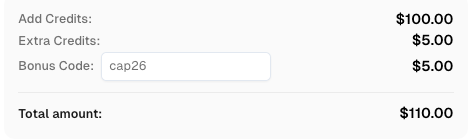
Use bonus code CAP26 when topping up your CapSolver account to get an extra 5% bonus on every recharge - with no limits.
Redeem it now in your CapSolver Dashboard
Browser mode is often simpler for Playwright workflows because the same page object carries the live DOM, frames, and token fields. Manual extraction can still be useful for lower-level integrations.
Start with one solve attempt and one application retry. If the challenge repeats, stop and inspect the evidence.
Yes, but the tool should enforce domain allowlists, timeout limits, and structured failure states.
Ethan Collins
AI Agent Workflow Engineer
Building clearer handoffs between AI agents and tools.
ABOUT THE AUTHOR
Find a reCAPTCHA callback through widget attributes, rendering code, and browser debugging. Check token handling without relying on fragile internal paths.

Use CapSolver getToken for supported reCAPTCHA tasks with a documented JSON request, a cURL example, direct results, and clear token-validation steps.