🎉NEWCapSolver for AI agents-MCP, agent tools, and SDK integrations

Rajinder Singh
Deep Learning Researcher
Published Jun 17, 2026
Updated Jun 17, 2026 · min read
An agent keeps solving CAPTCHAs wrong when it treats the visible challenge as the whole problem. CapSolver can support approved CAPTCHA-solving workflows, but the agent still has to identify the exact challenge, collect runtime parameters, bind the result to the right request, and verify backend acceptance. A result that looks correct in the browser may be rejected one step later. The fastest useful diagnosis is to locate the first mismatch: challenge type, parameters, token placement, session continuity, or planner loop.
The wrong solve often begins with wrong classification. An agent keeps solving CAPTCHAs wrong if it assumes every checkbox is the same, every image grid needs the same workflow, or every invisible challenge returns a token that can be pasted into any hidden field. Modern pages can combine reCAPTCHA, Turnstile, image tasks, custom risk prompts, and server-side checks in one journey.
Start with an explicit classification step. Record provider, version, iframe URL, visible widget state, site key or equivalent parameter, action name if present, callback behavior, and the protected request that follows. CapSolver's CAPTCHA concept vocabulary helps teams discuss the category without reducing everything to a generic challenge. CapSolver's CAPTCHA failure causes can then be used as a troubleshooting checklist after classification.
The W3C WebDriver specification discusses element interactability because automation can only act correctly on the element state it sees. CAPTCHA classification needs the same discipline: observe the rendered state before acting.
Save a classification snapshot immediately before the handoff. This snapshot is not a CapSolver request. It is local evidence that helps the agent prove which rendered challenge it is about to solve.
{
  "challengeId": "login-iframe-03",
  "provider": "recaptcha",
  "version": "v2",
  "frameUrl": "https://www.google.com/recaptcha/",
  "siteKeyObserved": true,
  "protectedRequest": "POST /login",
  "sessionStable": true
}
If this snapshot is missing, the agent should not request another result. An agent keeps solving CAPTCHAs wrong when it skips classification and treats a visible widget as enough evidence.
Static source is a weak source of truth. An agent keeps solving CAPTCHAs wrong when it extracts an old site key, misses a route-specific action, or reads a placeholder before the JavaScript framework hydrates. The page may render a different widget after login, after a failed submit, or after a risk score changes.
Capture widget context immediately before the solver handoff. For reCAPTCHA, record version, site key, action, callback, enterprise flag, and form target. For Turnstile, record site key, action, cData, callback, iframe URL, and target request. For image tasks, record instruction text and image grid state. CapSolver's reCAPTCHA type identification is useful when the page's challenge family is unclear.
Runtime state also depends on JavaScript completion. MDN's document readiness states can guide instrumentation, but readiness alone is not enough. Wait for the widget and protected form state, not just page load.
Only after the runtime parameters are captured should the agent build a CapSolver task. For reCAPTCHA v2, the official CapSolver reCAPTCHA v2 documentation shows the ReCaptchaV2TaskProxyLess task shape, while the official getTaskResult flow returns the result for a created task.
{
  "clientKey": "YOUR_API_KEY",
  "task": {
    "type": "ReCaptchaV2TaskProxyLess",
    "websiteURL": "https://www.google.com/recaptcha/api2/demo",
    "websiteKey": "6Le-wvkSAAAAAPBMRTvw0Q4Muexq9bi0DJwx_mJ-"
  }
}
Do not add guessed action names, callback fields, or page-specific metadata to this request unless the selected official task type documents them. Keep those values in the local incident packet.
A correct token can be used incorrectly. An agent keeps solving CAPTCHAs wrong if the result is placed in the wrong field, sent after the form has re-rendered, reused after a failed submit, or consumed by a request that no longer has the same cookies. Token output should have a one-attempt binding: token created, field set, submit sent, backend response received.
HTML form submission is stateful. The WHATWG definition of form data construction explains that the browser constructs a payload from controls at submit time. If the agent mutates a hidden field and then triggers a React rerender, the final payload may not include the value it thinks it inserted.
CapSolver's reCAPTCHA v2 product and reCAPTCHA v3 product map to different token expectations. Do not mix the flows. A v3-style action result will not repair a v2 checkbox callback failure, and a v2 result will not satisfy a score-based action policy.
Create one binding record for each result. The record should connect task ID, browser context, target request, token placement, submit time, and backend response. It should expire after one submit attempt.
{
  "challengeId": "login-iframe-03",
  "taskId": "capsolver-task-id",
  "browserContextId": "ctx-77",
  "submitRequest": "POST /login",
  "tokenAttached": true,
  "backendStatus": 200,
  "reuseAllowed": false
}
This record makes token reuse visible. If the backend rejects the submit, the next diagnostic question is where the binding broke, not whether to repeat the same solve.
Redeem Your CapSolver Bonus Code
Boost your automation budget instantly!
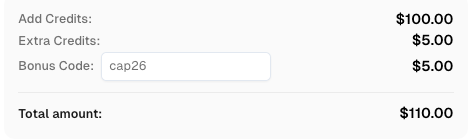
Use bonus code CAP26 when topping up your CapSolver account to get an extra 5% bonus on every recharge — with no limits.
Redeem it now in your CapSolver Dashboard
AI planners often misread progress. The widget disappears, so the planner assumes success. The hidden field is filled, so it submits again. The backend returns the same page, so it asks for another token. An agent keeps solving CAPTCHAs wrong when it has no state between visual completion and application acceptance.
Define progress levels. Level one is challenge detected. Level two is result received. Level three is result attached to the right browser session. Level four is protected request accepted. Level five is business action completed. A solver call only moves the agent to level two. CapSolver's breaking the CAPTCHA loop article is a useful companion for this planner design, because loop control is separate from solving quality.
Application security programs use layered verification for a reason. OWASP ASVS provides verification control categories that separate authentication, session, and input handling. Your agent should separate CAPTCHA output, session evidence, and final request acceptance in the same way.
Multiple challenges can exist in one page lifecycle. A login page may load an invisible token first, then display an image challenge after a failed password, then trigger a server-side risk check after submit. An agent keeps solving CAPTCHAs wrong if it sends a result for the first challenge to the second challenge's callback.
Use challenge IDs. Each detected widget should receive a local ID with provider, frame, parameters, render time, and target request. If the page re-renders, close the old challenge ID and create a new one. CapSolver's CAPTCHA success-rate factors can be tracked per ID, which is more useful than a single page-level success number.
Cookie continuity still matters during multi-challenge flows. MDN's HTTP cookie behavior shows why a backend may associate validation state with storage, not only with the submitted token. Do not open a fresh context between challenge IDs unless the workflow is intentionally restarting.
The best failure report names the broken boundary. An agent keeps solving CAPTCHAs wrong because classification failed, parameter capture failed, solver output failed, token placement failed, backend verification failed, or business logic failed. Those are different repairs. A generic retry hides the boundary.
Build a small failure taxonomy. wrong_provider, stale_parameters, missing_callback, token_not_submitted, session_changed, backend_rejected, and business_rule_rejected are enough to start. Store screenshots and request evidence for each. CapSolver's solver workflow can sit behind this taxonomy as the service step, while your agent owns the surrounding evidence.
Stop after repeated boundary-identical failures. If two attempts fail with token_not_submitted, do not buy a third token; fix form serialization. If two attempts fail with session_changed, fix browser context persistence. If two attempts fail with access refusal, stop and review permission. This is how a wrong-solve loop becomes an engineering ticket instead of a cost leak.
Create a compact incident packet whenever the agent keeps solving CAPTCHAs wrong. The packet should include the rendered widget screenshot, provider classification, runtime parameters, frame URL, callback name, token receipt time, field mutation, submit request, backend status, and planner decision. This evidence turns a vague complaint into a boundary-specific repair.
Do not let the planner summarize away the evidence. Store raw values in a structured log and let the model read a concise interpretation. If the model only receives a sentence such as CAPTCHA failed again, it may choose another solve. If it receives token field absent from submit payload, it can route the task to form serialization repair.
Add a synthetic test page for every failure class you see twice. One page can reject stale tokens, another can rotate action names, another can rerender hidden fields, and another can simulate a backend business denial. The agent should learn to classify each failure without calling a live solver. That keeps the wrong-solve loop out of production.
Review callback handling carefully. Some pages expect a JavaScript callback, not only a hidden input value. Other pages expect both. If the agent keeps solving CAPTCHAs wrong after a correct result arrives, inspect whether the page's own event handlers fired and whether the protected submit happened after those handlers completed.
Track cost by failure boundary, not only by total challenge count. If most failed spend sits in wrong_provider, improve classification. If it sits in token_not_submitted, fix the browser tool. If it sits in backend_rejected, involve the application owner. A solver success rate alone cannot tell you which part of the agent is broken.
Set a review rule for repeated wrong solves. After two boundary-identical failures, the agent should stop and attach the incident packet. That rule protects the target site, protects the automation budget, and gives engineers the evidence needed to fix the specific mismatch instead of guessing.
Add visual diffing only after structured fields are captured. Screenshots help reviewers, but they are weaker than provider, version, action, callback, and request evidence. An agent keeps solving CAPTCHAs wrong when it relies on visual similarity while missing a hidden parameter change.
Keep stale results from leaking between attempts. Clear local token variables, close old challenge IDs, and reset callbacks after a failed submit. A later attempt should not be able to reuse an old value by accident. This small cleanup step prevents many wrong-solve reports that appear random.
Make backend owners part of the loop. If the protected application verifies tokens server-side, browser engineers can only see half the story. Ask for correlation IDs, verification reasons, and application-rule outcomes so the incident packet covers the complete path from challenge to decision.
Record the agent prompt and browser-tool version with every wrong-solve incident. Planner instructions can change how the model interprets a challenge, while browser-tool updates can change frame access or event timing. Without those versions, teams may fix the page integration while the real regression lives in orchestration. Keep the version field mandatory for every protected run. This prevents silent regressions later.
When an agent keeps solving CAPTCHAs wrong, the repair is to find the first mismatch rather than repeat the same solver call. Classify the rendered challenge, capture runtime parameters, bind each result to one request, teach the planner what accepted progress means, and stop on repeated boundary-identical failures. For lawful workflows where CAPTCHA solving is approved, CapSolver can handle the challenge result while the agent keeps context and verification correct.
The result may not be attached to the right request, the session may have changed, the token may be stale, or the backend may reject a later business rule. Visual completion is not the same as request acceptance.
Log provider, version, iframe URL, site key, action, callback, and protected request. If those fields do not match the solver workflow used, the agent likely classified the challenge incorrectly.
Only after classifying the failure. If the token was never submitted, the session changed, or the backend refused access, another solve will not fix the root problem.
A boundary timeline is the most useful artifact: challenge detected, parameters captured, result received, field or callback updated, submit sent, backend response, and planner decision.
Rajinder Singh
Deep Learning Researcher
Making CAPTCHA solving more reliable in automated workflows.
ABOUT THE AUTHOR
Fix CAPTCHA handling that works locally but fails in a cloud AI agent. Compare browser setup, dependencies, credentials, network access, and page state.

Estimate CAPTCHA solving costs in Browser Use by separating agent runs, challenge types, billable solves, retries, and verified outcomes from browser costs.