🎉NEWCapSolver for AI agents-MCP, agent tools, and SDK integrations

Sora Fujimoto
AI Solutions Architect
Published Jun 17, 2026
Updated Jun 17, 2026 · min read
An n8n workflow blocked by CAPTCHA usually means one node entered a protected path without enough browser, session, or timing context for the next node to continue. CapSolver can support approved CAPTCHA handling in automation workflows, but the durable fix is to make the workflow state explicit. Start with the exact node that first receives a challenge, then record the request, browser context, response status, retry decision, and downstream side effect. This turns a vague failed run into a controlled repair. The goal is not more retries; the goal is a workflow that knows when to solve, wait, resume, or stop.
The first repair step is to name the protected boundary. An n8n workflow blocked by CAPTCHA may hit a challenge in an HTTP Request node, a browser automation subflow, a webhook callback, or a form submission after several normal pages. Treat those cases as different defects. If the first challenge appears before authentication, the route or environment may be under traffic validation. If it appears after data entry, the issue may be form timing, token consumption, or repeated submissions.
Create a small record before any retry runs. The record should not contain credentials or private form data. It should contain enough routing and state information to prove where the challenge appeared and which node would consume the result.
{
  "node": "submit-protected-form",
  "itemId": "crm-lead-1842",
  "targetUrl": "https://example.com/account/form",
  "method": "POST",
  "status": 403,
  "challengeDetected": true,
  "nextNode": "write-crm-result",
  "decision": "review"
}
Use this object as an n8n execution note or as a compact field passed to a review branch. It keeps the n8n workflow blocked by CAPTCHA from becoming a generic failed run with no owner.
Save a compact execution record for the boundary: node name, input item ID, target URL, response status, redirect chain, request method, and the next node that ran. MDN describes HTTP 403 Forbidden as an access refusal, which should not be handled like a missing selector. When the node receives a refusal, the workflow should branch to review or stop instead of quietly looping through the same request.
For n8n-specific architecture, put the protected step in a named subworkflow rather than burying it inside a long linear run. CapSolver's n8n CAPTCHA solver integration is most useful when the surrounding workflow already knows which node owns the challenge and which node consumes the result. That ownership keeps retries from spreading through the whole pipeline.
The most common hidden failure is state loss between nodes. An n8n workflow blocked by CAPTCHA can solve a challenge in one browser context and submit the protected action in another. The target service then sees a token without the cookies, local storage, or request route that created the session. Keep the same browser profile, proxy route, user-agent family, locale, and storage jar from challenge rendering through the protected request.
Cookie scope is precise, not decorative. RFC 6265 defines HTTP cookie state management rules for domain, path, expiry, and secure transport. If one node stores a clearance cookie for a subdomain and the next node posts to a sibling domain, the cookie may not travel. Log storage snapshots around the challenge and the protected request so the n8n workflow blocked by CAPTCHA can be traced as a session problem rather than a solver problem.
Use CapSolver's session persistence concepts to design the handoff. The practical rule is simple: solve and consume in the same session whenever the target site expects continuity.
A challenge should be a workflow state, not an exception swallowed by a retry setting. Add a branch that recognizes challenge pages, CAPTCHA widgets, 403 responses, and 429 responses. The branch can choose approved solving, cooldown, human review, or stop. This makes the n8n workflow blocked by CAPTCHA visible in execution history and prevents later nodes from running with incomplete data.
The branch should emit a structured object: challenge_detected, challenge_type, target_url, attempt_id, allowed_action, and reason. A downstream node should never guess from page text alone. CapSolver's AI and automation material is useful for naming AI-agent states, while the workflow logic remains yours. The solver path is only one branch in a larger state machine.
When the branch is allowed to solve a supported challenge, keep the API fields aligned with CapSolver's official createTask and getTaskResult documentation. For reCAPTCHA v2, CapSolver's official reCAPTCHA v2 page documents clientKey, task, type, websiteURL, and websiteKey, plus the taskId result flow.
{
  "clientKey": "YOUR_API_KEY",
  "task": {
    "type": "ReCaptchaV2TaskProxyLess",
    "websiteURL": "https://www.google.com/recaptcha/api2/demo",
    "websiteKey": "6Le-wvkSAAAAAPBMRTvw0Q4Muexq9bi0DJwx_mJ-"
  }
}
This example is intentionally narrow. Do not add n8n fields to the CapSolver payload. Put n8n execution IDs, retry counters, and branch decisions in your workflow data, then pass only official CapSolver task fields to the CAPTCHA service.
Responsible automation also belongs in the branch. OWASP's automated threat taxonomy explains why repeated automated activity can be considered risky. Add explicit stop conditions for private data, restricted systems, account abuse, or unclear permission. An n8n workflow blocked by CAPTCHA should not continue just because it can technically call another node.
Redeem Your CapSolver Bonus Code
Boost your automation budget instantly!
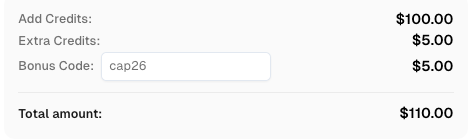
Use bonus code CAP26 when topping up your CapSolver account to get an extra 5% bonus on every recharge — with no limits.
Redeem it now in your CapSolver Dashboard
Scheduled n8n workflows often fail because the scheduler repeats a blocked route on a fixed interval. If each execution starts with the same target list and the same failing item, a site may see a burst of identical traffic. An n8n workflow blocked by CAPTCHA can then become a rate-control problem even if the original task was small.
Put the cooldown check before the browser or HTTP node, not after the failed submit. A simple function node can read a domain key from your datastore and stop the item before it creates more traffic. Keep the object small so it can be inspected in the n8n execution view.
const domain = new URL($json.targetUrl).hostname;
const retryAfterMs = Number($json.retryAfterMs || 0);
const now = Date.now();

return [{
  json: {
    ...$json,
    domain,
    allowedToRun: retryAfterMs <= now,
    stopReason: retryAfterMs > now ? "domain_cooldown" : null
  }
}];
This is not a CAPTCHA API call. It is workflow control that prevents an approved solver step from being used as a substitute for rate-limit discipline.
Honor server timing when it exists. MDN's HTTP 429 Too Many Requests page explains that 429 is a rate-limit signal, and RFC 9110 defines Retry-After response timing as guidance for waiting. In n8n, convert that signal into a domain-level cooldown stored outside a single execution. A retry inside the same failed run is rarely enough.
CapSolver's HTTP 429 rate limits guidance gives the right operational vocabulary: reduce concurrency, respect cooldowns, and avoid duplicate request bursts. Put the cooldown before the protected node so the next scheduled run checks it before making traffic.
Idempotency matters because CAPTCHA blocks often sit next to forms and webhooks. A workflow may submit once, receive a challenge, retry after solving, and then submit again when the upstream system resends the same payload. Without an idempotency key, an n8n workflow blocked by CAPTCHA can create duplicate orders, duplicate CRM records, or duplicate support tickets while still appearing to be a CAPTCHA issue.
Use a stable attempt ID for each protected submit. The HTML standard's form data construction model is useful because it reminds teams that the browser submits the current form state, including hidden fields and controls. Log the form state before the challenge, after the challenge, and immediately before submission.
For event-driven workflows, CapSolver's webhook concept page can help standardize language between automation engineers and backend owners. The fix is to let a single protected action be resumed once, not rebuilt and replayed repeatedly.
A repair is complete when one replayable execution proves the branch behavior. Run a single item through the protected path with tracing enabled. Save the node inputs, page screenshots, response statuses, storage snapshots, challenge branch output, solver handoff when approved, downstream submit payload, and final application result. An n8n workflow blocked by CAPTCHA should leave enough evidence for another engineer to understand the first broken boundary.
Compare the successful replay with the failed run. If the only change is a longer sleep, the repair is weak. If the replay shows a stable browser context, a single challenge attempt, a respected cooldown, and one idempotent submit, the workflow is materially safer. CapSolver's CAPTCHA-solving API can fit into that replay as a service boundary, but the workflow must still own state, timing, and stop rules.
Finally, add a regression check for the next scheduled run. The check should fail if a protected node retries more than the configured budget, if 429 is ignored, if a submit lacks an attempt ID, or if a challenge branch falls through to ordinary extraction. Those guards keep the n8n workflow blocked by CAPTCHA from returning as a silent production loop.
Write the workflow contract beside the n8n nodes. The contract should name the owner, allowed domain, account class, route policy, maximum challenge attempts, maximum form submissions, cooldown storage key, and review path. An n8n workflow blocked by CAPTCHA is much easier to operate when the allowed behavior is visible to the person editing the workflow, not hidden in a prompt.
Add one correlation ID to every protected item. Pass it from trigger to browser step, challenge branch, submit node, webhook callback, and final database write. The ID lets you prove that one source item produced one protected action. It also makes duplicate submit bugs obvious because two final writes will carry the same correlation ID.
Keep the branch outputs small and machine-readable. A good branch output says solved, cooldown, review, stop, or resume_failed, plus the reason. Do not pass full HTML through every node unless a debug flag is enabled. Large challenge pages can pollute downstream prompts and make the next agent decision less reliable.
Review the workflow after the first clean replay and again after the first scheduled production run. The replay proves the path works once; the scheduled run proves cooldown storage, item deduplication, and execution history work under normal timing. That second check often catches the real reason an n8n workflow blocked by CAPTCHA returned after a manual fix.
Give each failure path a notification target. A rate event can notify operations, a duplicated submit can notify the application owner, and a hard refusal can notify the compliance reviewer. Routing alerts by failure class prevents a CAPTCHA incident from becoming a generic red execution badge that nobody owns.
Keep secrets out of debug payloads. Execution records should include correlation IDs, status classes, and challenge state, but not account passwords, private tokens, or full personal data payloads. This lets teams share an n8n workflow blocked by CAPTCHA incident safely during review.
Finally, document the rollback action. If a new branch or solver handoff increases errors, the operator should know which switch disables it and which queue items need to be replayed. A rollback note prevents emergency edits in the n8n canvas while production executions are still running.
Fixing an n8n workflow blocked by CAPTCHA starts with workflow design: isolate the protected node, preserve browser state, make challenge handling an explicit branch, obey 429 cooldowns, and make protected submits idempotent. Approved solving can be part of the system, but it should never replace permission checks, session continuity, or stop rules. For teams running lawful automation where CAPTCHA support is appropriate, CapSolver can handle the challenge layer while n8n keeps the workflow controlled.
Scheduled runs can repeat the same route at fixed intervals, reuse stale state, or process the same failing item repeatedly. Add domain cooldown storage, challenge budgets, and idempotency keys so the scheduler does not create repeated traffic pressure.
No. Put it behind a named branch or subworkflow that receives structured evidence from the protected node. That keeps ordinary request failures, rate limits, access refusals, and approved challenge handling separate.
Log node name, input item ID, URL, status code, redirect chain, browser context, storage state, challenge type, attempt ID, branch decision, and downstream submit result. Those fields show whether the failure is state, timing, permission, or challenge handling.
No. Set a low challenge budget, obey cooldowns, and stop on hard refusals or unclear authorization. Repeated retries can increase risk signals and create duplicate side effects.
Sora Fujimoto
AI Solutions Architect
Connecting agents, browsers, and APIs into one workflow.
ABOUT THE AUTHOR
Fix CAPTCHA handling that works locally but fails in a cloud AI agent. Compare browser setup, dependencies, credentials, network access, and page state.

Estimate CAPTCHA solving costs in Browser Use by separating agent runs, challenge types, billable solves, retries, and verified outcomes from browser costs.