🎉NEWCapSolver for AI agents-MCP, agent tools, and SDK integrations

Emma Foster
Machine Learning Engineer
Published Jun 16, 2026
Updated Jun 16, 2026 · min read
Your agent fails at checkout CAPTCHAs when it treats checkout like a normal form instead of a transaction chain. A product page may tolerate retries, but checkout combines cart inventory, account identity, shipping calculation, tax lookup, payment preflight, fraud screening, and CAPTCHA validation. CapSolver can help authorized teams handle CAPTCHA checkpoints, but a checkout fix starts by preserving the transaction order. If the cart state is stale or the payment token is invalid, the challenge is only one visible part of a larger rejection.
Cart state is the first suspect. Your agent fails at checkout CAPTCHAs when it changes quantity, shipping option, coupon, account, or address after the risk step has already calculated a session. A CAPTCHA can then appear as the page's visible defense, but the backend may also be rejecting stale cart totals or inventory holds. CapSolver's ecommerce CAPTCHA discussion is useful because storefronts often combine challenge handling with cart-specific risk signals.
Log every cart checkpoint. Product added, cart ID issued, inventory hold created, address accepted, shipping quote returned, tax calculated, payment token created, CAPTCHA requested, CAPTCHA answered, order submitted, and order response received. A checkout CAPTCHA failure without that chain is hard to diagnose. The challenge may be valid while the cart is not.
Keep the same browser context through checkout. Do not rebuild storage between cart and payment. Do not move a cart from one agent profile to another. Do not change route or locale after shipping is calculated. If the agent must restart, begin from a fresh cart and record why the previous one was abandoned.
Inventory holds deserve their own timestamp. Many stores reserve stock for a short window or recalculate availability when the user reaches payment. If the agent pauses on a CAPTCHA, the hold can expire while the challenge is being handled. The final order submit then fails, and the visible page may still mention verification. Your agent fails at checkout CAPTCHAs in this case because inventory timing and challenge timing were never modeled together.
Payment tokenization often expires faster than the agent expects. A card iframe, wallet session, or payment intent may have its own lifetime and domain restrictions. W3C's Payment Request API specification shows how browser-mediated payment flows involve structured request state, and many modern checkouts add provider-specific tokenization on top. Your agent fails at checkout CAPTCHAs when it solves a challenge after the payment preflight has already aged out.
Place CAPTCHA timing relative to payment timing. If the site requests CAPTCHA before payment tokenization, do not wait too long before creating the payment token. If it requests CAPTCHA after payment tokenization, do not regenerate the cart or address after the challenge. The agent should know which operation consumes which token. Payment token, CAPTCHA token, CSRF token, and cart ID are different pieces of evidence.
CapSolver's CAPTCHA solving API performance can help teams set realistic time budgets, but the budget must be tied to checkout state. A fast CAPTCHA response still fails if the payment session or cart quote has expired. Measure end-to-end checkout age, not only challenge latency.
Payment preflight also changes what safe retry means. A failed address lookup can be repeated without charging a card. A payment authorization attempt may not be safe to repeat without checking provider state. The agent should classify payment responses before any CAPTCHA retry. If the payment provider says the intent is already confirmed, expired, or requires action, stop and reconcile that state before touching the challenge again.
Checkout pages often respond to retry pressure with visual challenges. The agent clicks submit, sees a spinner, times out, clicks again, reloads, and then sees a CAPTCHA. MDN's HTTP 429 rate limits explains why clients are asked to slow down after too many requests. In checkout, too many requests can include address validation, shipping quote refresh, payment retries, inventory checks, and submit attempts.
Treat checkout as a scarce operation. Set a maximum number of submit attempts per cart. Set a separate maximum for payment preflight attempts. If either limit is reached, stop and preserve logs. Your agent fails at checkout CAPTCHAs when it converts every uncertain response into another submit. A retry may duplicate payment authorization, lose inventory, or worsen risk scoring.
CapSolver's proxy and CAPTCHA guidance is relevant only after request pressure is controlled. Switching routes mid-checkout can make a session look less coherent. If the route fails, end the attempt and start a new cart after policy allows it.
Redeem Your CapSolver Bonus Code
Boost your automation budget instantly!
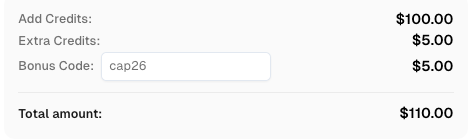
Use bonus code CAP26 when topping up your CapSolver account to get an extra 5% bonus on every recharge — with no limits.
Redeem it now in your CapSolver Dashboard
Checkout raises the sensitivity of browser signals. A route that works for product browsing may fail near payment because the site evaluates account age, payment instrument, address, device profile, browser storage, and interaction pattern together. CapSolver's device fingerprinting concept helps frame this as a coherence problem. Your agent fails at checkout CAPTCHAs when those signals tell different stories.
Keep the browser profile stable for the whole purchase journey. User agent, viewport, timezone, locale, cookies, local storage, route, and account should not change between product page and order submit. Avoid randomizing fingerprints on retry. A checkout attempt should look like one continuous session, not a collection of independent browser actions.
Research on browser uniqueness measurements shows that many small attributes can classify a browser. For responsible checkout QA, the lesson is not to disguise automation for unauthorized buying. The lesson is to avoid accidental contradictions in owned or approved tests, such as a mobile user agent with desktop viewport and desktop payment iframe assumptions.
A resilient checkout agent uses checkpoints. cart_valid, address_valid, shipping_valid, payment_ready, captcha_required, captcha_complete, and order_submitted should be explicit states. If any checkpoint fails, the agent should know whether to repair, restart, or stop. Your agent fails at checkout CAPTCHAs when it only has one plan: continue toward the submit button.
The HTTP method matters in this state machine. RFC 9110 describes idempotent request semantics; checkout submit is not a safe operation to repeat blindly. A GET to refresh shipping rates is different from a POST to place an order. Agents need method-aware retry policy.
CapSolver's AI agents for price monitoring is a useful comparison because monitoring can often skip or defer a blocked item. Checkout cannot. It has real inventory, account, and payment consequences. That is why stop rules matter more near payment.
A checkpoint design also improves user safety. The agent can return a partial result such as cart prepared, shipping validated, payment not submitted, CAPTCHA required. That is better than hiding uncertainty behind another click. Operators can then decide whether to continue manually, cancel the cart, or rerun the test with a fresh payment sandbox. Checkout automation should make the point of no return visible.
Store checkpoint snapshots with redaction. The snapshot should include cart total, shipping method, tax status, payment-state label, CAPTCHA state, and submit eligibility, but not full card data or private account details. When your agent fails at checkout CAPTCHAs, these snapshots let engineers compare the last valid checkpoint with the failing request without exposing sensitive commerce data. They also make rollback decisions easier when a cart should be abandoned.
Checkout automation should be narrow and auditable. Use it for owned storefront QA, contracted checkout testing, internal fraud-rule validation, or permitted purchasing flows with explicit limits. Do not use it to access private accounts, buy restricted goods, evade limits, or ignore site terms. OWASP's automated threat categories explains why commerce automation is often treated as a risk area.
Log purpose, target domain, account, cart ID, payment test mode, CAPTCHA event, solver eligibility, and final outcome. Redact payment details. Keep correlation IDs so backend teams can compare browser evidence with risk-engine decisions. Your agent fails at checkout CAPTCHAs less often when the team can see exactly which checkpoint failed.
Make the final outcome explicit. If payment preflight failed, fix payment timing. If cart state expired, restart from cart. If CAPTCHA verification failed, inspect token binding. If access is denied, stop. A single error message should not push the agent into a new purchase attempt.
For owned storefront QA, add synthetic scenarios before using production-like flows. Simulate expired cart, expired payment token, CAPTCHA required before payment, CAPTCHA required after payment, 429 after repeated shipping quotes, and duplicate submit. The agent should choose different recovery paths for each case. If every fixture routes to the same solver action, the workflow is not ready for real checkout testing.
Your agent fails at checkout CAPTCHAs because checkout is a transaction chain with strict timing, state, and risk boundaries. Fix cart checkpoints, payment preflight, request pressure, browser coherence, and audit rules before changing challenge handling. For approved checkout QA or permitted automation that includes CAPTCHA checkpoints, CapSolver can help with the CAPTCHA layer while your agent preserves the transaction evidence.
Repeated submits can create rate pressure or risk signals. The site may also be reacting to stale cart, payment, or address state. Stop after a small number of attempts and inspect the transaction checkpoints.
No. CAPTCHA, payment, CSRF, and cart tokens serve different purposes. If the payment session expired before order submit, challenge handling will not repair the transaction.
No. Route changes during checkout can break session coherence. If the route is no longer usable, close the attempt and start a new cart after policy allows it.
Use ordered checkpoints: cart, address, shipping, tax, payment, CAPTCHA, submit, and response. Add timestamps, request IDs, status codes, and planner actions for each checkpoint.
Emma Foster
Machine Learning Engineer
Where machine learning meets practical AI tooling.
ABOUT THE AUTHOR
Find CapSolver MCP in the Official MCP Registry, install version 0.1.3 with uvx or pip, configure a local client, and verify the stdio tools.

Add CAPTCHA tools to Pydantic AI using the official CapSolver adapter, test tool execution locally, and handle typed inputs and structured solver results.