🎉NEWCapSolver for AI agents-MCP, agent tools, and SDK integrations

Emma Foster
Machine Learning Engineer
Published Apr 03, 2026
Updated Apr 03, 2026 · min read
TL;Dr:
In the dynamic landscape of web automation, encountering CAPTCHAs is an inevitable challenge. These security measures, designed to differentiate human users from automated bots, can significantly impede the efficiency of web scraping, data collection, and other automated processes. The speed at which these challenges are overcome is not merely a convenience but a fundamental factor determining the success and cost-effectiveness of any automated operation. At the heart of this efficiency lies the CAPTCHA solving API response time, a crucial metric that quantifies the duration from the submission of a CAPTCHA to an API to the reception of its valid solution. Understanding and optimizing this response time is paramount for developers, businesses, and anyone relying on automated workflows, as it directly influences operational pace, resource utilization, and overall system performance. This comprehensive article will dissect the concept of CAPTCHA solving API response time, explore its profound significance, and meticulously analyze the multifaceted factors that govern its speed and performance, providing insights into how to achieve optimal resolution speeds.
CAPTCHA solving API response time is precisely defined as the total elapsed duration from the instant a request to solve a CAPTCHA is dispatched to a third-party API service until the moment a correct and usable solution is successfully returned. This metric is not monolithic; rather, it is a complex aggregation of several sequential and parallel stages. These stages typically include the network latency involved in transmitting the request, the processing time required by the API server to analyze the CAPTCHA, the computational effort to generate the solution (whether by AI algorithms or human intervention), and finally, the network latency for the solution to travel back to the requesting system. For high-stakes automated systems, where every millisecond can translate into significant operational advantages or disadvantages, the CAPTCHA solving API response time serves as a vital benchmark for an API's overall efficacy, reliability, and responsiveness. A rapid response ensures that automated workflows maintain their intended pace, preventing bottlenecks and preserving the integrity and continuity of data collection or task execution processes.
Optimizing CAPTCHA solving API response time extends far beyond a mere technical consideration; it carries substantial implications across a spectrum of applications, particularly within critical domains such as web scraping, competitive intelligence, and SEO monitoring. A sluggish response can trigger a cascade of negative effects, directly impacting user experience, severely hindering operational efficiency, and ultimately eroding profitability. In highly competitive digital environments, even marginal delays can result in lost opportunities, outdated data sets, or compromised service delivery. The velocity at which CAPTCHAs are resolved directly correlates with the throughput capacity of automated tasks; consequently, superior CAPTCHA solving API response time enables a significantly higher volume of operations within any given timeframe. This heightened efficiency translates directly into tangible benefits, including reduced operational costs, accelerated data acquisition, and enhanced overall productivity for businesses. For scenarios demanding real-time data, such as dynamic pricing analysis or immediate content monitoring, a swift CAPTCHA solving API response time is not merely advantageous but absolutely indispensable to guarantee the timeliness, accuracy, and relevance of the acquired information.
Numerous technical and operational variables collectively determine the overall CAPTCHA solving API response time. A thorough understanding of these contributing factors is essential for accurately diagnosing performance issues and subsequently implementing highly effective optimization strategies. The intrinsic complexity of the CAPTCHA itself, the specific methodology employed for its resolution, the inherent quality of the network infrastructure, and the processing capabilities of the API provider's servers all exert significant influence. Each of these components introduces a unique set of variables that can either dramatically accelerate or considerably impede the solution delivery process. Recognizing and analyzing these diverse influences empowers users to make more informed decisions when selecting CAPTCHA solving services and to more effectively manage their automated tasks, ensuring that the CAPTCHA solving API response time aligns with their operational demands.
The specific type of CAPTCHA encountered is arguably the most dominant factor dictating CAPTCHA solving API response time. Different CAPTCHA mechanisms are engineered with varying levels of difficulty and necessitate distinct solving approaches. For instance, traditional ImageToText CAPTCHAs, which typically involve deciphering distorted alphanumeric characters, are generally resolved much faster due to their relatively straightforward pattern recognition requirements. In stark contrast, more sophisticated challenges like reCAPTCHA v2 (requiring users to click specific images or check a box) and Cloudflare Turnstile (which often involves passive background analysis and user interaction simulations) inherently demand longer processing times. reCAPTCHA v3, specifically designed to operate silently in the background by analyzing user behavior and returning a risk score, aims to minimize overt user disruption but still requires a certain processing window to evaluate behavioral patterns. The fundamental design and verification logic of each CAPTCHA type inherently establish the minimum achievable CAPTCHA solving API response time.
The underlying method utilized by the CAPTCHA solving API—whether powered by advanced Artificial Intelligence (AI) algorithms or relying on human labor—profoundly impacts the response time. AI-driven solutions, particularly effective for simpler, pattern-based CAPTCHAs, can deliver near-instantaneous responses. Their computational speed and capacity to process vast datasets rapidly allow them to solve challenges like ImageToText CAPTCHAs in fractions of a second. However, for exceptionally complex, novel, or highly adaptive CAPTCHAs that current AI models struggle to accurately interpret, human intervention becomes indispensable. While human solvers boast superior accuracy for these intricate cases, their response times are naturally slower, typically ranging from several seconds to tens of seconds, contingent upon the CAPTCHA's complexity and the real-time availability of human workers. Many cutting-edge services, including CapSolver, employ hybrid systems that intelligently route simpler tasks to AI for speed and efficiency, thereby striking an optimal balance between speed, accuracy, and overall CAPTCHA solving API response time.
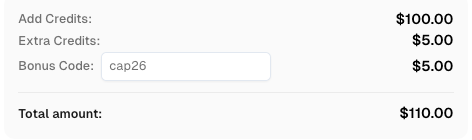
Use code
CAP26when signing up at CapSolver to receive bonus credits!
The caliber of the proxies deployed in conjunction with the CAPTCHA solving API can introduce significant variability into the overall response time. Substandard proxies—characterized by high latency, frequent disconnections, or limited bandwidth—can introduce substantial and often unpredictable delays. Every request sent to the API and every solution received back must traverse through the proxy server, adding to the cumulative round-trip time. Moreover, if a proxy is frequently identified and flagged by target websites, it can trigger repetitive CAPTCHA challenges, further exacerbating the effective CAPTCHA solving API response time. To mitigate these issues, it is imperative to utilize reliable, high-speed, and geographically optimized proxies. Residential or rotating proxies, for instance, are often preferred as they more effectively mimic legitimate user traffic, thereby reducing the likelihood of detection and re-challenging. Consistent monitoring of proxy performance and strategic rotation are crucial practices for minimizing network-related delays and ensuring seamless communication between your automation scripts and the CAPTCHA solving API. How to avoid IP bans when web scraping with proxies
The foundational infrastructure of the CAPTCHA solving API provider, coupled with the geographical distribution of their servers, plays a pivotal role in determining response time. A robust, globally distributed server network can dramatically reduce latency by intelligently routing requests to the nearest available server. Conversely, an API service operating with a limited number of server locations or an overburdened infrastructure will inevitably lead to slower processing times and extended wait periods. High-performance computing resources, efficient load balancing mechanisms, and meticulously optimized data processing pipelines are all critical components for consistently delivering a fast CAPTCHA solving API response time. Providers who make substantial investments in scalable, resilient, and geographically diverse infrastructure are inherently better positioned to manage high volumes of requests without compromising on speed or reliability.
Beyond the CAPTCHA itself, the target website's broader anti-bot and risk assessment mechanisms can indirectly influence the perceived CAPTCHA solving API response time. Websites often employ sophisticated systems that analyze various user signals, including browser fingerprints (e.g., TLS fingerprinting), behavioral patterns (mouse movements, typing speed), and IP reputation. If these systems detect suspicious activity, they might present more difficult CAPTCHAs, increase the frequency of challenges, or even introduce artificial delays before presenting a CAPTCHA. While the API might solve the CAPTCHA quickly, the overall time taken to navigate the website and complete the desired action can be extended due to these underlying security layers. A comprehensive understanding of these mechanisms is vital for developing resilient automation strategies that minimize friction and optimize the end-to-end process, including the CAPTCHA solving API response time.
To provide a clearer perspective on the variability in CAPTCHA solving API response time, the following table offers a detailed comparison of common CAPTCHA types, their typical solution speeds, and other critical performance indicators. These figures are illustrative and can fluctuate based on the specific API provider, network conditions, and the complexity of the individual challenge, but they serve as a valuable guide for expected performance and strategic planning.
| CAPTCHA Type | Typical Response Time (CapSolver) | Key Characteristics | Impact on Automation | Success Rate (Avg.) | Cost Efficiency (Relative) |
|---|---|---|---|---|---|
| ImageToText | < 1 second | Simple image recognition, often distorted text or numbers. | Very fast, ideal for high-volume, rapid automation. | High | Very High |
| reCAPTCHA v2 | < 9 seconds | User interaction (click images, check boxes). Requires browser emulation. | Moderate speed, requires interaction simulation. | High | Medium |
| reCAPTCHA v3 | < 3 seconds | Scores user behavior in background, no direct interaction. | Fast, good for seamless integration, score-based. | N/A (Score) | High |
| Cloudflare Turnstile | < 3 seconds | Non-intrusive, verifies legitimate users without puzzles. Browser-based. | Fast, designed for user experience, less intrusive. | High | High |
| Geetest v3/v4 | < 5 seconds | Interactive puzzles (slide, click, drag). Requires specific solving logic. | Moderate speed, requires complex interaction logic. | High | Medium |
Achieving an optimal CAPTCHA solving API response time is a sophisticated undertaking that demands strategic choices and meticulous technical implementations. It transcends the simple act of identifying the fastest API; it necessitates configuring your entire automation environment to synergize with that speed. By diligently focusing on the following optimization strategies, businesses can substantially enhance their operational efficiency and guarantee smoother, uninterrupted automated workflows. The overarching objective is to systematically eliminate any potential bottlenecks that could impede the swift resolution of CAPTCHA challenges, thereby maximizing the throughput and effectiveness of all automated tasks. This proactive and comprehensive approach to optimization is absolutely crucial for maintaining a competitive advantage in data-intensive and time-sensitive operations.
Where feasible, opting for the least complex CAPTCHA type can dramatically curtail the solving duration. While direct control over the CAPTCHA types encountered on target websites is often limited, a deep understanding of their inherent characteristics enables superior strategic planning. For instance, if you are responsible for implementing CAPTCHAs on your own digital platform, consciously choosing simpler, AI-friendly types can significantly improve the end-user experience and reduce the processing load on external solving services. For web scraping endeavors, prioritizing target websites that deploy less complex CAPTCHAs or implementing advanced techniques to proactively minimize CAPTCHA triggers can yield substantial benefits. The intrinsic nature and complexity of the chosen CAPTCHA type directly dictate its inherent difficulty and, consequently, the potential CAPTCHA solving API response time. Best CAPTCHA Solver: A Comprehensive Guide
As previously underscored, the quality of your proxy infrastructure is paramount. Investing in premium proxies that consistently offer low latency, ample bandwidth, and a pristine IP reputation can profoundly enhance communication speed with the CAPTCHA solving API. Residential or rotating proxies are frequently favored due to their superior ability to convincingly mimic authentic user traffic, thereby significantly reducing the probability of detection, blocking, and subsequent re-challenging. Proactive and regular monitoring of proxy performance, coupled with strategic rotation as needed, is indispensable for preventing performance degradation and ensuring a consistently fast CAPTCHA solving API response time. A robust and well-managed proxy infrastructure serves as a critical conduit, guaranteeing that requests reach the solving API both swiftly and efficiently.
For applications demanding exceptionally high throughput, the implementation of asynchronous requests to the CAPTCHA solving API represents a transformative optimization. Instead of a synchronous model where the system idly waits for one CAPTCHA to be solved before initiating the next, asynchronous processing enables the concurrent dispatch of multiple CAPTCHA solving requests. This parallel execution paradigm can drastically reduce the cumulative time required to process a large batch of CAPTCHAs, even if the individual CAPTCHA solving API response time for each remains constant. The majority of contemporary API clients and programming languages provide robust native support for asynchronous operations, rendering this a highly effective strategy for scaling automation efforts and maximizing overall efficiency.
Persistent monitoring of CAPTCHA solving API response time alongside other critical performance metrics is absolutely essential for sustained optimization. Meticulously tracking average response times, solution success rates, and error rates can facilitate the identification of emerging trends, the detection of performance bottlenecks, and the precise pinpointing of areas ripe for improvement. Many reputable CAPTCHA solving services offer intuitive dashboards or dedicated API endpoints for accessing these vital metrics. Regular and systematic analysis empowers you to fine-tune your automation scripts, dynamically adjust proxy configurations, and make data-driven decisions regarding your overarching CAPTCHA solving strategy, thereby ensuring that you consistently achieve the desired CAPTCHA solving API response time. This analytical, data-centric approach is indispensable for maintaining peak operational performance and responsiveness.
Even with the most optimized setup, occasional failures or timeouts can occur. Implementing robust error handling and intelligent retry mechanisms within your automation scripts is crucial. This involves gracefully catching API errors, analyzing the error codes, and implementing a strategic retry logic with exponential backoff. For instance, if a CAPTCHA solving API request times out, instead of immediately failing, the system can wait for a short period and retry the request. This not only improves the overall success rate but also helps manage transient network issues or temporary API server loads, contributing to a more reliable and consistent effective CAPTCHA solving API response time over time.
When the objective is to achieve an optimal and consistently low CAPTCHA solving API response time, CapSolver emerges as an exceptionally reliable, efficient, and technologically advanced solution. Engineered with the rigorous demands of modern automation and web scraping in mind, CapSolver provides a robust and highly performant API that integrates seamlessly into virtually any existing workflow. By harnessing the power of cutting-edge AI models, coupled with a strategically distributed and highly scalable infrastructure, CapSolver is meticulously designed to minimize latency and deliver exceptionally fast, highly accurate CAPTCHA solutions across an extensive array of CAPTCHA types. Whether your operations involve navigating the complexities of reCAPTCHA v2, the behavioral analysis of reCAPTCHA v3, the non-intrusive verification of Cloudflare Turnstile, or the rapid processing of ImageToText CAPTCHAs, CapSolver is expertly engineered to provide industry-leading CAPTCHA solving API response time, thereby ensuring your automated tasks execute with unparalleled smoothness and efficiency. Why Web Automation Keeps Failing on CAPTCHA
CapSolver's unwavering commitment to both speed and reliability is demonstrably reflected in its impressive performance metrics, with a significant proportion of CAPTCHA types resolved within mere seconds. This rapid resolution capability is absolutely critical for applications where precise timing is paramount, such as real-time market data collection, dynamic pricing monitoring, or competitive intelligence gathering. Furthermore, CapSolver's flexible and transparent pricing models, combined with its dedicated and responsive customer support, position it as an accessible and highly attractive choice for businesses of all scales. These businesses seek to significantly enhance their automation capabilities without making any compromises on either speed or solution accuracy. By strategically choosing CapSolver, you are not merely adopting a CAPTCHA solving service; you are forging a partnership with a provider unequivocally dedicated to optimizing your CAPTCHA solving API response time and ensuring the unequivocal success and resilience of your automated operations.
Integrating CapSolver into your development projects is designed to be straightforward and efficient. The following Python example provides a clear demonstration of the typical workflow for creating a CAPTCHA solving task and subsequently retrieving its result using the CapSolver API. This illustrative code snippet highlights the ease of use and the inherent efficiency of the platform, allowing developers to quickly incorporate robust CAPTCHA resolution capabilities into their applications.
import requests
import time

API_KEY = "YOUR_CAPSOLVER_API_KEY"

def create_task(task_payload):
    url = "https://api.capsolver.com/createTask"
    headers = {"Content-Type": "application/json"}
    payload = {"clientKey": API_KEY, "task": task_payload}
    response = requests.post(url, json=payload, headers=headers)
    return response.json()

def get_task_result(task_id):
    url = "https://api.capsolver.com/getTaskResult"
    headers = {"Content-Type": "application/json"}
    payload = {"clientKey": API_KEY, "taskId": task_id}
    response = requests.post(url, json=payload, headers=headers)
    return response.json()

# Example: Solving a reCAPTCHA v2
recaptcha_task = {
    "type": "ReCaptchaV2TaskProxyLess",
    "websiteURL": "https://www.google.com/recaptcha/api2/demo",
    "websiteKey": "6Le-wvkSAAAAAPBZ9qvwqE_6m_a5Jbs004fMZXG1"
}

print("Creating reCAPTCHA v2 task...")
task_creation_response = create_task(recaptcha_task)

if task_creation_response.get("errorId") == 0:
    task_id = task_creation_response.get("taskId")
    print(f"Task created with ID: {task_id}. Waiting for result...")

    # Poll for result with a reasonable timeout
    start_time = time.time()
    timeout = 60 # seconds
    while time.time() - start_time < timeout:
        result_response = get_task_result(task_id)
        if result_response.get("errorId") == 0 and result_response.get("status") == "ready":
            solution = result_response.get("solution")
            print("CAPTCHA solved successfully!")
            print(f"Solution: {solution}")
            break
        elif result_response.get("status") == "processing":
            print("Still processing... waiting 5 seconds.")
            time.sleep(5)
        else:
            print(f"Error getting task result: {result_response.get("errorDescription")}")
            break
    else:
        print("Timeout: CAPTCHA solving took too long.")
else:
print(f"Error creating task: {task_creation_response.get("errorDescription")}")Mastering the intricacies of CAPTCHA solving API response time is unequivocally fundamental for achieving highly efficient web automation and precision data extraction. The velocity at which CAPTCHAs are successfully resolved directly influences operational expenditures, profoundly impacts the end-user experience, and ultimately dictates the overall triumph of automated tasks. By meticulously considering and strategically managing critical factors such as the specific CAPTCHA type, the chosen solving methodology, the inherent quality of proxy services, and the underlying API infrastructure, businesses are empowered to make exceptionally informed decisions that significantly enhance their automation workflows. Leading services like CapSolver provide robust, high-speed, and reliable solutions, ensuring that CAPTCHA challenges are effectively neutralized and do not evolve into detrimental bottlenecks within your critical operations. Prioritizing a consistently fast and dependable CAPTCHA solving API response time is not merely a technical preference; it represents a strategic investment in the enduring efficiency, unwavering reliability, and ultimate effectiveness of your comprehensive digital strategies.
A1: An optimal CAPTCHA solving API response time typically varies based on the CAPTCHA's complexity. For straightforward ImageToText CAPTCHAs, sub-1-second response times are excellent. For more complex challenges like reCAPTCHA v2 or Cloudflare Turnstile, a response time under 10 seconds is generally considered good. For reCAPTCHA v3, which operates discreetly in the background, achieving a response time under 3 seconds is highly desirable, as it ensures minimal disruption to the user experience. The ideal response time should always align with the specific requirements and real-time constraints of your automation task.
A2: To accurately measure the CAPTCHA solving API response time, you should record a precise timestamp immediately before dispatching the CAPTCHA solving request to the API. Subsequently, record another timestamp the moment you successfully receive the solution back from the API. The differential between these two timestamps represents the exact response time. Most modern programming languages and API client libraries offer convenient built-in functions or modules for precise time measurement. Furthermore, many advanced CAPTCHA solving services provide comprehensive dashboards and dedicated API endpoints that allow you to monitor and analyze detailed performance metrics, including average response times, directly.
A3: Absolutely, the geographical location of the CAPTCHA solving API server can significantly influence the overall CAPTCHA solving API response time. Data transmission across considerable geographical distances inherently introduces network latency. If your automation scripts are deployed in a distinct geographical region from where the CAPTCHA solving API's servers are primarily located, the round-trip time for both requests and responses will inevitably be higher. Strategically selecting an API provider with server infrastructure geographically closer to your operational base can substantially mitigate this network latency, thereby leading to a noticeable improvement in overall response times and enhancing the efficiency of your CAPTCHA solving API response time.
A4: Yes, investing in high-quality, and often more expensive, proxies can indeed lead to a tangible improvement in CAPTCHA solving API response time. Premium proxies are typically engineered to offer superior bandwidth, lower latency, and maintain a cleaner IP reputation. These characteristics collectively reduce the probability of encountering frequent CAPTCHA re-challenges or experiencing network-induced slowdowns. While the initial cost outlay for such proxies might be higher, the long-term benefits in terms of increased automation efficiency, reduced operational delays, and a more consistent CAPTCHA solving API response time often justify the investment, making it a cost-effective decision for serious automation efforts.
A5: In synchronous CAPTCHA solving, your automation script is designed to pause and wait for each individual CAPTCHA to be fully solved and its result returned before it can proceed to the subsequent task. This sequential approach can be inherently slow and inefficient, especially when processing high volumes of CAPTCHAs. Conversely, asynchronous CAPTCHA solving allows your script to dispatch multiple CAPTCHA requests concurrently, without the necessity of waiting for each individual response. The system then collects these solutions as they become available. Asynchronous methods are overwhelmingly preferred for optimizing overall throughput and achieving a significantly faster effective CAPTCHA solving API response time in large-scale automation projects, as they maximize parallel processing and minimize idle waiting periods.
Emma Foster
Machine Learning Engineer
Where machine learning meets practical AI tooling.
ABOUT THE AUTHOR
Explore how AI detects and solves CAPTCHA challenges, from image recognition to behavioral analysis. Understand the technology behind AI CAPTCHA solvers and how CapSolver aids automated workflows. Learn about the evolving battle between AI and human verification.

Compare top CAPTCHA solving APIs by speed, accuracy, uptime, and pricing. See how CapSolver, 2Captcha, CapMonster Cloud, and others stack up in our detailed performance comparison.