🎉NEWCapSolver for AI agents-MCP, agent tools, and SDK integrations

Step-by-step tutorial for solving reCAPTCHA v2 in LangChain agents using CapSolver capsolver-agent tools, covering Token mode and Browser mode with code examples.

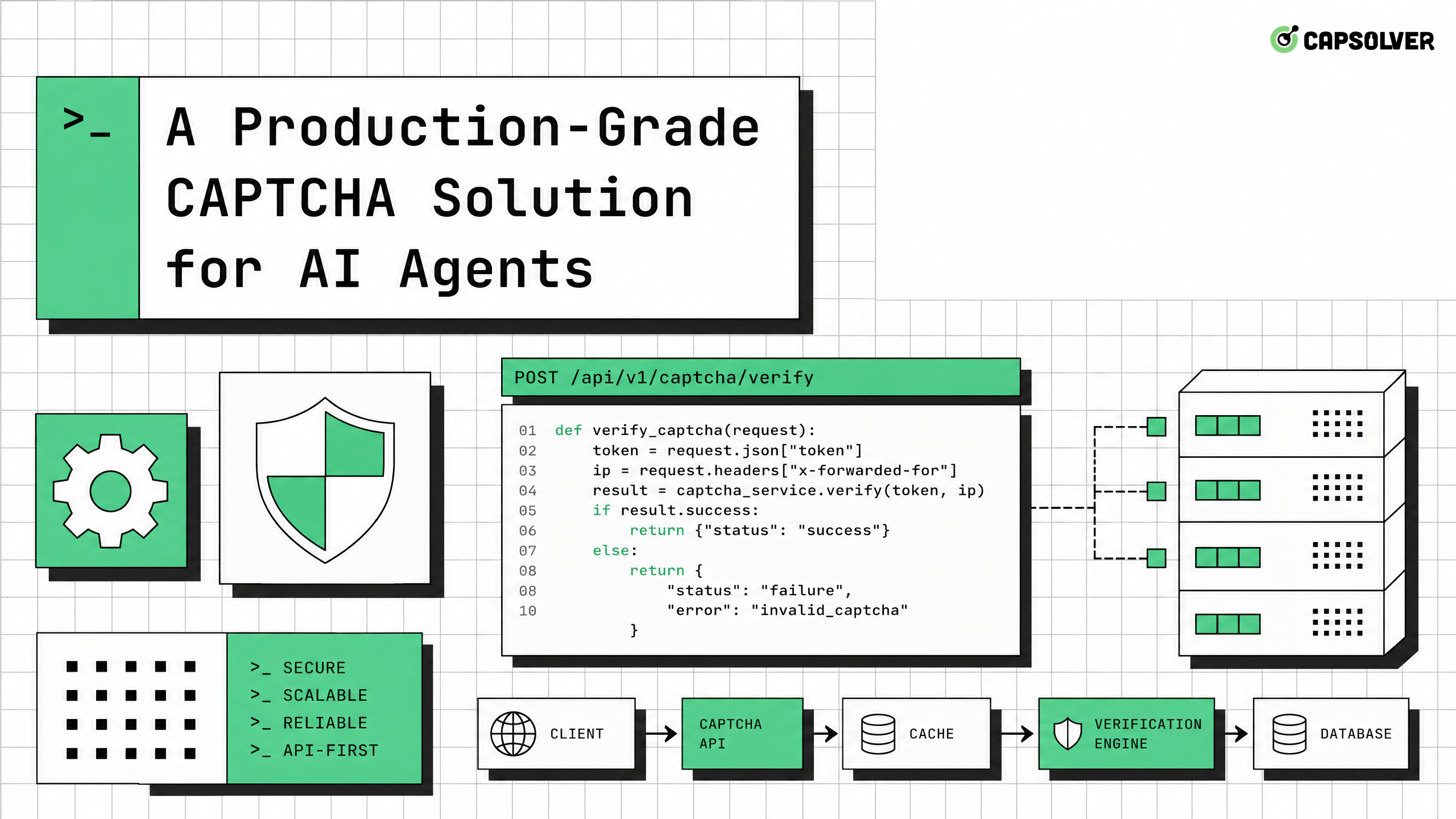
Discover how to build a production-grade CAPTCHA solution for AI agents using CapSolver's API — reliable, scalable, and designed for autonomous workflows.

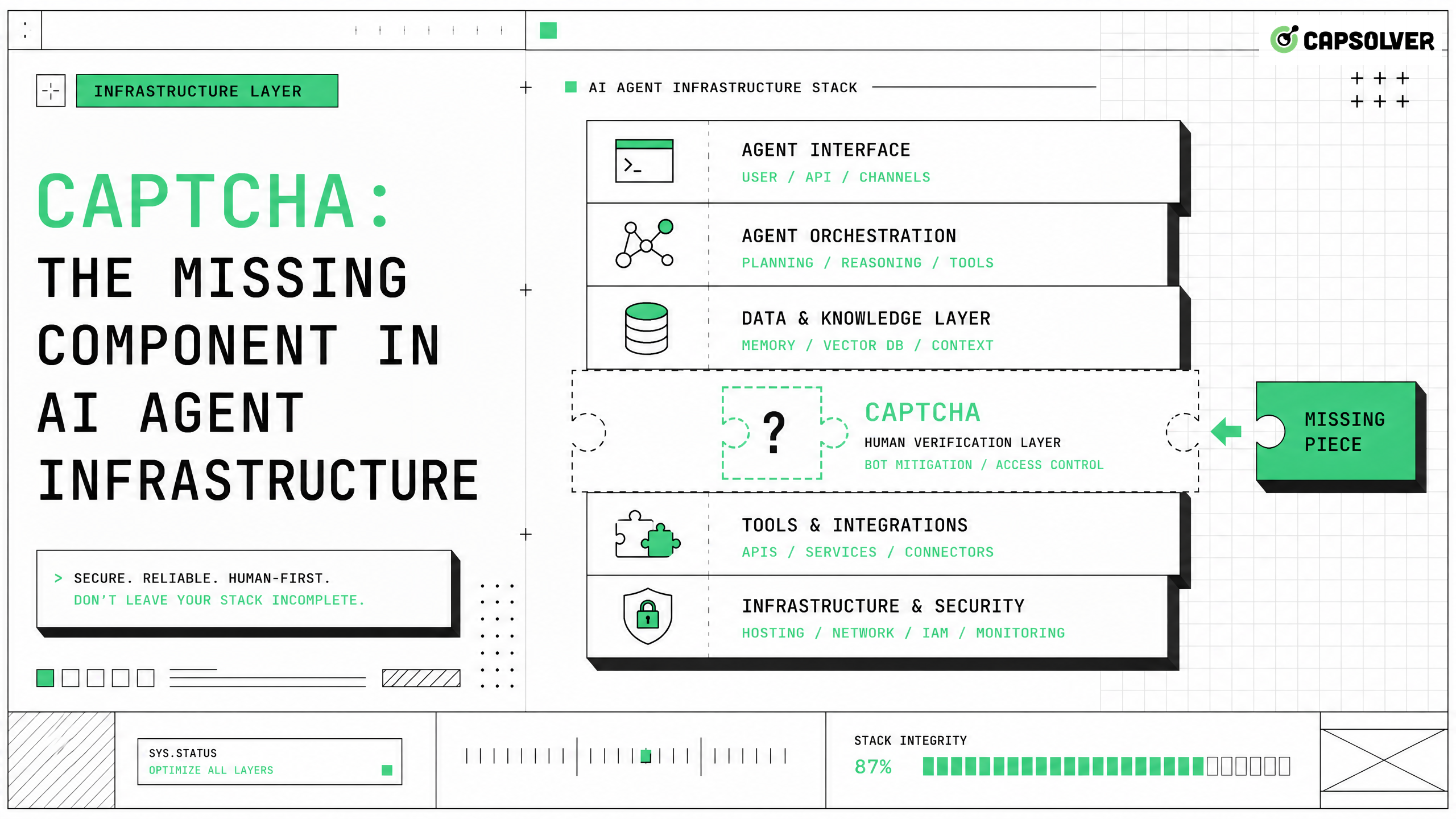
Discover why handling traffic validation is the missing component in AI agent infrastructure. Learn how to integrate robust solutions for autonomous agents.

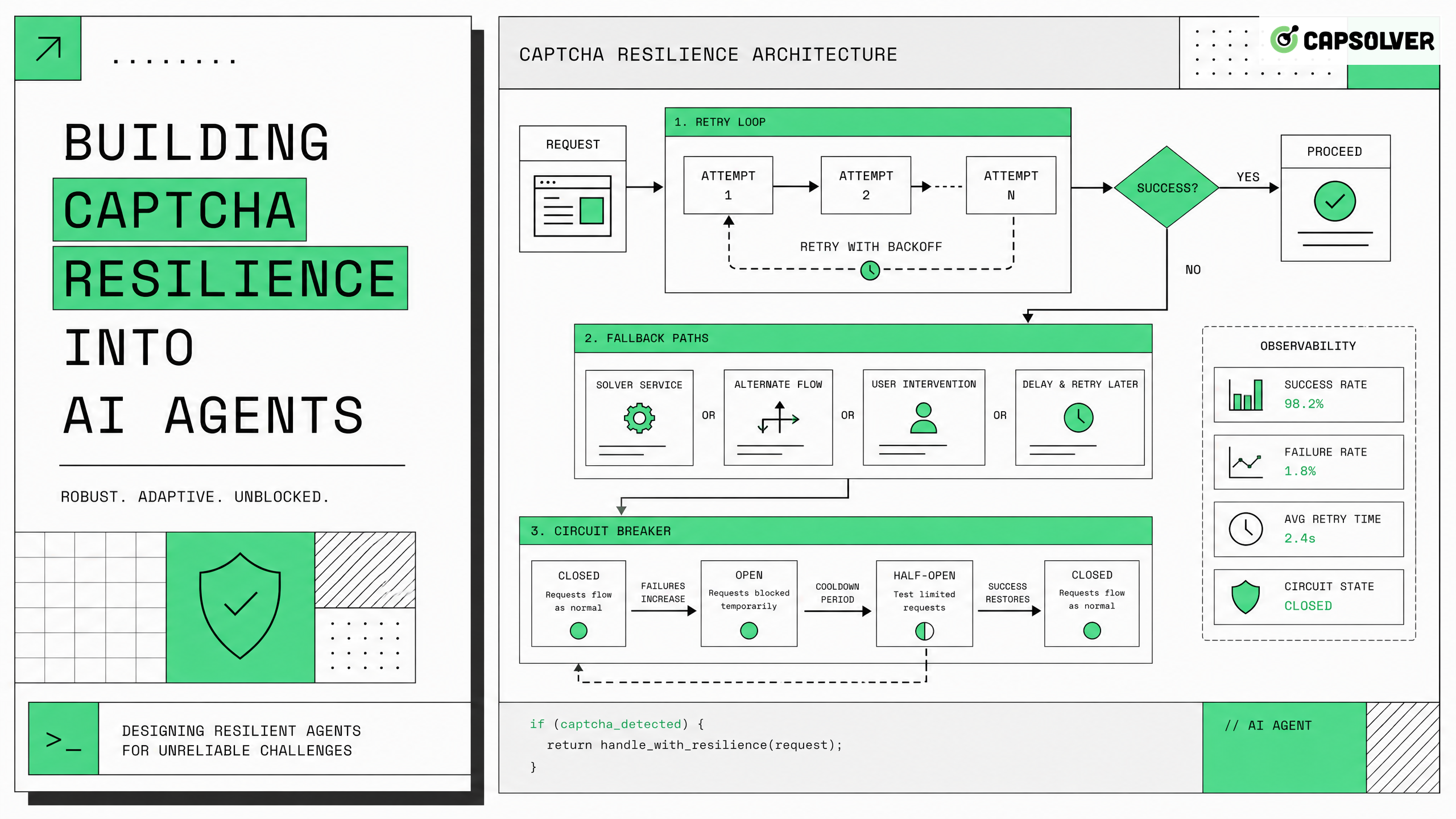
- AI agents require robust CAPTCHA resilience to maintain continuous operation during automated tasks. - Implementing structured traffic validation strategies minimizes disruptions caused by risk control mechanisms. - Utilizing a reliable CAPTCHA solving API ensures efficient handling of complex challenges. - Proper infrastructure design separates the core agent logic from bot protection managemen

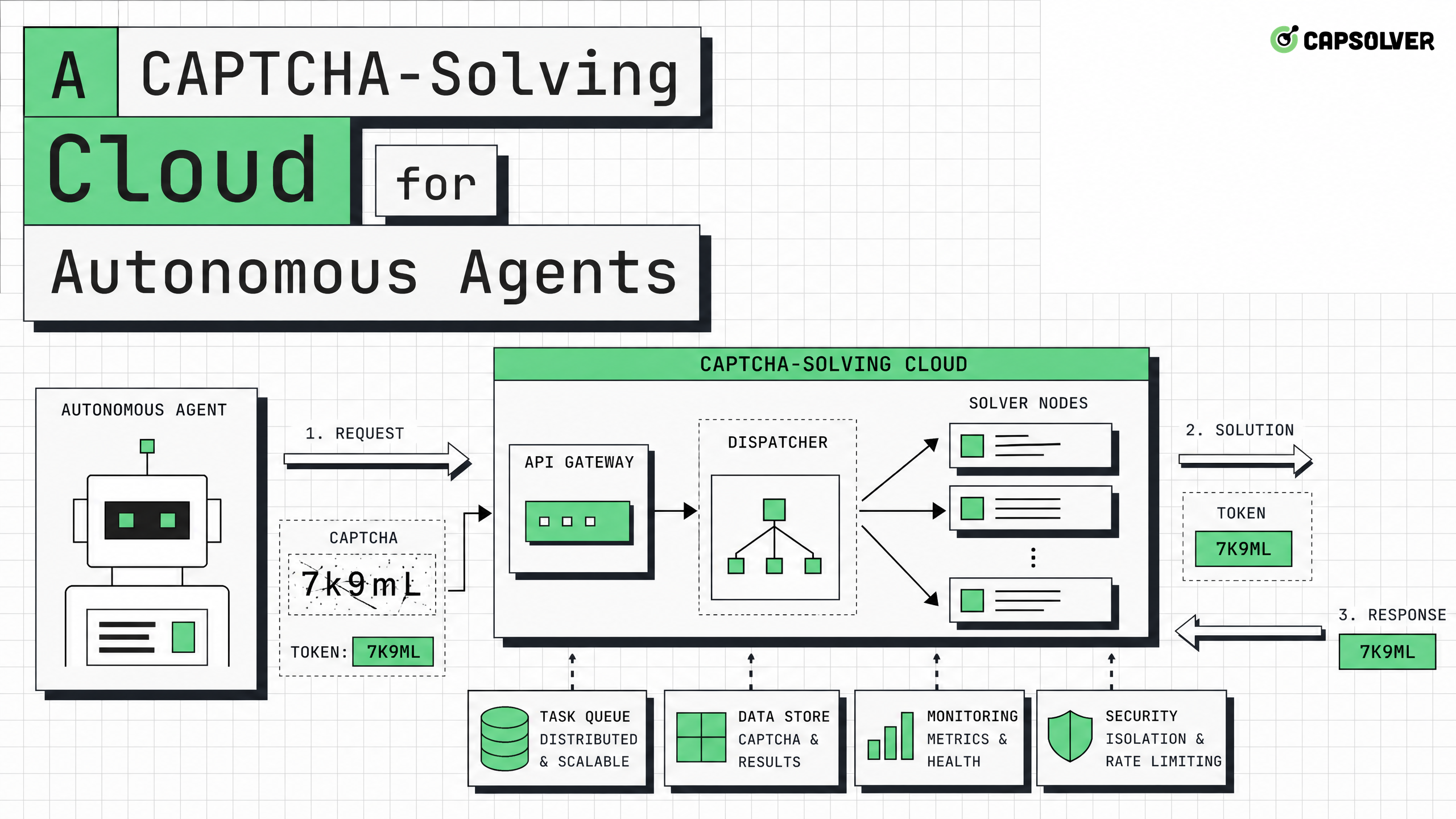
Autonomous agents frequently encounter CAPTCHAs, hindering their ability to perform web automation tasks efficiently. A dedicated CAPTCHA-solving cloud provides a scalable, reliable, and fast solution for AI agents to overcome these challenges.

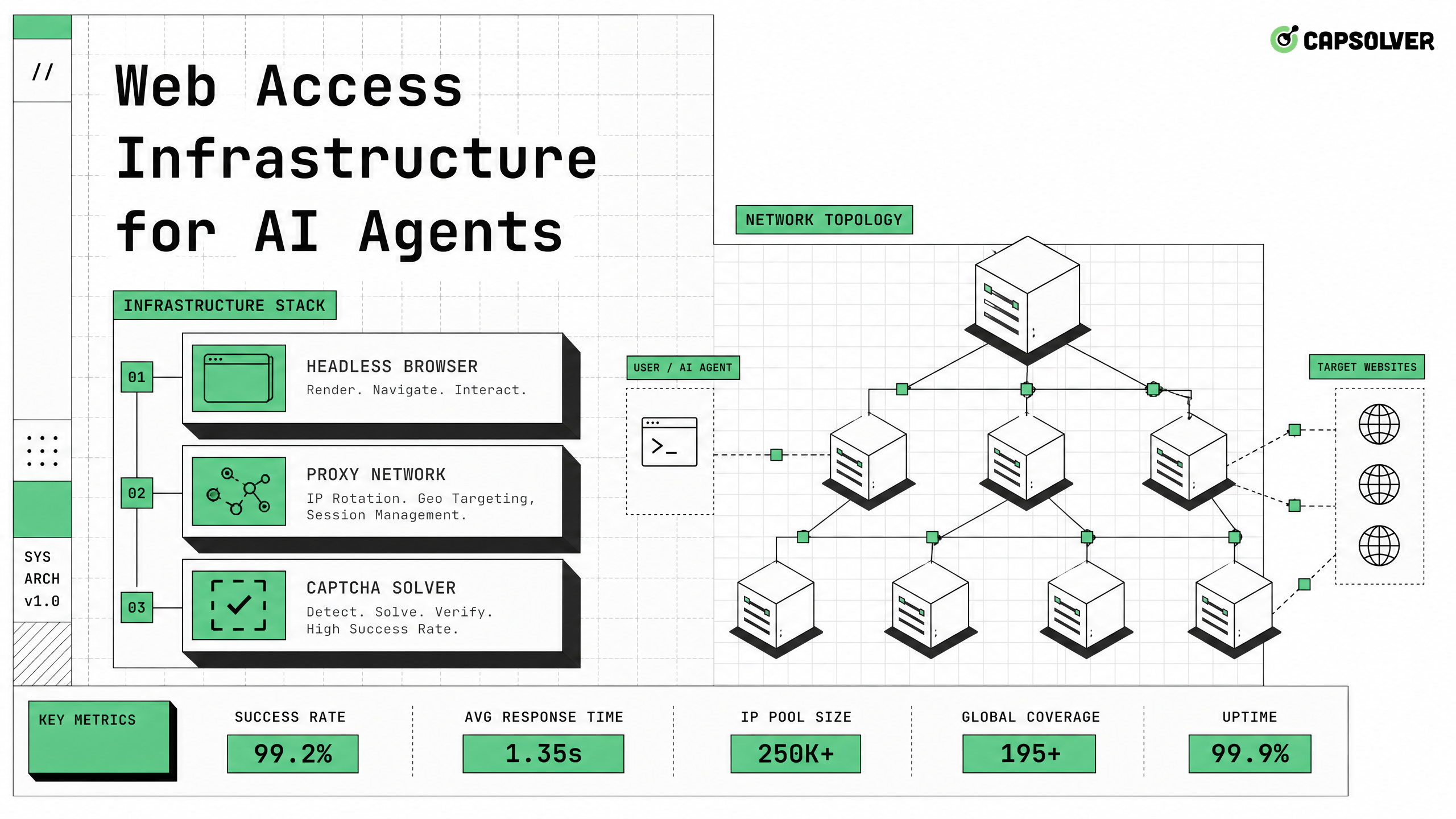
AI agents require sophisticated web access infrastructure to interact with the internet effectively. Key components include headless browsers, proxy networks, and advanced CAPTCHA solving mechanisms.

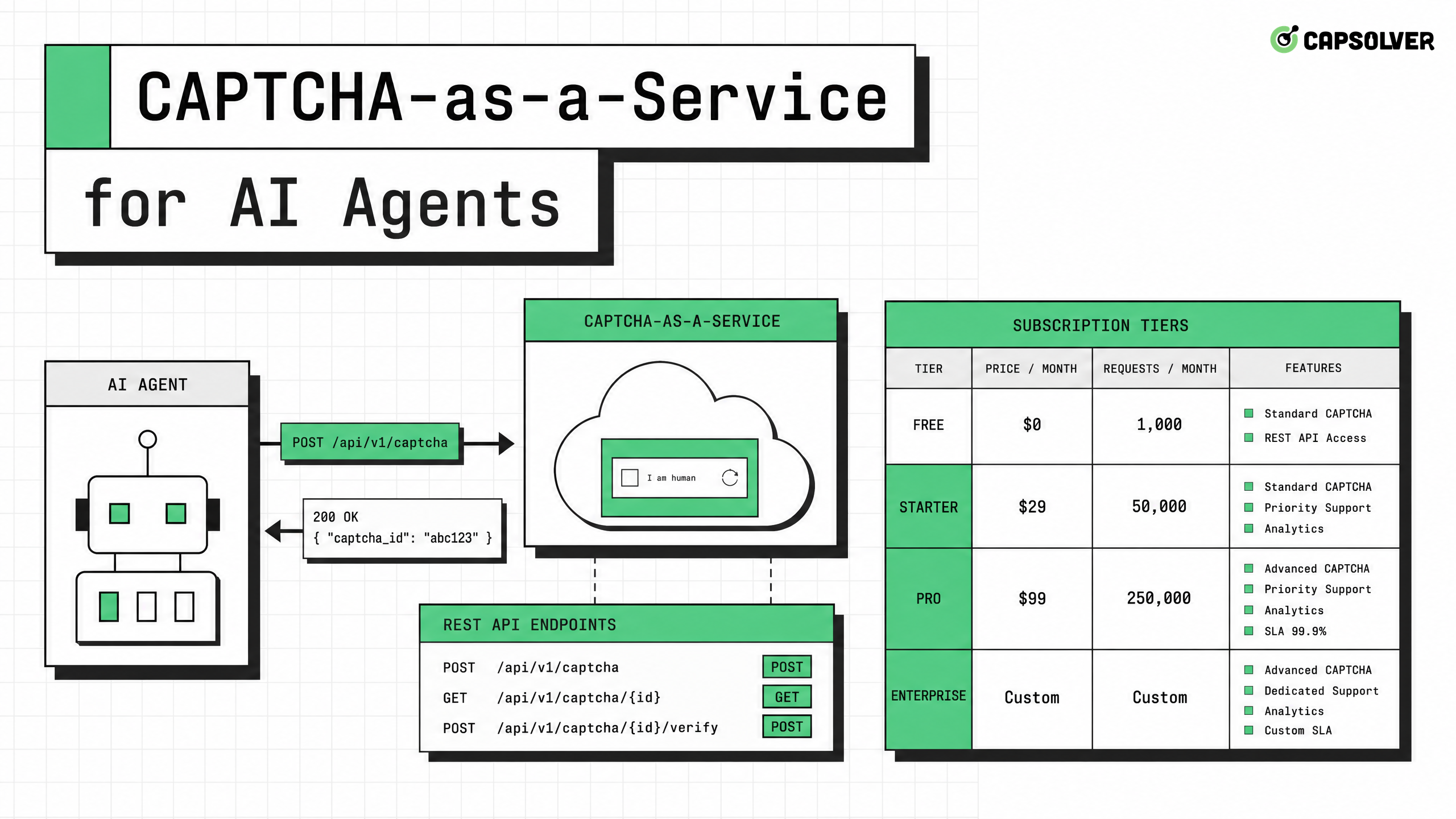
AI agents frequently encounter CAPTCHA challenges that hinder automated tasks. CAPTCHA-as-a-Service provides an automated, scalable solution for AI agents to overcome these barriers.
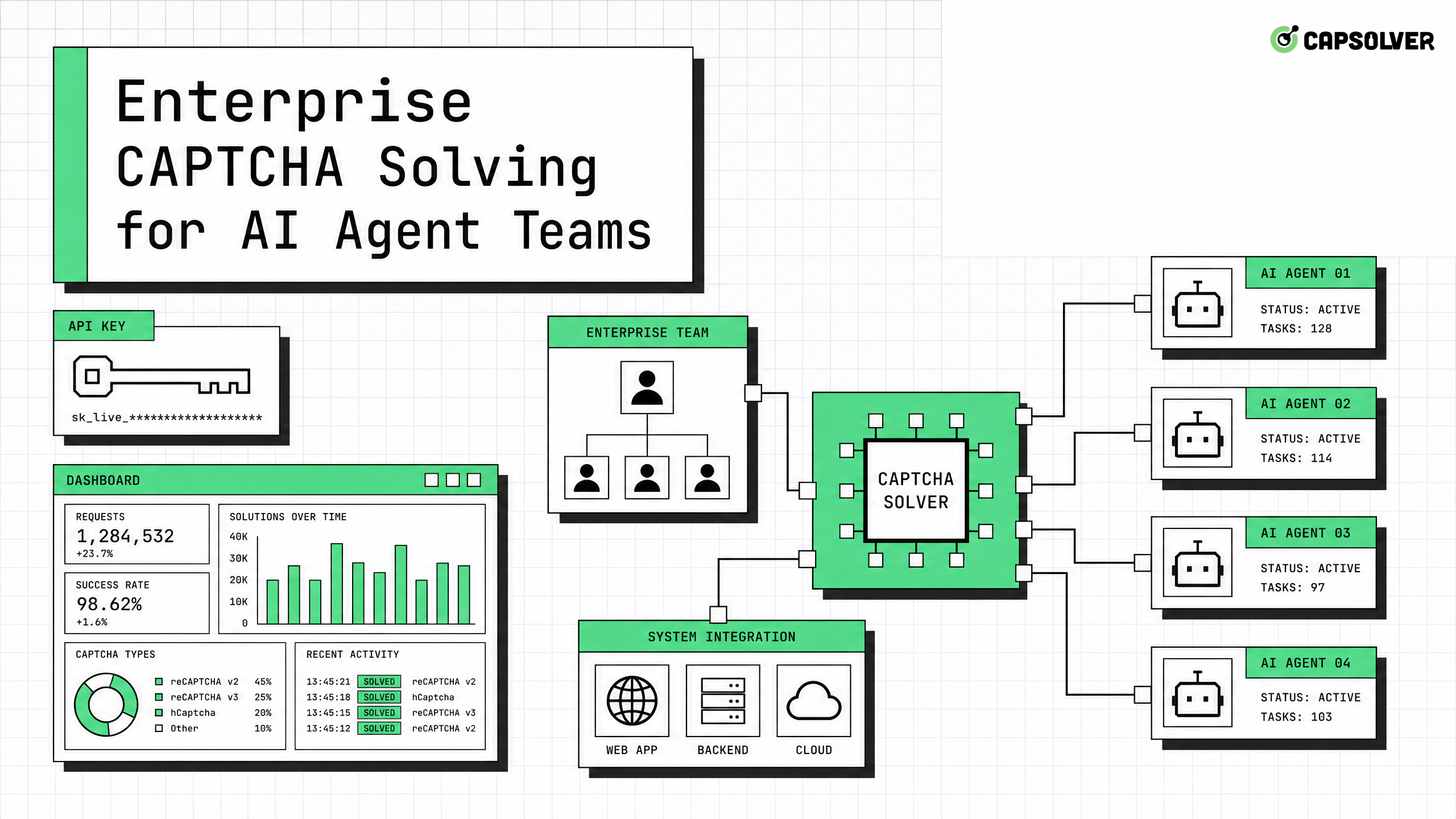
Learn how enterprise AI agent teams can implement scalable, reliable CAPTCHA solving infrastructure to keep automation workflows running without interruption.
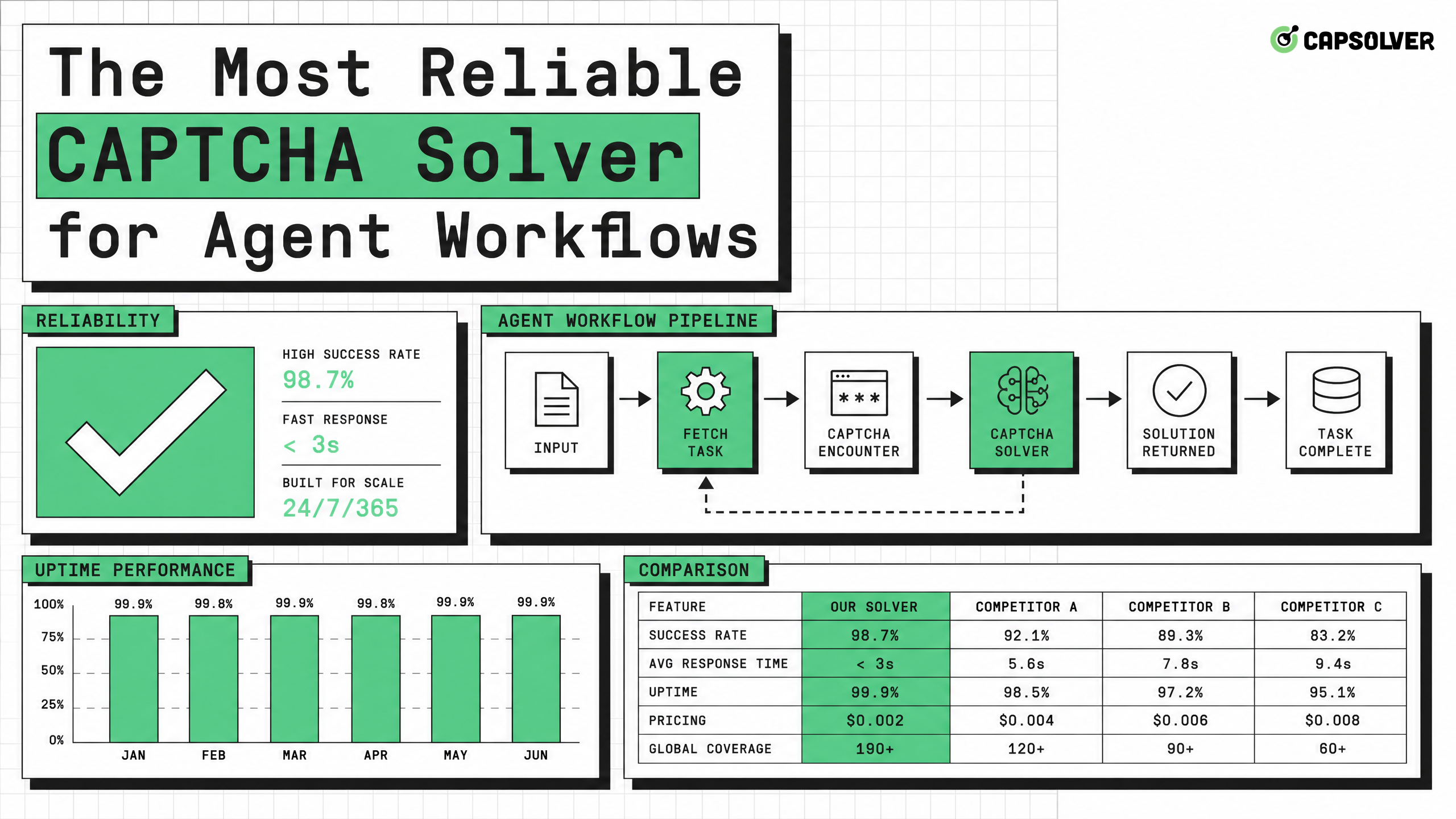
Agent workflows often face significant interruptions due to CAPTCHA challenges, hindering automation efficiency. A reliable CAPTCHA solver is crucial for maintaining continuous operation and data integrity in AI-driven tasks.

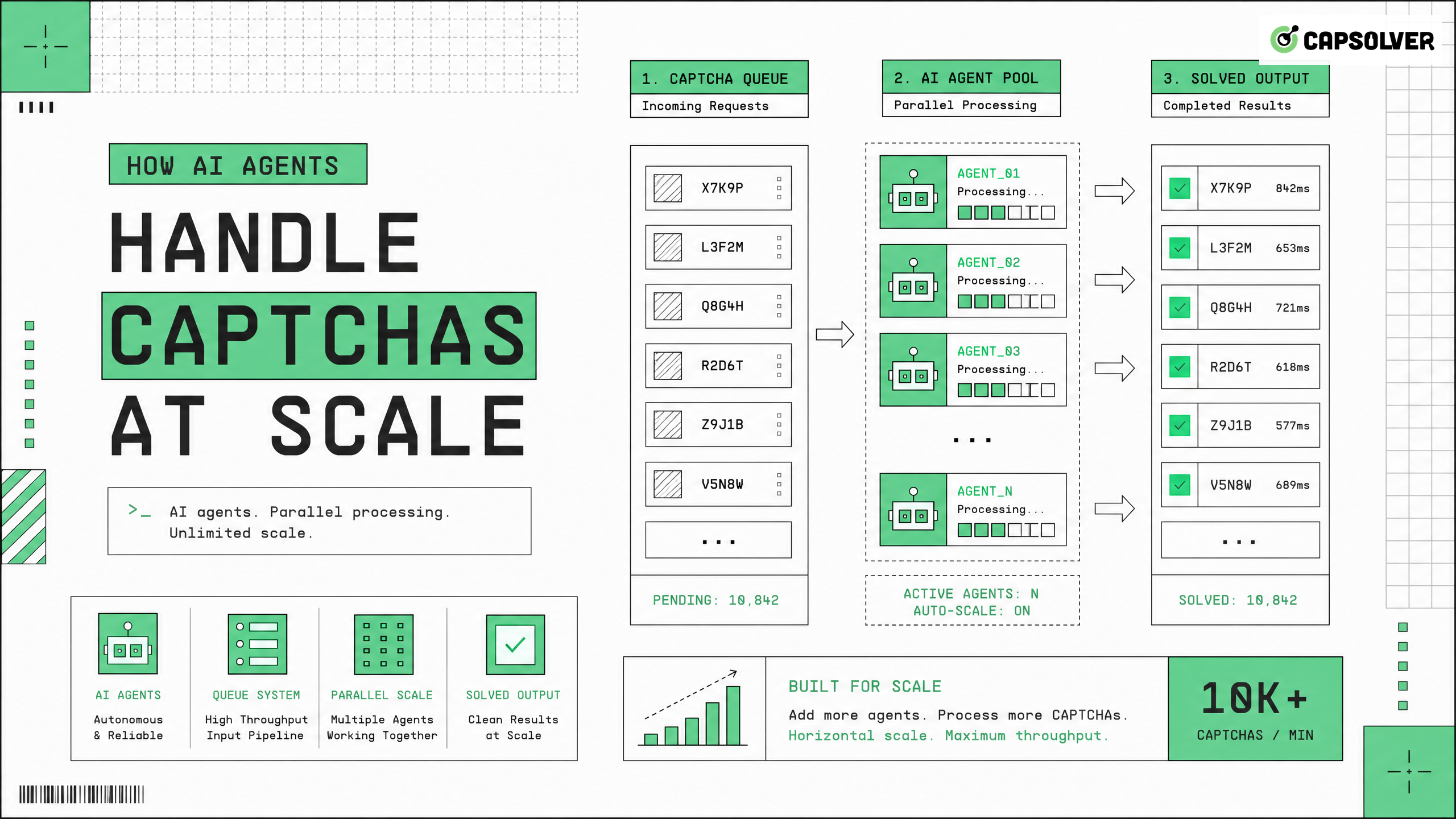
- AI agents require robust infrastructure to handle CAPTCHAs at scale during automated web operations. - Modern traffic validation systems use behavioral analysis and device fingerprinting to detect automated requests. - Integrating a reliable CAPTCHA solving API ensures continuous operation for autonomous agents. - Distributed architectures and proxy rotation are essential for managing high-volum
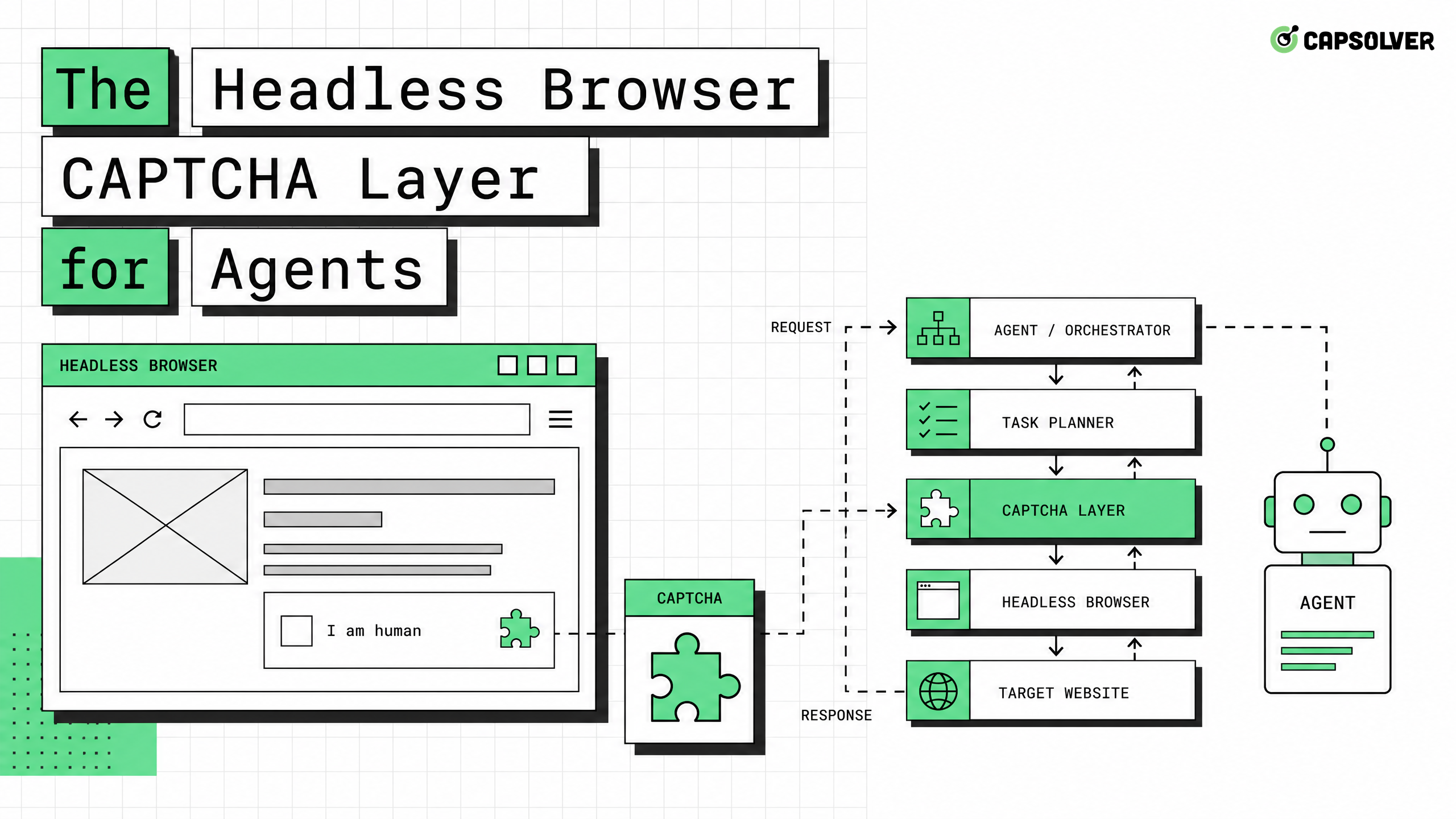
Explore how headless browsers and CAPTCHA-solving layers enable reliable automation for AI agents, overcoming bot detection and ensuring efficient web interaction.
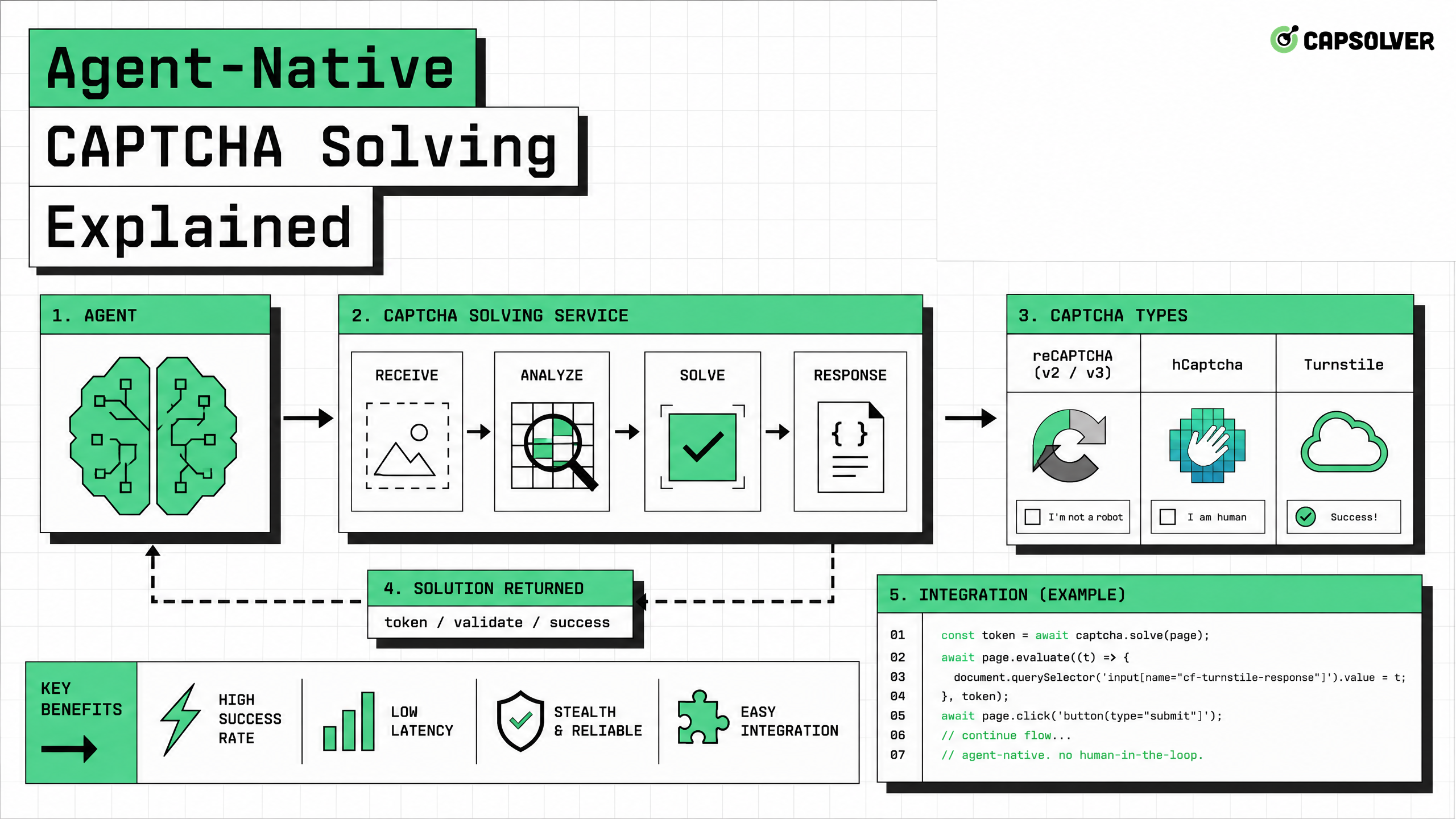
Agent-native CAPTCHA solving integrates directly into AI agent workflows for reliable automation. Traditional CAPTCHA resolution methods are often unreliable and easily detected by advanced bot protection.