🎉NEWCapSolver for AI agents-MCP, agent tools, and SDK integrations

Sora Fujimoto
AI Solutions Architect
Published Aug 01, 2024
Updated Aug 01, 2024 · min read
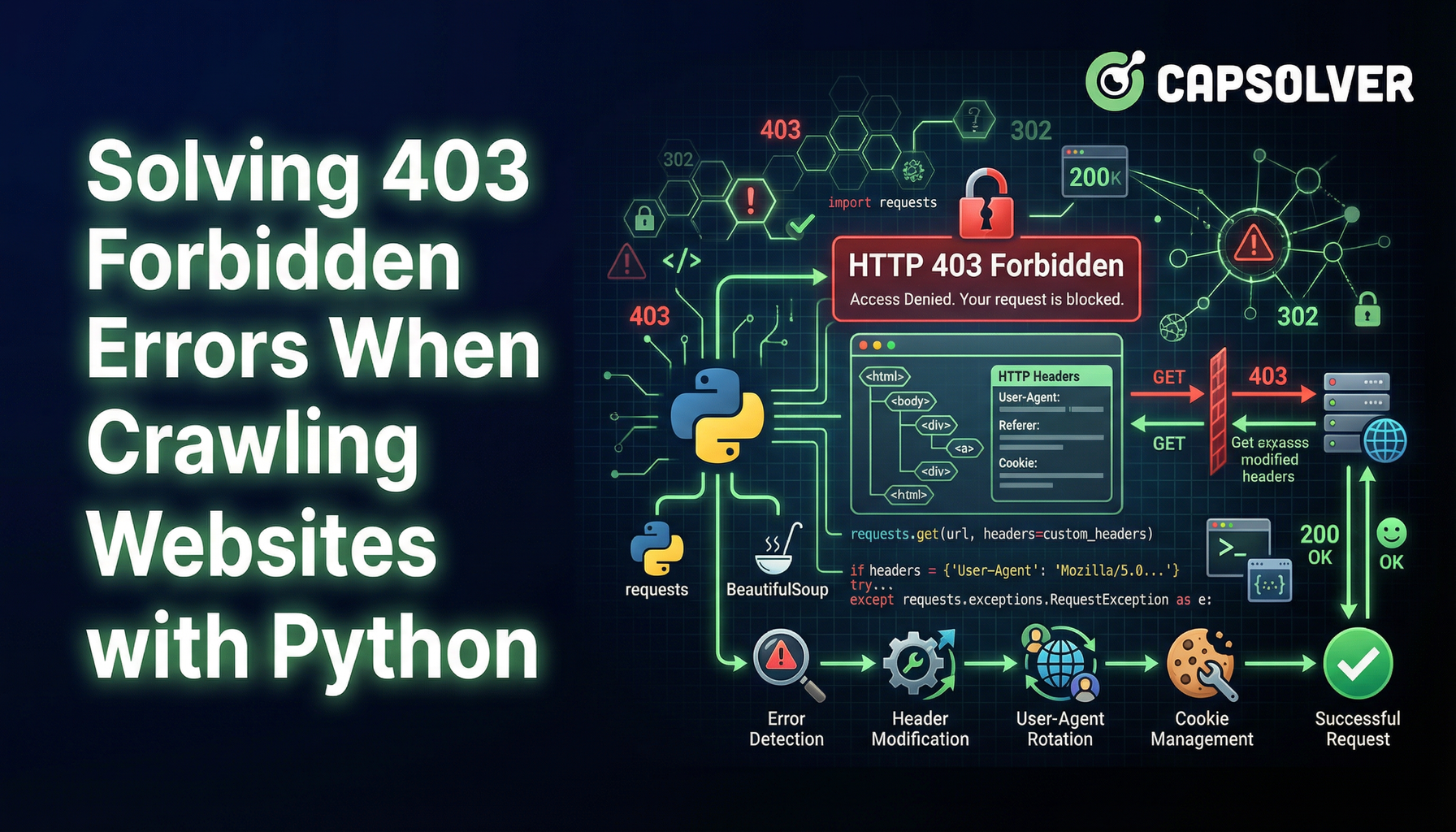
Web scraping is an invaluable technique for extracting data from websites. However, encountering a 403 Forbidden error can be a major roadblock. This error signifies that the server understands your request, but it refuses to authorize it. Here’s how to navigate around this issue and continue your web scraping journey.
A 403 Forbidden error occurs when a server denies access to the requested resource. This can happen for several reasons, including:
Struggling with the repeated failure to completely solve the irritating captcha? Discover seamless automatic captcha solving with CapSolver AI-powered Auto Web Unblock technology!
Redeem Your CapSolver Bonus Code
Boost your automation budget instantly!
Use bonus code CAPN when topping up your CapSolver account to get an extra 5% bonus on every recharge — with no limits.
Redeem it now in your CapSolver Dashboard
.
Servers often block requests from the same IP address after a certain threshold. Using a pool of proxy servers to rotate IP addresses can help you avoid this. Services like Nstproxy or Bright Data offer rotating proxy solutions.
import requests
proxies = {
    "http": "http://your_proxy_here",
    "https": "http://your_proxy_here",
}
response = requests.get("http://example.com", proxies=proxies)Web servers can detect and block requests with suspicious User-Agent strings. Spoofing a User-Agent string to mimic a regular browser can help avoid detection.
headers = {
    "User-Agent": "Mozilla/5.0 (Windows NT 10.0; Win64; x64) AppleWebKit/537.36 (KHTML, like Gecko) Chrome/58.0.3029.110 Safari/537.3"
}
response = requests.get("http://example.com", headers=headers)Sending too many requests in a short period can trigger rate limiting. Introducing delays between requests can help you stay under the radar.
import time

for url in url_list:
    response = requests.get(url)
time.sleep(5) # Delay for 5 secondsSome resources require authentication. Using cookies or API keys for authenticated requests can bypass access restrictions.
cookies = {
    "session": "your_session_cookie_here"
}
response = requests.get("http://example.com", cookies=cookies)Headless browsers like Puppeteer or Selenium simulate real user interactions and can help bypass sophisticated anti-scraping measures.
from selenium import webdriver

options = webdriver.ChromeOptions()
options.add_argument('headless')
driver = webdriver.Chrome(options=options)
driver.get("http://example.com")
html = driver.page_sourceIn addition to 403 errors, web scrapers often encounter CAPTCHAs, which are designed to block automated access. CAPTCHAs like reCAPTCHA require solving visual or interactive challenges to prove that the request is made by a human.
To solve these challenges, you can use services like CapSolver that provide automated CAPTCHA-solving solutions. CapSolver supports a variety of CAPTCHA types and offers easy integration with web scraping tools.
Encountering a 403 Forbidden error while web scraping can be frustrating, but understanding the reasons behind it and employing the right techniques can help you overcome this hurdle. Whether it's rotating IPs, using realistic User-Agent strings, throttling requests, handling authentication, or leveraging headless browsers, these methods can help you continue extracting valuable data from the web.
By following these strategies, you can effectively manage and circumvent 403 errors, ensuring smoother and more successful web scraping efforts.
Bypassing a 403 error is not inherently illegal, but legality depends on the website’s terms of service, robots.txt rules, and local laws. Scraping publicly accessible data for legitimate purposes is often allowed, while bypassing authentication, paywalls, or explicit restrictions may violate terms or regulations. Always review the target site’s policies before scraping.
A 403 error can persist if the website uses advanced bot-detection systems such as behavioral analysis, fingerprinting, or CAPTCHA challenges. In such cases, simple IP rotation and User-Agent spoofing may not be sufficient. Combining request throttling, session management, headless browsers, and CAPTCHA-solving services like CapSolver can significantly improve success rates.
For large-scale scraping, the most reliable approach is a layered strategy: high-quality rotating residential or mobile proxies, realistic browser fingerprints, controlled request rates, proper authentication handling, and automated CAPTCHA solving. Using headless browsers with AI-based web unblock solutions helps closely mimic real user behavior and reduces the likelihood of repeated 403 blocks.
Sora Fujimoto
AI Solutions Architect
Connecting agents, browsers, and APIs into one workflow.
ABOUT THE AUTHOR
Solve an image CAPTCHA in Node.js with the documented ImageToTextTask request, local Base64 encoding, direct text results, and a small tested client.

Compare ImageToTextTask and VisionEngine by CAPTCHA input, recognition output, module requirements, and application checks before choosing a solver task.