🎉NEWCapSolver for AI agents-MCP, agent tools, and SDK integrations

Anh Tuan
Data Science Expert
Published Feb 03, 2026
Updated Feb 03, 2026 · min read
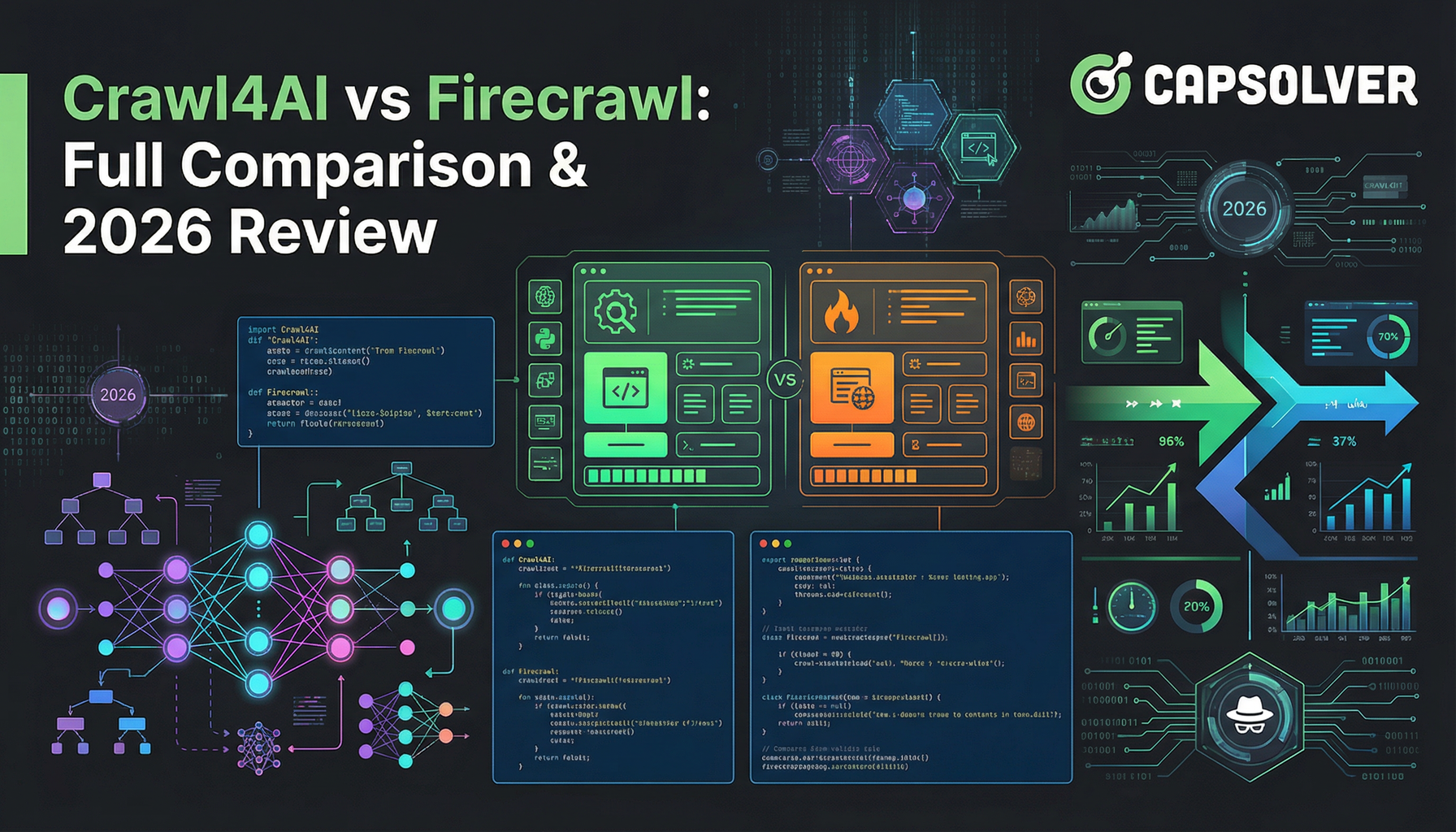
The landscape of web data acquisition has shifted dramatically as we move into 2026. Traditional scraping methods are being replaced by AI-driven solutions that prioritize structured output and LLM compatibility. Two names dominate the conversation in this Crawl4AI vs Firecrawl comparison. This Crawl4AI vs Firecrawl review provides a comprehensive comparison of these powerhouses, evaluating their features, performance, and total cost of ownership in the Crawl4AI vs Firecrawl landscape. Whether you are building a RAG pipeline or a sophisticated AI agent, understanding the nuances between a "toolbox" like Crawl4AI and a "managed service" like Firecrawl is essential for choosing the right data extraction tools. We will dive into the technical architecture, developer experience, and real-world scalability of both platforms.
Crawl4AI is built on a philosophy of transparency and hackability. As a Python-first library, it functions as a sophisticated wrapper around Playwright, offering granular control over browser instances and extraction logic. It is often described as "Scrapy for the LLM era," allowing engineers to step through code and inject custom hooks. The core value of Crawl4AI lies in its ability to run entirely within your own infrastructure. This ensures that sensitive data never leaves your controlled environment.
In contrast, Firecrawl adopts a "serverless" approach to scraping. It abstracts the entire crawling machinery behind a simple API. Users do not need to manage browser fleets or retry logic; they simply send a URL and receive cleaned Markdown or JSON. This "hands-off" philosophy makes it exceptionally popular for language-agnostic environments and rapid prototyping. Firecrawl is designed for those who want the data without the operational overhead of maintaining a scraping stack.
The following table summarizes the core differences between the two platforms to help you identify which fits your technical stack.
| Feature | Crawl4AI | Firecrawl |
|---|---|---|
| Type | Open-source Python Library | Managed SaaS (API-first) |
| Primary Language | Python | Language Agnostic (REST API) |
| Extraction Method | Adaptive Heuristics & LLM | Natural Language Prompts |
| Infrastructure | Self-hosted (Docker/K8s) | Fully Managed |
| GitHub Community | ~50,000+ Stars | Active Open-source Fork available |
| Browser Engine | Playwright | Custom Managed Fleet |
| Scaling | Manual / Kubernetes | Automatic SaaS Scaling |
Crawl4AI's standout feature is its "Adaptive Intelligence." The crawler learns reliable selectors over time, increasing confidence scores and detecting layout changes automatically. This makes it highly effective for stable, high-volume domains. Firecrawl shines with its "FIRE-1" navigation agent, which can autonomously navigate complex sites to find relevant data without manual selector tuning.
Crawl4AI has evolved into a powerhouse for Python developers. Its latest updates in 2026 have introduced advanced pattern-learning algorithms. These algorithms allow the crawler to evolve with the website it is monitoring. When a site changes its DOM structure, Crawl4AI can often find the new location of the data without human intervention. This reduces the maintenance burden significantly for long-term projects.
Furthermore, Crawl4AI provides native support for local LLMs. You can use models like Llama 3 or Mistral running on your own hardware to perform data extraction. This is a game-changer for privacy-conscious industries like finance or healthcare. By keeping the extraction logic local, you eliminate the latency and cost associated with external LLM API calls. It also integrates seamlessly with Playwright integration strategies, allowing for complex multi-step interactions.
Firecrawl has built a robust ecosystem around its core API. It is not just a scraper; it is a comprehensive data delivery platform. One of its most impressive features is the "Map" endpoint. This allows you to generate a full sitemap of any website in seconds. You can then selectively crawl or extract data from specific sections. This level of automation is difficult to achieve with a library-based approach without writing extensive custom logic.
The Firecrawl playground is another major advantage. It provides a visual interface where you can experiment with natural language prompts. You can see the extracted data in real-time and refine your queries. Once you are satisfied, Firecrawl generates the necessary code snippets for various languages. This makes it the preferred choice for teams working in Node.js, Go, or Rust. It simplifies the process of building AI agent automation by providing a reliable and predictable data source.
Scalability is where the two tools diverge most significantly. With Crawl4AI, you are responsible for horizontal scaling. While this offers maximum control over CPU and memory allocation, it requires significant DevOps effort to maintain a global browser fleet. For teams that need advanced web scraping solutions at scale, managing proxy rotation and stealth settings in Crawl4AI is a manual process. For more on advanced proxy usage, see Best User Agent for Web Scraping. You must configure your own proxy pools and implement your own retry logic.
Firecrawl handles scaling automatically. Their infrastructure is designed to manage thousands of concurrent requests across a global network. They provide built-in proxy rotation and stealth techniques to ensure high success rates. For many AI startups, the trade-off of paying a premium for a managed service is justified by the elimination of infrastructure headaches. Firecrawl's fleet is pre-warmed, meaning that browser instances are ready to go the moment you make a request, reducing initial latency.
Both tools prioritize high-quality, LLM-ready output. They excel at converting messy HTML into clean, structured Markdown. This is crucial for RAG systems where noise in the input can lead to hallucinations or poor performance. Crawl4AI allows for fine-grained control over the Markdown generation process. You can define custom rules for how tables, images, and links are handled.
Firecrawl takes a more automated approach. Its models are trained to recognize the most important parts of a page and discard the rest. This often results in a more compact and relevant output. Firecrawl also provides a "token-saving" mode, which aggressively strips out unnecessary elements to minimize the token count for downstream LLM processing. This can lead to significant cost savings when processing millions of pages through models like GPT-4o.
Understanding the true cost of these tools requires looking beyond the initial price tag.
For low-volume, highly complex extractions, Firecrawl's all-in-one pricing is often more economical. For massive-scale operations where you already have infrastructure, Crawl4AI can offer significant savings. It is a classic "build vs. buy" decision that depends on your specific use case and resource availability.
Regardless of whether you choose Crawl4AI or Firecrawl, modern web scraping frequently encounters sophisticated bot protection systems. These systems can block even the most advanced AI crawlers. This is where CapSolver becomes an essential component of your stack. Even the most intelligent AI agent can be stopped by a well-implemented verification challenge.
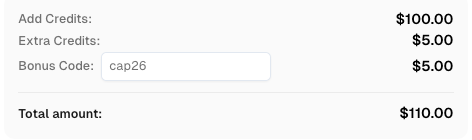
Use code
CAP26when signing up at CapSolver to receive bonus credits!
By integrating CapSolver, you can ensure that your data pipeline remains uninterrupted. CapSolver provides high-speed, reliable solutions for solving complex verification challenges that might otherwise stall your extraction process. Integrating CapSolver into your Crawl4AI setup or using it alongside Firecrawl's API ensures that your data collection remains robust against the ever-evolving security measures of the modern web. It allows your AI models to focus on processing data rather than struggling with access issues.
As we look toward the future, the boundary between crawling and reasoning will continue to blur. We expect to see more integration between scraping tools and agentic frameworks. Crawl4AI is already moving in this direction with its adaptive intelligence. Firecrawl is likely to expand its managed service to include more complex multi-site reasoning capabilities.
The demand for high-quality data will only increase as LLMs become more specialized. Tools that can provide clean, structured, and verified data will be the backbone of the next generation of AI applications. Whether you choose the open-source flexibility of Crawl4AI or the managed convenience of Firecrawl, staying ahead of the curve requires a deep understanding of these technologies and the support systems that make them work at scale.
Deciding in the Crawl4AI vs Firecrawl debate depends on your team's expertise. When comparing Crawl4AI vs Firecrawl, you must consider your project requirements. A final Crawl4AI vs Firecrawl assessment highlights that your choice should align with your long-term scalability goals. If you demand total control, prefer Python, and want to build a custom, adaptive extraction engine, Crawl4AI is the clear winner. If you value speed, ease of use, and want to offload infrastructure management to a reliable partner, Firecrawl is the better choice for 2026. Both tools represent the cutting edge of AI web scraping, and this Crawl4AI vs Firecrawl analysis shows that when combined with the power of CapSolver, they provide a formidable solution for any data-driven enterprise. The key is to evaluate your specific needs and choose the tool that offers the best balance of performance, cost, and flexibility.
1. Is Crawl4AI completely free to use in production?
The library itself is open-source and free under a permissive license. However, production use involves costs for server hosting, proxy rotation, and any external LLM API credits required for data parsing.
2. Can Firecrawl handle JavaScript-heavy websites and SPAs?
Yes, Firecrawl uses a managed browser fleet that natively supports dynamic content, single-page applications, and infinite scrolling, ensuring you get the full rendered content.
3. Which tool is better for RAG (Retrieval-Augmented Generation)?
Both are excellent choices. Firecrawl is faster to set up and provides "LLMs.txt" support, while Crawl4AI offers more control over the Markdown cleaning process for specific data types.
4. Do I need to know how to code to use Firecrawl effectively?
While SDKs are available for developers, Firecrawl's web playground allows non-developers to perform extractions and export data easily without writing code.
5. How do I handle CAPTCHAs with these tools?
While some tools have basic solvers, for consistent and high-volume success, it is recommended to integrate a specialized service like CapSolver into your workflow to ensure uninterrupted data flow.
Anh Tuan
Data Science Expert
Turning task outcomes into actionable insights.
ABOUT THE AUTHOR
Discover how AI agents transform web scraping and competitive intelligence. Learn about automated data collection, anti-bot challenges, and CAPTCHA solutions for scalable workflows.

Discover the key differences between AI agent vs chatbot. Learn how agentic AI outperforms traditional AI in automation, decision-making, and complex workflows.