Fixing reCAPTCHA v3 Errors in Browser Use

Sora Fujimoto
AI Solutions Architect
TL;DR
- reCAPTCHA v3 errors in Browser Use is usually caused by inconsistent browser state, weak timing, wrong challenge values, repeated retries, or network reputation.
- The right fix is to instrument the workflow before changing solver settings, proxies, or browser options.
- Authorized automation should use explicit stop rules, masked logs, and human review for sensitive login or account flows.
- CapSolver is useful when CAPTCHA handling is allowed and the agent needs a controlled token or extension-based integration point.
Introduction
reCAPTCHA v3 errors in Browser Use usually means the workflow produced a risk pattern that the protected application decided to challenge or reject. The fix is not a blind retry loop. It is a careful diagnosis of browser state, network continuity, challenge parameters, and agent planning. CapSolver can help authorized teams handle CAPTCHA challenges as one controlled step inside that diagnosis. The stronger approach is to make the agent observable, lawful, and conservative: collect the right signals, solve only when allowed, submit once, and stop when the site returns a policy or account-risk decision.
Start With reCAPTCHA v3 Semantics
reCAPTCHA v3 returns a token tied to an action and lets the protected application decide how to use the score. The Browser Use agent can fail even when it receives a token, because the site may reject the token after backend verification. Check the site key, page URL, pageAction, hostname, token age, enterprise mode, and submit timing. reCAPTCHA v3 errors in Browser Use should be treated as integration defects until the evidence shows a genuine policy rejection. Teams can normalize this step with Browser-use integration so the runbook uses the same vocabulary across engineering, operations, and compliance. The same decision should account for Google reCAPTCHA v3 docs when the workflow touches identity, browser behavior, or web security controls.
Instrument the Browser Use Action
The custom action that handles the challenge should return a structured result, not just true or false. Include the provider, site key source, action string, token creation time, submit time, visible page result, and retry count. Do not log the token value, credentials, or personal data. The agent planner should see enough state to choose stop, retry with a corrected parameter, or human review. Blind retries hide the real cause. Teams can normalize this step with reCAPTCHA v3 solver so the runbook uses the same vocabulary across engineering, operations, and compliance. The same decision should account for reCAPTCHA verification docs when the workflow touches identity, browser behavior, or web security controls.
Fix Timing and Context
Solve close to submission, then submit once. A token generated before the form is ready can age while the agent scrolls, summarizes, or waits for another tool call. A token submitted from a different browser context can fail because the visible page and backend request do not line up. reCAPTCHA v3 errors in Browser Use often disappear after the team moves token creation later and keeps the page, cookies, and network route stable. Teams can normalize this step with ReCaptchaV3 task documentation so the runbook uses the same vocabulary across engineering, operations, and compliance. The same decision should account for Playwright auto-waiting documentation when the workflow touches identity, browser behavior, or web security controls.
Diagnostic Checklist
| Check | What to inspect | Healthy outcome |
|---|---|---|
| Challenge type | reCAPTCHA, Turnstile, image CAPTCHA, WAF challenge, or login risk review | The workflow records the provider and required values |
| Browser state | Cookies, local storage, viewport, locale, timezone, and extension state | The session remains coherent through page load and submit |
| Network continuity | Proxy route, region, ASN, TLS behavior, and IP changes | The route does not change mid-challenge |
| Planner behavior | Duplicate clicks, repeated submits, missing wait states, and vague tool output | The agent returns typed states and stops after its retry budget |
| Permission | Terms, authorization, account ownership, and data scope | The task continues only when access is allowed |
Fix the Workflow in Layers
Build a Minimum Diagnostic Record
A minimum record keeps the team from guessing. Capture the target domain, workflow name, browser tool, provider type, page URL, visible error, HTTP status, retry count, and final state. Keep the record short enough to review during an incident. The record should not contain passwords, raw tokens, personal messages, or sensitive page data. This makes it useful for debugging and safer for audit. reCAPTCHA v3 errors in Browser Use becomes easier to resolve when the agent reports facts instead of guesses. Teams can normalize this step with identify reCAPTCHA v3 values so the runbook uses the same vocabulary across engineering, operations, and compliance. The same decision should account for Browser Use project documentation when the workflow touches identity, browser behavior, or web security controls.
Compare Manual and Agent Sessions
A manual comparison is still valuable. Run the same authorized workflow in a normal browser and in the agent. Compare page load timing, cookie creation, redirects, JavaScript errors, storage state, and network route. If only the agent fails, the issue is likely environment, timing, or planner behavior. If both fail, the account, domain policy, or application state may be the real cause. reCAPTCHA v3 errors in Browser Use becomes easier to resolve when the agent reports facts instead of guesses. Teams can normalize this step with reCAPTCHA data so the runbook uses the same vocabulary across engineering, operations, and compliance. The same decision should account for the relevant identity, browser behavior, and web security controls in the target workflow.
Redeem Your CapSolver Bonus Code
Boost your automation budget instantly!
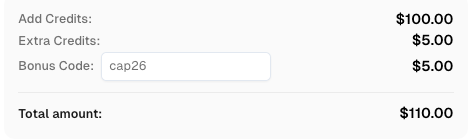
Use bonus code CAP26 when topping up your CapSolver account to get an extra 5% bonus on every recharge — with no limits.
Redeem it now in your CapSolver Dashboard
Implementation Pattern
Use a simple state model for reCAPTCHA v3 errors in Browser Use: detected, values_collected, solve_allowed, token_ready, submitted, accepted, rejected, and stopped. Each state should have a timestamp and a reason. The model should be owned by code, not improvised in a prompt. When the page result is ambiguous, the browser tool should return screenshots or sanitized DOM snippets to a human reviewer instead of continuing.
Keep provider-specific values close to the page where they were found. For reCAPTCHA v3, the action and site key should be collected from the live page. For widget challenges, the page URL and site key need to match the visible form. For extension-based workflows, the browser should wait for the extension result and then continue only after the page state changes. This pattern reduces duplicate submissions and makes errors reproducible.
Add one small dashboard for these outcomes. Track challenge rate, accepted submissions, stopped tasks, human reviews, and policy denials by workflow. Trends over time expose broken releases faster than single traces, and they help teams prove that automation is being used within the approved scope.
Operational Guardrails
Use a Controlled Retry Budget
A retry budget prevents noisy automation. Retrying once after a corrected parameter is reasonable. Retrying several times after the same visible result is not. Add backoff, preserve the first failure, and return a clear stop reason. This protects site stability and gives the operator a decision point. In practice, reCAPTCHA v3 errors in Browser Use should lead to a documented decision: fix parameters, preserve session, slow down, ask for review, or stop. Teams can normalize this step with API Reference so the runbook uses the same vocabulary across engineering, operations, and compliance.
Separate CAPTCHA Handling From Page Logic
Keep challenge handling in one integration layer. The agent should not scatter provider-specific code across prompts, tool calls, and page scripts. A single layer can detect the provider, collect required values, request a solution when allowed, inject the result, and return a typed outcome. This design also makes it easier to change providers or disable solving for restricted workflows. In practice, reCAPTCHA v3 errors in Browser Use should lead to a documented decision: fix parameters, preserve session, slow down, ask for review, or stop. Teams should keep the same vocabulary across engineering, operations, and compliance so incident review stays consistent.
Compliance and Scope
Responsible use is part of the fix. reCAPTCHA v3 errors in Browser Use is a signal that the target system is enforcing a boundary. Use CAPTCHA solving only for workflows you own, test, or have explicit permission to automate. Do not use automation to access private, restricted, sensitive, or unauthorized data. If the site indicates account review, payment risk, identity risk, or access denial, stop and move the task to a human approval path.
Comparison Summary
| Approach | When it helps | Risk if overused |
|---|---|---|
| Parameter correction | The site key, action, URL, or enterprise setting is wrong | Repeating with the same wrong value hides the defect |
| Session continuity | The agent loses cookies, storage, or browser context | Persisting sensitive sessions without policy can create privacy risk |
| Controlled solving | CAPTCHA handling is authorized and values are known | Using it without permission violates boundaries |
| Human review | Login, checkout, account, or ambiguous policy states appear | Too much manual review can slow low-risk workflows |
Runbook for Production Incidents
First, freeze the failing trace and stop automatic retries. Second, identify the provider and the exact page state. Third, compare a normal browser session with the agent session. Fourth, correct one variable at a time: challenge values, token timing, browser continuity, or retry behavior. Fifth, decide whether the task is still inside the approved scope. This runbook keeps reCAPTCHA v3 errors in Browser Use from turning into a broad and expensive investigation.
The final implementation should be boring. The agent opens the page, waits for stable state, detects a challenge, checks policy, calls the solving layer only when allowed, submits once, and returns a typed result. That is more reliable than asking the model to improvise after every challenge screen.
Conclusion
reCAPTCHA v3 errors in Browser Use should be treated as an observability and governance problem. Fix the environment, parameters, timing, retry policy, and approval path before increasing traffic. For authorized CAPTCHA workflows that need a controlled solving layer, CapSolver can fit into the runbook without making the agent ignore site boundaries.
FAQ
What causes reCAPTCHA v3 errors in Browser Use?
The common causes are mismatched challenge values, unstable browser state, weak network continuity, repeated form submissions, missing waits, and policy decisions from the protected application.
Should the agent keep retrying until it passes?
No. Repeated attempts can worsen risk signals and create noisy traffic. Use one controlled retry after correcting a known issue, then stop or request review.
Is CAPTCHA solving appropriate for login workflows?
Only when the workflow is authorized and the account owner or system owner permits automation. Login, payment, health, finance, and private-data flows need stricter human review.
What should the agent log?
Log provider type, page URL, action name, timestamps, retry count, browser context, and final visible result. Do not log raw tokens, passwords, personal data, or private page content.
More
reCAPTCHAJul 16, 2026
Make reCAPTCHA Solver Tutorial: Build a No-Code CapSolver HTTP Scenario
Follow this Make reCAPTCHA solver tutorial to build a CapSolver HTTP scenario with createTask, getTaskResult, retry branches, and verification.

reCAPTCHAJul 15, 2026
Cursor reCAPTCHA v2 Solver: MCP Setup with CapSolver
A Cursor reCAPTCHA v2 solver is safest when Cursor calls a narrow MCP tool instead of asking the model to improvise browser steps. CapSolver provides that shape through `capsolver-mcp`, which exposes solving capabilities as discoverable Model Context Protocol tools. The practical setup is straightforward: install `capsolver-core`, install `capsolver-mcp`, add the server to Cursor, and choose token mode or browser mode depending on the workflow. This guide rewrites the common