🎉NEWCapSolver for AI agents-MCP, agent tools, and SDK integrations

Lucas Mitchell
Automation Engineer
Published Nov 04, 2025
Updated Nov 04, 2025 · min read
Web scraping, particularly for search engine results pages (SERPs), is essential for price monitoring bot puppeteer development, SEO automation, and market analysis. The increasing complexity of anti-bot systems is detailed in The State of Web Scraping 2024 report. However, as data harvesting scales, you inevitably face the most formidable anti-bot defense: Google's reCAPTCHA. This article provides a definitive guide on how to solve reCAPTCHA when scraping search results with Puppeteer, ensuring your data streams remain uninterrupted. We will focus on the most robust and scalable method: leveraging specialized CAPTCHA solving services. This guide is specifically tailored for data scraping engineers, SEO automation developers, and those building puppeteer data harvesting tools.
Google's reCAPTCHA is designed to distinguish human users from automated bots. It has evolved from simple image selection (reCAPTCHA v2) to a purely behavioral analysis system (reCAPTCHA v3), which assigns a score based on user interaction. For technical details, refer to the Google reCAPTCHA v3 Documentation.
When your puppeteer automation script attempts to scrape search results, Google's anti-bot mechanisms analyze several factors:
These factors quickly lead to a low reCAPTCHA v3 score or the presentation of a reCAPTCHA v2 challenge, effectively blocking your puppeteer google scraping operation. Relying solely on stealth plugins is often a temporary fix; a dedicated puppeteer recaptcha solver is necessary for long-term success.
Before resorting to external solvers, you must implement basic stealth measures to reduce the frequency of CAPTCHA challenges. These techniques aim to make your Puppeteer instance look more like a genuine browser.
puppeteer-extra-plugin-stealthThe puppeteer-extra-plugin-stealth is a collection of patches that modify the browser's behavior to avoid detection. It addresses common bot-detection vectors, such as:
webdriver property.chrome.runtime object.navigator.languages property.High-volume scraping requires a robust proxy infrastructure. Rotating through a pool of high-quality residential or mobile proxies helps maintain a good IP reputation, which is crucial for achieving a high reCAPTCHA v3 score. Similarly, rotating user agents prevents easy identification based on a single browser signature. To understand how anti-bot systems identify automated browsers, see the AmIUnique Project on browser fingerprinting.
| Technique | Purpose | Effectiveness for reCAPTCHA |
|---|---|---|
| Stealth Plugins | Hides bot-specific browser properties. | Low to Medium (Easily defeated by v3) |
| Proxy Rotation | Maintains IP reputation and geographic diversity. | Medium (Essential for high volume) |
| User Agent Rotation | Prevents fingerprinting based on browser signature. | Low |
| CAPTCHA Solving Service | Automates the token generation process. | High (The most reliable method) |
For reliable, large-scale puppeteer data harvesting, a third-party captcha solver for puppeteer scraping is the industry standard. These services use a combination of AI, machine learning, and human workers to solve CAPTCHAs and return the necessary token to your script.
CapSolver is a leading service that provides an API to solve various CAPTCHA types, including reCAPTCHA v2, reCAPTCHA v3, and reCAPTCHA Enterprise. Integrating CapSolver allows your script to bypass recaptcha in puppeteer automation without manual intervention. For more on optimizing Puppeteer scripts, consult the Puppeteer Official Documentation.
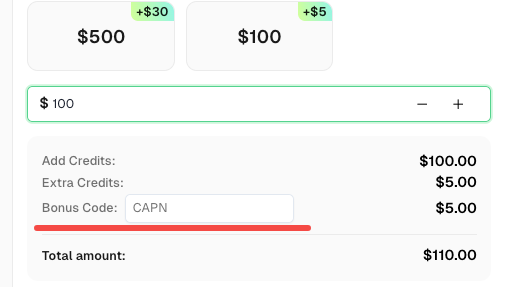
Redeem Your CapSolver Bonus Code
Don’t miss the chance to further optimize your operations! Use the bonus code CAPN when topping up your CapSolver account and receive an extra 5% bonus on each recharge, with no limits. Visit the CapSolver to redeem your bonus now!
A common application is building a price monitoring bot puppeteer tool. If the bot checks thousands of product pages daily, it will quickly be flagged.
Scenario: A script needs to scrape 10,000 product pages from a major e-commerce site protected by reCAPTCHA v3.
Solution: The Puppeteer script is configured to send the sitekey and pageurl to the CapSolver API. CapSolver returns a valid g-recaptcha-response token, which the script then injects into the target page's form before submission. This process takes only a few seconds, ensuring the price monitoring data is collected on time.
The integration process is straightforward and involves three main steps:
sitekey and the pageurl of the page containing the reCAPTCHA.axios) within your Node.js environment to send these parameters to the CapSolver API.page.evaluate() function to inject the token into the correct element and submit the form.For detailed, non-innovative technical code examples, you should refer to the official documentation:
The core logic for solving reCAPTCHA v2 is as follows:
// 1. Get the sitekey and page URL
const sitekey = 'YOUR_SITE_KEY';
const pageurl = 'https://www.target-site.com';

// 2. Send to CapSolver API
const taskId = await createCapSolverTask(sitekey, pageurl);
const token = await getCapSolverResult(taskId); // Wait for the solved token

// 3. Inject the token and submit the form
await page.evaluate((token) => {
    document.getElementById('g-recaptcha-response').innerHTML = token;
    // Optionally, click the submit button if needed
    // document.getElementById('submit-button').click();
}, token);
This method is the most effective way to handle google recaptcha with puppeteer at scale.
SEO professionals often need to automate large-scale keyword research by scraping search suggestions or "People Also Ask" sections. This is a classic puppeteer google scraping task.
Scenario: An SEO tool needs to run 50,000 search queries daily across different Google domains.
Solution: The sheer volume of requests necessitates a robust puppeteer captcha bypass strategy. By integrating CapSolver, the script can automatically solve any reCAPTCHA v3 challenges that arise due to the high query rate. The service ensures the script maintains a high trust score, allowing the puppeteer automation to continue uninterrupted.
Choosing the right method depends on your scale and budget. For serious puppeteer data harvesting, a solver service is non-negotiable.
| Method | Cost | Reliability | Speed | Complexity | Best For |
|---|---|---|---|---|---|
| Stealth Plugins | Free | Low | Fast | Low | Small, non-critical projects |
| Manual Solving | N/A | High | Slow | Low | Debugging or one-off tasks |
| Third-Party Solver (CapSolver) | Per-solve fee | High | Fast | Medium | Large-scale, critical puppeteer recaptcha solver operations |
| Machine Learning (Self-Hosted) | High setup/maintenance | Medium | Medium | High | Highly specialized, in-house teams |
reCAPTCHA v3 is particularly challenging because it doesn't present a visible challenge; it simply blocks the request if the score is too low. To succeed with reCAPTCHA v3, your puppeteer captcha bypass must focus on generating a high score.
CapSolver's reCAPTCHA v3 solution works by simulating human-like behavior on the target page, which is then used to generate a high-score token. This is far more effective than simply using a stealth plugin.
To learn more about solving the invisible reCAPTCHA v3, read:
Successfully performing puppeteer google scraping at scale hinges on your ability to reliably avoid recaptcha puppeteer blocks. While stealth techniques are a good starting point, the only truly scalable and reliable method is integrating a professional captcha solver for puppeteer scraping service.
CapSolver provides the speed, reliability, and multi-CAPTCHA support necessary to keep your puppeteer automation running smoothly. Stop wasting time debugging stealth issues and start collecting the data you need.
Ready to streamline your data collection and bypass recaptcha in puppeteer automation?
Start your free trial today and experience seamless CAPTCHA solving:
A: For small, non-critical tasks, you might temporarily avoid recaptcha puppeteer blocks using stealth plugins and good proxy rotation. However, for large-scale, persistent puppeteer data harvesting, a paid service is necessary. Google's reCAPTCHA v3 is specifically designed to defeat free, open-source bypass methods.
A: Automating interactions, including solving CAPTCHAs, often violates a website's Terms of Service. Users of puppeteer recaptcha solver tools should be aware of the legal and ethical implications of their scraping activities. Always check the target website's robots.txt and ToS. For a necessary overview of the legal landscape, refer to the Electronic Frontier Foundation (EFF) on Copyright.
A: reCAPTCHA v2 is the "I'm not a robot" checkbox or the image selection challenge. reCAPTCHA v3 is invisible and returns a score (0.0 to 1.0) based on user behavior. A puppeteer captcha bypass for v2 involves getting a token; for v3, it involves generating a high-score token. Both are solvable via the CapSolver API.
A: When performing puppeteer google scraping, you should rotate proxies frequently, ideally after every few requests or when you encounter a CAPTCHA or block page. Using a high-quality proxy pool (residential or mobile) is more important than the rotation frequency itself.
A: No. While Puppeteer-Extra-Stealth is essential for initial anti-bot evasion, it is not a puppeteer recaptcha solver It helps you avoid recaptcha puppeteer challenges less frequently, but it cannot solve the challenge when it appears. For guaranteed success, you need a dedicated solver service.
Lucas Mitchell
Automation Engineer
Helping browser automation recover and continue.
ABOUT THE AUTHOR
Understand reCAPTCHA v3 score range (0.0 to 1.0), its meaning, and how to improve your score. Learn how to handle low scores and optimize user experience.

Facing "reCAPTCHA Invalid Site Key" or "invalid reCAPTCHA token" errors? Discover common causes, step-by-step fixes, and troubleshooting tips to resolve reCAPTCHA verification failed issues. Learn how to fix reCAPTCHA verification failed please try again.