🎉NEWCapSolver for AI agents-MCP, agent tools, and SDK integrations

Ethan Collins
AI Agent Workflow Engineer
Published Aug 17, 2026
Updated Aug 17, 2026 · min read
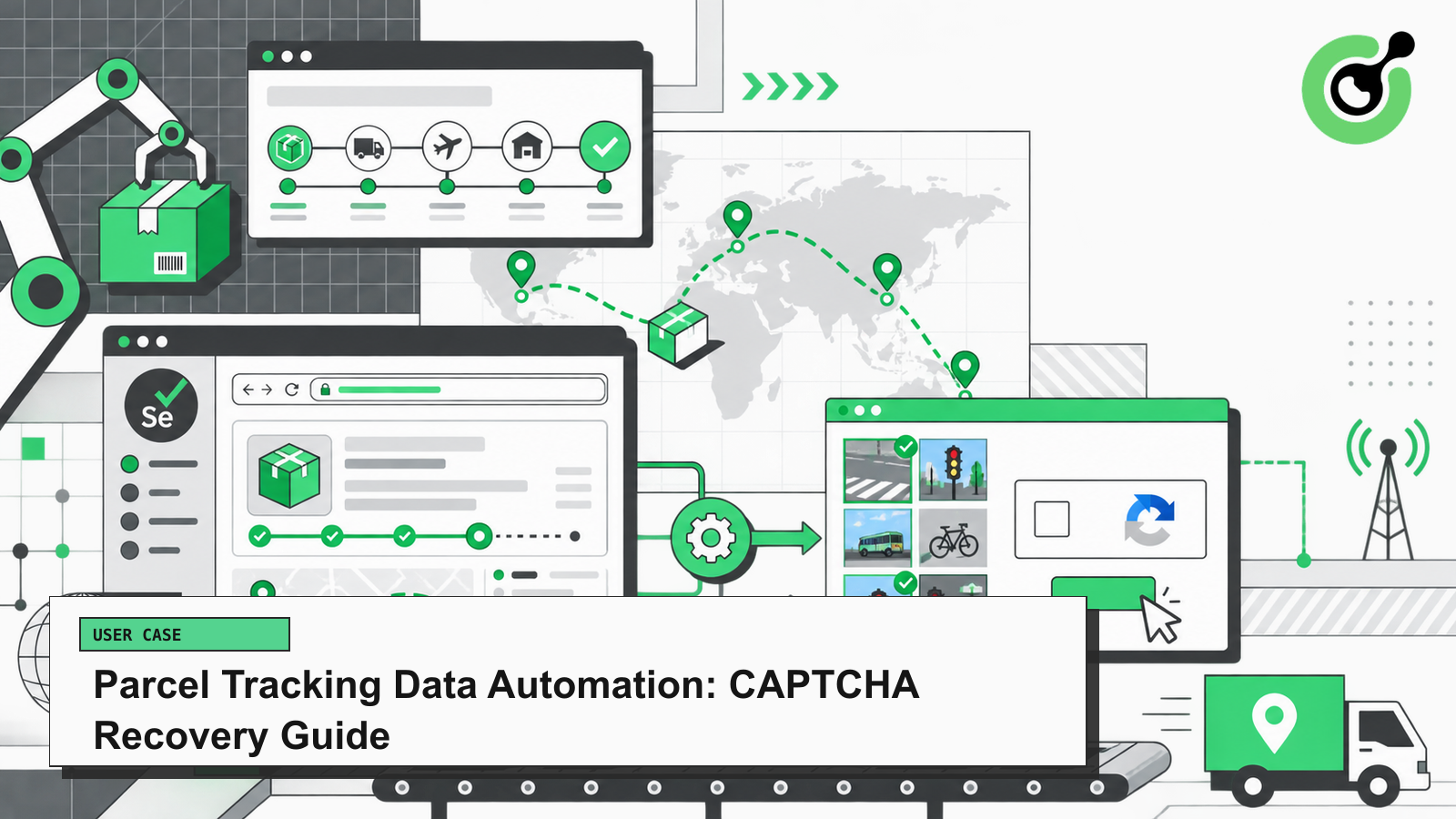
Parcel tracking data automation fails when a verification checkpoint interrupts the exact moment a shipment timeline is being refreshed. CapSolver can provide a bounded reCAPTCHA recovery step inside an authorized Selenium workflow, but it does not decide which parcel belongs to which customer or whether an event is trustworthy. This tutorial treats CAPTCHA as the central interrupted state, then returns to event collection with the same tracking identifier, carrier, browser session, and polling window. It explains inputs, normalized outputs, error recovery, and terminal conditions for duplicate events, repeated challenges, and changed shipment context. Use parcel tracking data automation only for lawful, reasonable, responsible, user-authorized monitoring of public or otherwise permitted tracking information, with careful handling of personal and delivery-related data.
The CapSolver implementation for parcel tracking data automation is grounded in reCAPTCHA v2 tasks. Keep fields inside the CAPTCHA family that defines them. Do not invent task types, callback names, request properties, result fields, or token submission behavior. The surrounding application owns authorization, input validation, result use, retries, and the final business assertion.
The input is an official reCAPTCHA v2 task for an authorized tracking page. The create response must contain taskId; polling returns the documented solution object only when status is ready. The loop stops on create error, missing taskId, failed status, API error, HTTP timeout, or the absolute deadline. The application must then confirm that the original tracking timeline loaded for the same identifier.
import os
import time
import requests

API = "https://api.capsolver.com"

def solve_authorized_task(deadline_seconds=120):
    task = {
        "type": "ReCaptchaV2TaskProxyLess",
        "websiteURL": "https://tracking.example/authorized-status",
        "websiteKey": "PUBLIC_SITE_KEY",
    }
    created = requests.post(
        f"{API}/createTask",
        json={"clientKey": os.environ["CAPSOLVER_API_KEY"], "task": task},
        timeout=(10, 30),
    ).json()
    if created.get("errorId") or not created.get("taskId"):
        raise RuntimeError(created.get("errorDescription", "createTask failed"))

    deadline = time.monotonic() + deadline_seconds
    while time.monotonic() < deadline:
        time.sleep(2)
        result = requests.post(
            f"{API}/getTaskResult",
            json={"clientKey": os.environ["CAPSOLVER_API_KEY"], "taskId": created["taskId"]},
            timeout=(10, 30),
        ).json()
        if result.get("status") == "ready":
            return result["solution"]
        if result.get("status") == "failed" or result.get("errorId"):
            raise RuntimeError(result.get("errorDescription", "task failed"))
raise TimeoutError("absolute CAPTCHA task deadline exceeded")parcel tracking data automation needs a defined workflow identity at this stage. Record tracking identifier hash, carrier, page URL, browser context, poll window, and attempt number as one checkpoint, not as unrelated log messages. These values explain what the automation believed, what it observed, and why it was permitted to continue. The operating rule is to freeze the shipment context before recovery. The conservative boundary is to cancel when the identifier or carrier changes. Without that boundary, a technically successful API call can be attached to the wrong page, wrong account, wrong business object, or stale browser session.
Start with tracking identifier hash, then bind it to carrier, page URL, browser context. Use typed fields and explicit unknown values. Every record should include an observed timestamp, a correlation ID, the authorized purpose, and the component that made the decision. Avoid copying credentials, full cookies, raw solution values, or unnecessary page content into the record. Missing evidence must remain missing; a convenient default must never look like a real observation.
The current packet should be compared with the last valid packet for the same authorized unit of work. A change in carrier may be expected, while a change in page URL can invalidate the job. Emit a small state set such as ACCEPT, RETRY_ONCE, REVIEW, or STOP with a reason code. Operational telemetry can follow HTTP Semantics while keeping credentials, cookies, raw solution values, and unnecessary page content out of logs.
The stop condition is part of the implementation. When the workflow must cancel when the identifier or carrier changes, cancel pending child work, preserve a redacted evidence summary, release the queue lock, and prevent background retries from continuing with stale state. A later operator-approved run should begin from a fresh browser or task checkpoint and re-evaluate scope. This makes parcel tracking data automation explainable under load and prevents a single ambiguous page from becoming a retry storm.
The Selenium reCAPTCHA integration adds adjacent implementation context, while this workflow keeps the narrower workflow identity contract explicit. The output of this stage is a machine-readable decision and the minimum evidence required to reproduce it. It is not permission to ignore terms, access controls, data rights, rate limits, or account boundaries. A review state is a valid outcome when the evidence is incomplete.
parcel tracking data automation needs a defined challenge boundary at this stage. Record reCAPTCHA frame, page status, consent screen, login boundary, rate signal, and DOM stability as one checkpoint, not as unrelated log messages. These values explain what the automation believed, what it observed, and why it was permitted to continue. The operating rule is to classify the page before extracting events. The conservative boundary is to do not treat every empty timeline as a CAPTCHA. Without that boundary, a technically successful API call can be attached to the wrong page, wrong account, wrong business object, or stale browser session.
Start with reCAPTCHA frame, then bind it to page status, consent screen, login boundary. Use typed fields and explicit unknown values. Every record should include an observed timestamp, a correlation ID, the authorized purpose, and the component that made the decision. Avoid copying credentials, full cookies, raw solution values, or unnecessary page content into the record. Missing evidence must remain missing; a convenient default must never look like a real observation.
The current packet should be compared with the last valid packet for the same authorized unit of work. A change in page status may be expected, while a change in consent screen can invalidate the job. Emit a small state set such as ACCEPT, RETRY_ONCE, REVIEW, or STOP with a reason code. Evidence retention should reflect W3C Trace Context while keeping credentials, cookies, raw solution values, and unnecessary page content out of logs.
The stop condition is part of the implementation. When the workflow must do not treat every empty timeline as a CAPTCHA, cancel pending child work, preserve a redacted evidence summary, release the queue lock, and prevent background retries from continuing with stale state. A later operator-approved run should begin from a fresh browser or task checkpoint and re-evaluate scope. This makes parcel tracking data automation explainable under load and prevents a single ambiguous page from becoming a retry storm.
The Selenium browser automation fundamentals adds adjacent implementation context, while this workflow keeps the narrower challenge boundary contract explicit. The output of this stage is a machine-readable decision and the minimum evidence required to reproduce it. It is not permission to ignore terms, access controls, data rights, rate limits, or account boundaries. A review state is a valid outcome when the evidence is incomplete.
parcel tracking data automation needs a defined browser handoff at this stage. Record same driver session, approved hostname, site key, task ID, absolute deadline, and one-attempt budget as one checkpoint, not as unrelated log messages. These values explain what the automation believed, what it observed, and why it was permitted to continue. The operating rule is to resume only the paused shipment job. The conservative boundary is to stop on a second challenge or browser replacement. Without that boundary, a technically successful API call can be attached to the wrong page, wrong account, wrong business object, or stale browser session.
Start with same driver session, then bind it to approved hostname, site key, task ID. Use typed fields and explicit unknown values. Every record should include an observed timestamp, a correlation ID, the authorized purpose, and the component that made the decision. Avoid copying credentials, full cookies, raw solution values, or unnecessary page content into the record. Missing evidence must remain missing; a convenient default must never look like a real observation.
The current packet should be compared with the last valid packet for the same authorized unit of work. A change in approved hostname may be expected, while a change in site key can invalidate the job. Emit a small state set such as ACCEPT, RETRY_ONCE, REVIEW, or STOP with a reason code. The control boundary is consistent with OWASP Data Protection Guidance while keeping credentials, cookies, raw solution values, and unnecessary page content out of logs.
The stop condition is part of the implementation. When the workflow must stop on a second challenge or browser replacement, cancel pending child work, preserve a redacted evidence summary, release the queue lock, and prevent background retries from continuing with stale state. A later operator-approved run should begin from a fresh browser or task checkpoint and re-evaluate scope. This makes parcel tracking data automation explainable under load and prevents a single ambiguous page from becoming a retry storm.
The automation CAPTCHA failure causes adds adjacent implementation context, while this workflow keeps the narrower browser handoff contract explicit. The output of this stage is a machine-readable decision and the minimum evidence required to reproduce it. It is not permission to ignore terms, access controls, data rights, rate limits, or account boundaries. A review state is a valid outcome when the evidence is incomplete.
Redeem Your CapSolver Bonus Code
Boost your automation budget instantly!
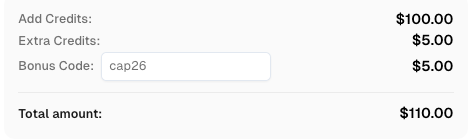
Use bonus code CAP26 when topping up your CapSolver account to get an extra 5% bonus on every recharge — with no limits.
Redeem it now in your CapSolver Dashboard
parcel tracking data automation needs a defined event schema at this stage. Record carrier status, location label, source timestamp, observed timestamp, sequence number, and raw-source hash as one checkpoint, not as unrelated log messages. These values explain what the automation believed, what it observed, and why it was permitted to continue. The operating rule is to map events without erasing carrier wording. The conservative boundary is to send reversed time, unknown timezone, or impossible transitions to review. Without that boundary, a technically successful API call can be attached to the wrong page, wrong account, wrong business object, or stale browser session.
Start with carrier status, then bind it to location label, source timestamp, observed timestamp. Use typed fields and explicit unknown values. Every record should include an observed timestamp, a correlation ID, the authorized purpose, and the component that made the decision. Avoid copying credentials, full cookies, raw solution values, or unnecessary page content into the record. Missing evidence must remain missing; a convenient default must never look like a real observation.
The current packet should be compared with the last valid packet for the same authorized unit of work. A change in location label may be expected, while a change in source timestamp can invalidate the job. Emit a small state set such as ACCEPT, RETRY_ONCE, REVIEW, or STOP with a reason code.
The stop condition is part of the implementation. When the workflow must send reversed time, unknown timezone, or impossible transitions to review, cancel pending child work, preserve a redacted evidence summary, release the queue lock, and prevent background retries from continuing with stale state. A later operator-approved run should begin from a fresh browser or task checkpoint and re-evaluate scope. This makes parcel tracking data automation explainable under load and prevents a single ambiguous page from becoming a retry storm.
The Selenium and Puppeteer CAPTCHA comparison adds adjacent implementation context, while this workflow keeps the narrower event schema contract explicit. The output of this stage is a machine-readable decision and the minimum evidence required to reproduce it. It is not permission to ignore terms, access controls, data rights, rate limits, or account boundaries. A review state is a valid outcome when the evidence is incomplete.
parcel tracking data automation needs a defined change detection at this stage. Record previous event key, current event key, delivery state, exception state, notification history, and confidence as one checkpoint, not as unrelated log messages. These values explain what the automation believed, what it observed, and why it was permitted to continue. The operating rule is to emit alerts only for validated transitions. The conservative boundary is to never infer delivery from a CAPTCHA disappearance. Without that boundary, a technically successful API call can be attached to the wrong page, wrong account, wrong business object, or stale browser session.
Start with previous event key, then bind it to current event key, delivery state, exception state. Use typed fields and explicit unknown values. Every record should include an observed timestamp, a correlation ID, the authorized purpose, and the component that made the decision. Avoid copying credentials, full cookies, raw solution values, or unnecessary page content into the record. Missing evidence must remain missing; a convenient default must never look like a real observation.
The current packet should be compared with the last valid packet for the same authorized unit of work. A change in current event key may be expected, while a change in delivery state can invalidate the job. Emit a small state set such as ACCEPT, RETRY_ONCE, REVIEW, or STOP with a reason code.
The stop condition is part of the implementation. When the workflow must never infer delivery from a CAPTCHA disappearance, cancel pending child work, preserve a redacted evidence summary, release the queue lock, and prevent background retries from continuing with stale state. A later operator-approved run should begin from a fresh browser or task checkpoint and re-evaluate scope. This makes parcel tracking data automation explainable under load and prevents a single ambiguous page from becoming a retry storm.
The ecommerce inventory tracking recovery adds adjacent implementation context, while this workflow keeps the narrower change detection contract explicit. The output of this stage is a machine-readable decision and the minimum evidence required to reproduce it. It is not permission to ignore terms, access controls, data rights, rate limits, or account boundaries. A review state is a valid outcome when the evidence is incomplete.
parcel tracking data automation needs a defined production policy at this stage. Record per-carrier interval, concurrency cap, retention window, redaction rule, account boundary, and incident owner as one checkpoint, not as unrelated log messages. These values explain what the automation believed, what it observed, and why it was permitted to continue. The operating rule is to minimize data and slow down on risk signals. The conservative boundary is to pause when permission, rate policy, or personal-data scope is unclear. Without that boundary, a technically successful API call can be attached to the wrong page, wrong account, wrong business object, or stale browser session.
Start with per-carrier interval, then bind it to concurrency cap, retention window, redaction rule. Use typed fields and explicit unknown values. Every record should include an observed timestamp, a correlation ID, the authorized purpose, and the component that made the decision. Avoid copying credentials, full cookies, raw solution values, or unnecessary page content into the record. Missing evidence must remain missing; a convenient default must never look like a real observation.
The current packet should be compared with the last valid packet for the same authorized unit of work. A change in concurrency cap may be expected, while a change in retention window can invalidate the job. Emit a small state set such as ACCEPT, RETRY_ONCE, REVIEW, or STOP with a reason code.
The stop condition is part of the implementation. When the workflow must pause when permission, rate policy, or personal-data scope is unclear, cancel pending child work, preserve a redacted evidence summary, release the queue lock, and prevent background retries from continuing with stale state. A later operator-approved run should begin from a fresh browser or task checkpoint and re-evaluate scope. This makes parcel tracking data automation explainable under load and prevents a single ambiguous page from becoming a retry storm.
The output of this stage is a machine-readable decision and the minimum evidence required to reproduce it. It is not permission to ignore terms, access controls, data rights, rate limits, or account boundaries. A review state is a valid outcome when the evidence is incomplete.
parcel tracking data automation works in production only when every stage has a defined input, typed output, redacted evidence record, and terminal stop condition. Preserve the authorized page and business context, use verified CapSolver methods or API fields, keep retries bounded, and validate the original application outcome after recovery. Teams running lawful and permitted automation can evaluate CapSolver for the documented CAPTCHA layer while retaining deterministic policy, data quality, and human-review controls in their own systems.
Q: What is parcel tracking data automation?
Parcel tracking data automation collects and normalizes permitted shipment events while preserving carrier, timestamp, and provenance context.
Q: Where does CAPTCHA recovery fit?
It pauses one authorized shipment check, handles the documented challenge once, and returns to the same Selenium context.
Q: What should the automation store?
Store the minimum necessary event fields, redacted identifiers, timestamps, provenance, and terminal decision reason.
Q: When should the monitor stop?
Stop on scope drift, repeated challenges, private account boundaries, impossible chronology, exhausted deadlines, or unclear permission.
Q: Does a solved CAPTCHA mean the shipment changed?
No. A shipment change requires a validated new carrier event after the original tracking page loads.
Ethan Collins
AI Agent Workflow Engineer
Building clearer handoffs between AI agents and tools.
ABOUT THE AUTHOR
Learn scalable Rust web scraping architecture with reqwest, scraper, async scraping, headless browser scraping, proxy rotation, and compliant CAPTCHA handling.

Learn the best techniques to scrape job listings without getting blocked. Master Indeed scraping, Google Jobs API, and web scraping API with CapSolver.