🎉NEWCapSolver for AI agents-MCP, agent tools, and SDK integrations

Ethan Collins
AI Agent Workflow Engineer
Published Jun 17, 2026
Updated Jun 17, 2026 · min read
CAPTCHA blocks in AI web scraping agents should be handled as pipeline control states, not as random browser failures. CapSolver can support approved CAPTCHA handling, but the scraping agent must first confirm scope, permission, request pressure, extraction checkpoint, and data integrity. A challenge on page 50 of a product crawl is different from a challenge on a login page or a pricing API. The right fix protects both the target site and the dataset. It tells the agent when to wait, solve, skip, resume, or stop.
The core design change is to make captcha_blocked a first-class state. CAPTCHA blocks in AI web scraping agents should not be thrown as generic browser exceptions because downstream extractors may still run against challenge HTML and produce garbage rows. The state should carry URL, crawl job ID, item ID, status code, challenge type, response body hash, and the next permitted action.
State modeling also helps decide ownership. The browser tool detects the block, the scheduler applies cooldown, the compliance layer checks scope, the solver path handles approved challenges, and the extractor resumes only after the target page is verified. CapSolver's AI web scraping term is useful here because it combines agent planning with data extraction, but the pipeline still needs explicit boundaries.
MDN's HTTP status code semantics pages are helpful because a status code carries operational meaning. Treat 403, 429, redirects to challenge pages, and widget detection as different states with different recovery paths.
Emit a pipeline event before the extractor sees the page. The event should be small, deterministic, and safe to store beside crawl logs. It should not contain passwords, private account data, or raw personal data from the target site.
{
  "crawlJobId": "jobs/products-2026-06-17",
  "itemKey": "sku-88194",
  "url": "https://example.com/products/88194",
  "state": "captcha_blocked",
  "status": 403,
  "nextAction": "scope_review"
}
This event keeps CAPTCHA blocks in AI web scraping agents from reaching the parser as ordinary HTML. The extractor should run only after the page verifier changes the state back to content_verified.
The first recovery question is permission. CAPTCHA blocks in AI web scraping agents can signal that a site does not want automated access to a path, that a public route is overloaded, or that an account-only area is restricted. Technical capability does not grant permission to collect private, restricted, or sensitive data.
The robots exclusion protocol is standardized in RFC 9309 as robots.txt access rules. Robots directives are not a complete legal framework, but they are an important machine-readable signal for crawl scope. Combine them with terms, contracts, data sensitivity review, and regional law. CapSolver's web scraping legality material gives a practical checklist for this decision.
When scope is unclear, the agent should stop and produce an access review item. A scraping agent that solves challenges on restricted pages can create legal and security risk even if every technical step works. Responsible handling is part of the architecture.
Extraction state should describe data progress: current URL, pagination cursor, item keys, deduplication hash, and last committed row. Challenge state should describe access progress: protected URL, challenge type, attempt count, cooldown, and solver eligibility. CAPTCHA blocks in AI web scraping agents become dangerous when those states are merged and the extractor treats a challenge page as data.
Use a page verifier before extraction resumes. Verify canonical URL, expected title pattern, key selector, item count, and response body fingerprint. CapSolver's Playwright CAPTCHA solver integration can fit into browser-based pipelines, but the page verifier decides whether the agent has returned to real content.
Structured data extraction benefits from deterministic parsing. The W3C HTML specification's HTML parsing model is a reminder that parsers consume the document they receive. If the received document is a challenge, the parser will still output something unless your pipeline blocks it.
When scope is permitted and a supported challenge needs solving, keep the CapSolver task separate from extraction state. The official CapSolver createTask and getTaskResult pages define the task lifecycle. For a supported reCAPTCHA v2 challenge, the official task payload uses documented fields such as clientKey, task, type, websiteURL, and websiteKey.
{
  "clientKey": "YOUR_API_KEY",
  "task": {
    "type": "ReCaptchaV2TaskProxyLess",
    "websiteURL": "https://www.google.com/recaptcha/api2/demo",
    "websiteKey": "6Le-wvkSAAAAAPBMRTvw0Q4Muexq9bi0DJwx_mJ-"
  }
}
Do not store crawl cursors or item keys inside the CapSolver task. Store them in the scraping job record, then resume extraction only after page verification confirms that the protected content, not a challenge page, is loaded.
Redeem Your CapSolver Bonus Code
Boost your automation budget instantly!
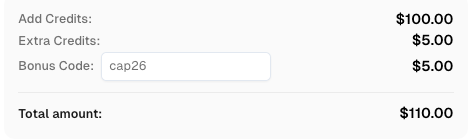
Use bonus code CAP26 when topping up your CapSolver account to get an extra 5% bonus on every recharge — with no limits.
Redeem it now in your CapSolver Dashboard
Backoff should be applied where pressure is created. A page-level sleep inside one browser does not protect a fleet if the scheduler immediately launches another worker for the same domain. CAPTCHA blocks in AI web scraping agents should update a shared domain budget, route budget, and path budget before the next crawl item starts.
MDN's HTTP 429 rate limits guidance and RFC 9110's Retry-After header behavior support this design. If the server asks clients to wait, your scheduler should wait. CapSolver's IP ban handling can help translate this into scraping operations.
Backoff is not only a kindness to the target; it protects data quality. If a scraper pushes through pressure, it may collect partial pages, challenge pages, stale cached pages, or duplicate data. Waiting can produce a cleaner dataset than forcing completion.
A page sleep inside a single browser is too local. Write a scheduler-level backoff record that every worker checks before requesting the next URL from the same pressure group.
{
  "budgetKey": "crawl:example.com:search-pages",
  "blockedAt": "2026-06-17T02:11:00Z",
  "resumeAfter": "2026-06-17T02:21:00Z",
  "reason": "http_429_or_challenge_rate",
  "queueAction": "pause_matching_items"
}
This record makes backoff part of collection planning. CAPTCHA blocks in AI web scraping agents should reduce new work for the affected domain instead of creating more browser attempts.
A CAPTCHA block in the middle of a crawl should not force the whole job to restart. Use item-level checkpoints: discovered URL, fetched URL, verified content, extracted record, normalized record, committed row. CAPTCHA blocks in AI web scraping agents should pause at the fetched or verified boundary, not at an ambiguous browser screenshot.
Resume by cursor, not by page number alone. Infinite scroll, filtered search, and sorted product grids can reorder items between attempts. CapSolver's scraping performance monitoring language helps define recovery metrics: duplicate rate, missing-key rate, challenge rate, retry count, and successful verified pages.
Data integrity needs careful identifiers. The W3C CSV on the Web model discusses tabular data metadata for structured datasets; the same principle applies to scrape outputs. Keep stable item keys and provenance so a challenge recovery does not corrupt the table.
Challenge rate is a signal about architecture quality. CAPTCHA blocks in AI web scraping agents may indicate too much concurrency, poor route fit, missing session persistence, aggressive pagination, or forbidden scope. Track it next to extraction accuracy, freshness, cost, and completion time.
Create dashboards by domain, route pool, agent version, browser mode, content path, and challenge type. A new planner prompt that increases challenge rate should be treated as a regression even if it finishes the same number of rows. CapSolver's AI-agent CAPTCHA article frames this as an agent design issue, not merely a service call issue.
The best steady state is boring: few challenge states, clear cooldowns, verified pages before extraction, low duplicate rate, and explicit stops on unauthorized paths. If CAPTCHA handling becomes the largest part of the pipeline, redesign the collection method, reduce scope, use approved APIs where available, or obtain permission instead of adding more browser pressure.
Write a scraping recovery contract before the next large crawl. It should name allowed domains, disallowed paths, data categories, account rules, route pools, challenge budget, cooldown policy, page verifier, deduplication key, and escalation owner. CAPTCHA blocks in AI web scraping agents are easier to handle when the recovery action is chosen from a contract, not improvised by a prompt.
Make the page verifier strict enough to protect the dataset. A verified page should have the expected URL pattern, canonical marker, title pattern, key selectors, and nonzero item evidence. If those checks fail after a challenge, the extractor should not run. This prevents challenge pages, login pages, and empty pages from becoming rows.
Separate skip from stop. A skip can be valid for one item when the data is optional and access is still permitted. A stop is required when access is restricted, the challenge budget is exhausted, sensitive data appears, or route pressure affects the domain. The agent should write different audit events for these two outcomes.
Plan for delayed completion. A crawl that pauses for cooldown should preserve its queue, cursors, and route assignment. If the queue is rebuilt from scratch after every pause, the first pages may be over-collected while deeper pages never finish. CAPTCHA blocks in AI web scraping agents often expose weak queue durability.
Use small pilot crawls after changing the agent. A new browser version, proxy pool, prompt, extraction selector, or scheduler interval can change challenge rate. Run a limited cohort and compare verified-page rate, duplicate rate, challenge rate, and stop events before opening the full queue.
Include a human review lane. Some targets require permission, a partner API, or a data-sharing agreement. A mature scraping system can say not collectible by this method and hand the item to a business owner. That answer is often better than turning every blocked page into a solver workflow.
Track challenge location in the crawl graph. A block on category pages has a different impact from a block on detail pages, search pages, or media downloads. CAPTCHA blocks in AI web scraping agents should report the graph node where access changed so teams know which data segment is at risk.
Keep raw challenge pages out of training datasets. If the scraping output feeds analytics or model training, challenge HTML can poison downstream data. Quarantine blocked responses, mark them as access events, and commit only verified content records. This protects both quality and auditability.
Give product owners a freshness tradeoff. Sometimes the right response is to collect fewer pages more reliably, wait longer between runs, or move to an approved feed. Surfacing that tradeoff helps the business choose quality and permission over fragile completion numbers.
Audit skipped items after the crawl completes. A skip may be acceptable during collection, but repeated skips for the same category or region can bias the dataset. CAPTCHA blocks in AI web scraping agents should therefore appear in data-quality reports, not only infrastructure dashboards.
Keep solver outcomes out of extraction scoring. A solved challenge says the agent passed one access checkpoint; it does not prove the extracted data is correct. Score page verification, parser accuracy, deduplication, and schema completeness separately so recovery work does not inflate quality metrics.
Handling CAPTCHA blocks in AI web scraping agents requires pipeline discipline: model challenges as states, verify crawl scope, separate extraction state from access state, back off at the scheduler, recover partial datasets with checkpoints, and monitor challenge rate as a quality metric. For authorized scraping and public-data workflows where challenge handling is appropriate, CapSolver can support the CAPTCHA layer while your pipeline protects access rules and data integrity.
It should classify the block, check crawl scope, update scheduler state, and decide whether approved solving, cooldown, skip, review, or stop is allowed. It should not send challenge HTML to the extractor.
Use item-level checkpoints and stable item keys. Resume from the last verified content boundary, not from an ambiguous page number or browser screenshot.
No. Blocks can come from scope restrictions, rate pressure, missing sessions, route mismatch, or account policy. Proxy changes can make identity less coherent if they are not planned.
It should stop when access is restricted, permission is unclear, sensitive data is involved, a hard refusal appears, or the configured challenge and retry budgets are exhausted.
Ethan Collins
AI Agent Workflow Engineer
Building clearer handoffs between AI agents and tools.
ABOUT THE AUTHOR
Learn scalable Rust web scraping architecture with reqwest, scraper, async scraping, headless browser scraping, proxy rotation, and compliant CAPTCHA handling.

Learn the best techniques to scrape job listings without getting blocked. Master Indeed scraping, Google Jobs API, and web scraping API with CapSolver.