🎉NEWCapSolver for AI agents-MCP, agent tools, and SDK integrations

Aloísio Vítor
Image Processing Expert
Published Jun 22, 2026
Updated Jun 22, 2026 · min read
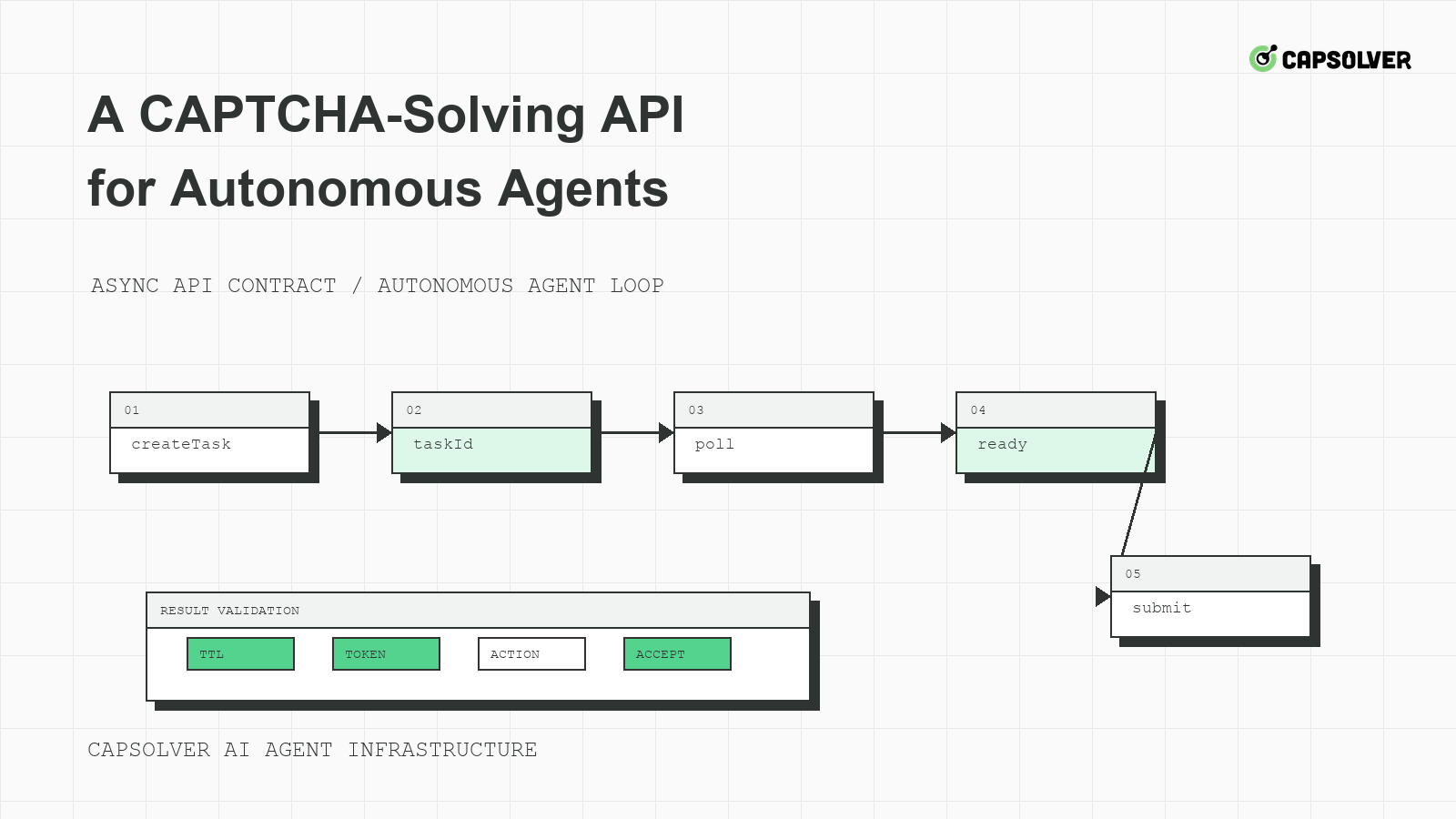
A CAPTCHA-solving API for autonomous agents is useful only when it is surrounded by disciplined state handling. CapSolver provides documented API contracts for CAPTCHA tasks, but the agent runtime still has to preserve the browser session, enforce budgets, and verify the final application response. The common mistake is to treat an API response as a completed task. A safer integration treats the response as one input to a protected action that may still be rejected by the application.
A CAPTCHA-solving API for autonomous agents should be modeled as a state machine instead of a helper function. The states are detection, eligibility check, task creation, polling, result consumption, application verification, and final disposition. Each transition should have a timeout and a stop condition. This keeps the agent from looping when a page rerenders or when a target returns a rate signal.
Autonomous agents need typed states because they can otherwise mistake page friction for progress. A spinner, a disabled submit button, a 429 response, and a challenge iframe are different states. WHATWG's form data construction model is a useful reminder that the browser submits current form state, not the state remembered by the planner.
Use small, explicit state names: challenge_detected, solver_task_created, solver_pending, solver_ready, result_consumed, backend_accepted, backend_rejected, cooldown, and review_required. The agent should not receive raw HTML as its primary decision object. CapSolver's CAPTCHA-solving API availability helps explain why API access belongs behind a service boundary rather than inside prompt text.
pseudocode state flow:
  if protected_action_not_allowed: stop("review_required")
  if challenge_detected: create documented solver task
  while task_pending and within_budget: poll documented result endpoint
  if solver_ready: consume result in original browser session
  if backend_accepts_action: finish("completed_once")
  else: stop("backend_rejected")
This pseudocode intentionally avoids CapSolver request fields. Production code should use the official docs for exact payloads and task types.
Implementation details for a CAPTCHA-solving API for autonomous agents must come from official documentation. CapSolver's createTask API describes task creation, including documented request parameters and response behavior. CapSolver's getTaskResult API describes how asynchronous task results are retrieved. Do not invent task names, callback fields, response keys, or SDK methods to match a page you have not verified.
Run a field mapping review before merging integration code. The review should answer four questions. Which documented task type matches the observed challenge? Which documented request fields are required? Which result state tells the runtime to keep polling? Which final field is consumed by the browser or backend step? CapSolver's Python CAPTCHA API integration can give workflow context, but exact field-level behavior should still be checked against official docs.
The review should reject code that copies an old payload from another challenge family. It should also reject code that treats every API response as reusable across pages. A CAPTCHA-solving API for autonomous agents needs strict correlation between the task, the browser session, the protected action, and the final application response.
The result from a CAPTCHA-solving API for autonomous agents should be consumed by the same browser session that encountered the challenge. Preserve cookies, local storage, route class, user-agent family, viewport, form state, and hidden fields between detection and protected submission. RFC 6265's cookie scope rules explains why cookie domain and path scope can affect a final request.
CapSolver's Playwright and Puppeteer CAPTCHA integration is relevant for browser-based agents because the browser context owns the protected state. If the agent opens a new context after the API result is ready, the target may see a different session. If the form rerenders while polling, the target may reject a stale result. Session binding is part of the integration, not a debugging afterthought.
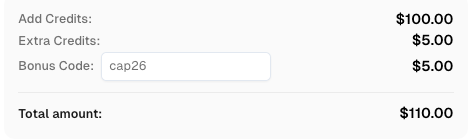
Redeem Your CapSolver Bonus Code
Boost your automation budget instantly!
Use bonus code CAP26 when topping up your CapSolver account to get an extra 5% bonus on every recharge — with no limits.
Redeem it now in your CapSolver Dashboard
Failure handling should be explicit. A CAPTCHA-solving API for autonomous agents can return useful information, but it cannot decide whether your task is lawful, whether a site is cooling down, or whether a page is asking for private data. Those decisions belong to the runtime. MDN's HTTP 429 Too Many Requests gives a clear example: a 429 should become shared cooldown state, not a prompt asking the model to try again.
Define stop conditions near the API wrapper. Stop if the task budget is exhausted. Stop if the challenge family changes during polling. Stop if the original browser context closes. Stop if the final backend response rejects the protected action. Stop if permission is unclear. CapSolver's CAPTCHA API selection criteria can help teams evaluate service fit, but stop rules must be enforced in your own runtime.
captcha_api_wrapper_policy:
  max_solver_tasks_per_action: 1
  max_poll_seconds: 120
  require_same_browser_context: true
  stop_on_backend_status: [401, 403, 429]
  stop_on_context_change: true
  require_application_acceptance: true
This policy describes local wrapper behavior. It is not a CapSolver API request. The important output is a deterministic stop rather than an autonomous agent creating a new task for every repeated widget.
The minimal acceptance test should run one allowed protected action from start to finish. It should record challenge detection evidence, the documented task path, polling duration, original browser context ID, result consumption point, protected request status, and final business assertion. OpenTelemetry's distributed traces model is useful because it connects events across service boundaries.
Pass only when the final application action succeeds once in the original session. Fail if the API task completes but the backend rejects the action. Fail if two protected submits occur for one source item. Fail if polling continues past budget. Fail if engineers cannot prove which allowed task caused the solver request. A CAPTCHA-solving API for autonomous agents is production-ready when the trace shows a bounded, authorized, session-bound workflow.
The final test should also include a negative case. Trigger a known unauthorized domain, a closed browser context, or a forced cooldown and confirm that the wrapper stops before creating a solver task. This proves the API layer is not acting as an unconditional retry engine.
Observability should make wrapper ownership obvious. A CAPTCHA-solving API for autonomous agents crosses several systems: the planner, browser runtime, solver wrapper, queue, network policy, and application backend. If a run fails, each system should emit a small event with the same correlation ID. The trace should show when the challenge was detected, when eligibility was approved, when the documented task path was called, how long polling lasted, when the result was consumed, and what the application returned.
Use event names that describe facts, not guesses. api_task_created is better than captcha_fixed. poll_budget_exhausted is better than solver_slow. backend_rejected_after_result is better than bad_token unless official error evidence supports that label. This matters because autonomous agents can produce confident narratives that do not match the browser trace. The wrapper should preserve facts so engineering can identify whether the defect is task mapping, session binding, form timing, cooldown policy, or authorization.
Give operations a compact dashboard for the wrapper. Show task creations per protected action, median polling time, timeout rate, backend acceptance rate, duplicate-submit rate, and review-stop rate. Show those metrics by domain and route class, not only globally. A CAPTCHA-solving API for autonomous agents is healthy when the wrapper creates fewer unclear incidents over time, not when it hides every protected failure behind a successful API response.
Credential handling deserves its own review because autonomous agents can call tools repeatedly. API keys should live in secret storage, not prompts, browser local storage, trace files, or copied notebooks. The wrapper should receive credentials from the runtime environment and should never echo them into model context. If a trace is exported for debugging, the export pipeline should redact request headers, account identifiers, and any private page content.
Review rotation and scope before launch. The team should know how to replace a key, how to disable one environment, and how to detect unexpected usage. Production, staging, and local testing should not share the same credential. A CAPTCHA-solving API for autonomous agents should also include per-workflow correlation so unusual spend can be traced to a domain, account class, and queue rule without exposing secrets.
Security review should also cover prompt boundaries. The model does not need the API key, raw solver response, or hidden task metadata. It needs typed outcomes such as pending, ready, backend accepted, backend rejected, cooldown, or review required. Keeping sensitive API details outside prompts reduces leakage risk and keeps the wrapper accountable for exact implementation behavior.
Finally, define an emergency disable path. If usage spikes, if a credential is exposed, or if a domain's authorization status becomes unclear, operators should be able to stop solver dispatch while preserving ordinary browsing or evidence collection. The disable path should be tested, not just documented. A controlled stop is part of a safe CAPTCHA-solving API for autonomous agents.
Credential review should be repeated after every new workflow joins the wrapper. New domains, new agent teams, and new queues can change who has access and how spend is attributed. Treat that review as a release requirement, not an annual cleanup.
A CAPTCHA-solving API for autonomous agents should be integrated as a controlled state machine with documented task contracts, session binding, budgets, and application-level verification. The API response helps the agent continue an approved workflow, but it is not the same as authorization or completion. Teams that want documented challenge support can use CapSolver while keeping stop rules, policy checks, and final acceptance tests in their own runtime.
It is an API service path that lets an approved agent create documented CAPTCHA tasks, poll for results, consume the result in the original session, and verify the protected action.
No. The result should be bound to the challenge, browser context, and protected action that produced it. Reusing it across sessions can fail and can create unsafe behavior.
No. Polling needs a budget, timeout, and stop reason. When the budget ends, the agent should preserve evidence and stop rather than create repeated tasks.
Exact task types, parameters, response fields, and SDK behavior should come from CapSolver official documentation, not from guesses or copied examples from unrelated challenge families.
Aloísio Vítor
Image Processing Expert
Interpreting the visual signals behind web workflows.
ABOUT THE AUTHOR
Estimate CAPTCHA solving costs in Browser Use by separating agent runs, challenge types, billable solves, retries, and verified outcomes from browser costs.

Set up CapSolver MCP in Claude Code, check the available CAPTCHA tools, and choose token or page solving for a supported, authorized browser task.