🎉NEWCapSolver for AI agents-MCP, agent tools, and SDK integrations

Ethan Collins
AI Agent Workflow Engineer
Published Dec 29, 2023
Updated Dec 29, 2023 · min read
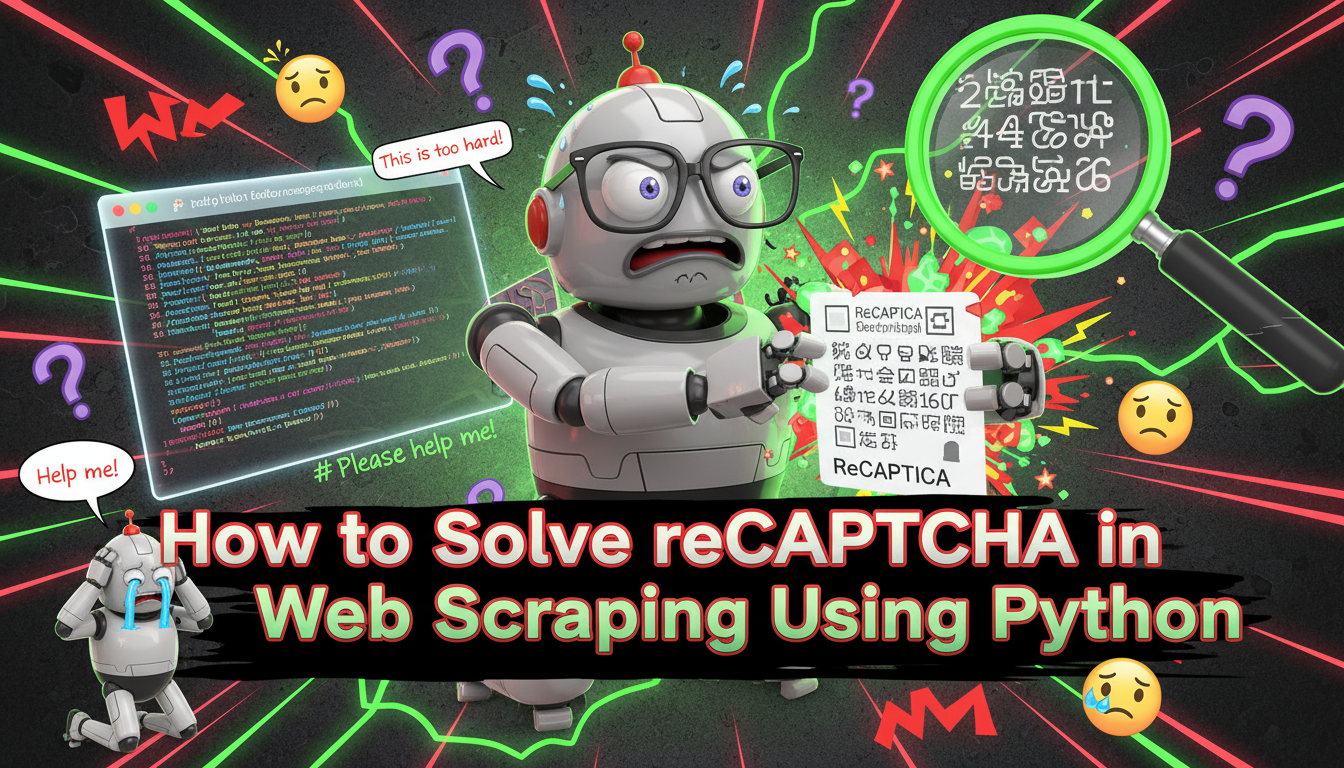
Web scraping has become an essential tool for developers, data engineers, and SEO specialists. However, one of the most common obstacles in web scraping is reCAPTCHA, a security mechanism designed to distinguish between humans and automated bots. reCAPTCHA protects websites from abusive activities such as account creation, spamming, and data scraping.
This article provides a detailed overview of reCAPTCHA, explains why it is challenging for automation, and demonstrates how Python and CapSolver can help solve it safely and efficiently.
reCAPTCHA, developed by Google, is a security system that presents users with challenges that are easy for humans but difficult for automated programs. These challenges are designed to prevent malicious bots from accessing a website’s content, ensuring the integrity of web services.
Typical reCAPTCHA challenges include:
By leveraging these challenges, websites can prevent unwanted scraping, spam, and automated attacks. However, this also creates hurdles for legitimate automation use cases such as SEO analysis, price monitoring, and market research.
Web scraping tools often mimic human browsing behavior to collect data. However, traditional scrapers are limited in their ability to solve reCAPTCHA because:
Image recognition is complex
Image-based challenges require accurate recognition of objects, which is difficult for simple automated scripts.
Behavioral analysis
Invisible CAPTCHAs track mouse movement, click patterns, and page interaction, which traditional scripts do not simulate well.
IP and session restrictions
reCAPTCHA may block repetitive requests from the same IP or flag suspicious patterns.
As a result, scrapers often fail to extract data or get blocked entirely. This is where tools like Capsolver become essential.
Google has released multiple versions of reCAPTCHA over the years to improve security and usability. Understanding each type is critical for automation.
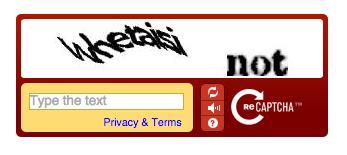
The first version presented users with two distorted words. One word was known (for human verification), and the other unknown (used for digitizing text from books). Users had to type both words correctly to pass the test.
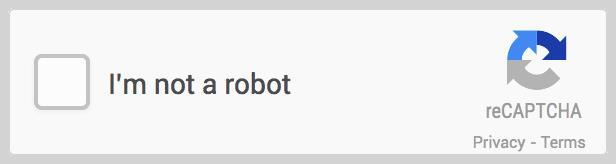
Introduced the “I’m not a robot” checkbox, which evaluates the user’s behavior upon clicking. Suspicious activity triggers a secondary challenge, usually an image-based puzzle.
This version does not show a checkbox. Instead, it runs in the background and triggers challenges only when it detects suspicious behavior.

Enterprise v2 adds more sophisticated protections against bots, including advanced risk analysis, adaptive challenges, and better integration with corporate websites.
Unlike v2, reCAPTCHA v3 runs entirely in the background, analyzing user behavior and assigning a risk score. No challenge is shown unless suspicious activity is detected.

Enterprise v3 provides granular insights into website traffic and allows nuanced risk-based responses. Ideal for organizations with sensitive data or high-traffic web platforms.
Websites use reCAPTCHA to block automated scraping. Traditional scraping tools cannot bypass these challenges, making it essential to integrate CAPTCHA-solving solutions to continue automated data extraction.
CapSolver leverages machine learning to solve reCAPTCHA automatically. By integrating Capsolver into Python workflows, developers can bypass CAPTCHA barriers efficiently.
Claim Your CapSolver Bonus
Boost your automation performance with a quick bonus! Use the promo code CAP25 when adding funds to your CapSolver account to get an extra 5% credit on every recharge — with no limit. Start optimizing your CAPTCHA-solving workflow today!
pip install capsolverimport capsolver
PROXY = "http://username:password@host:port"
capsolver.api_key = "Your Capsolver API Key"
PAGE_URL = "PAGE_URL"
PAGE_KEY = "PAGE_SITE_KEY"
def solve_recaptcha_v2(url, key):
solution = capsolver.solve({
"type": "ReCaptchaV2Task",
"websiteURL": url,
"websiteKey": key,
"proxy": PROXY
})
return solution
def main():
print("Solving reCaptcha v2...")
solution = solve_recaptcha_v2(PAGE_URL, PAGE_KEY)
print("Solution:", solution)
if __name__ == "__main__":
main()import capsolver
capsolver.api_key = "Your Capsolver API Key"
PAGE_URL = "PAGE_URL"
PAGE_KEY = "PAGE_SITE_KEY"
def solve_recaptcha_v2_proxyless(url, key):
solution = capsolver.solve({
"type": "ReCaptchaV2TaskProxyless",
"websiteURL": url,
"websiteKey": key,
})
return solution
def main():
print("Solving reCaptcha v2 (proxyless)...")
solution = solve_recaptcha_v2_proxyless(PAGE_URL, PAGE_KEY)
print("Solution:", solution)
if __name__ == "__main__":
main()After creating a task, poll the getTaskResult endpoint until the CAPTCHA is solved:
POST https://api.capsolver.com/getTaskResult
Host: api.capsolver.com
Content-Type: application/json

{
  "clientKey": "YOUR_API_KEY",
  "taskId": "TASK_ID"
}
Once ready, the response contains the solved CAPTCHA token.
By integrating CapSolver into Python workflows, web scraping can overcome reCAPTCHA barriers efficiently. Developers can now automate data extraction without interruption, saving time and ensuring higher success rates. CapSolver’s flexibility, supporting both proxy and proxyless tasks, makes it suitable for a wide range of scraping scenarios.
1. Which types of reCAPTCHA can Capsolver solve?
Capsolver supports reCAPTCHA v2/v3, including invisible and enterprise versions, as well as image-to-text CAPTCHAs and many more.
2. Do I need a proxy to use Capsolver?
Not always. Proxyless tasks are available for standard cases.
3. How fast does Capsolver solve reCAPTCHA?
Average solve time is 1–10 seconds, depending on CAPTCHA complexity and server load.
Ethan Collins
AI Agent Workflow Engineer
Building clearer handoffs between AI agents and tools.
ABOUT THE AUTHOR
Understand reCAPTCHA v3 score range (0.0 to 1.0), its meaning, and how to improve your score. Learn how to handle low scores and optimize user experience.

Facing "reCAPTCHA Invalid Site Key" or "invalid reCAPTCHA token" errors? Discover common causes, step-by-step fixes, and troubleshooting tips to resolve reCAPTCHA verification failed issues. Learn how to fix reCAPTCHA verification failed please try again.