🎉NEWCapSolver for AI agents-MCP, agent tools, and SDK integrations

Ethan Collins
AI Agent Workflow Engineer
Published Aug 17, 2026
Updated Aug 17, 2026 · min read
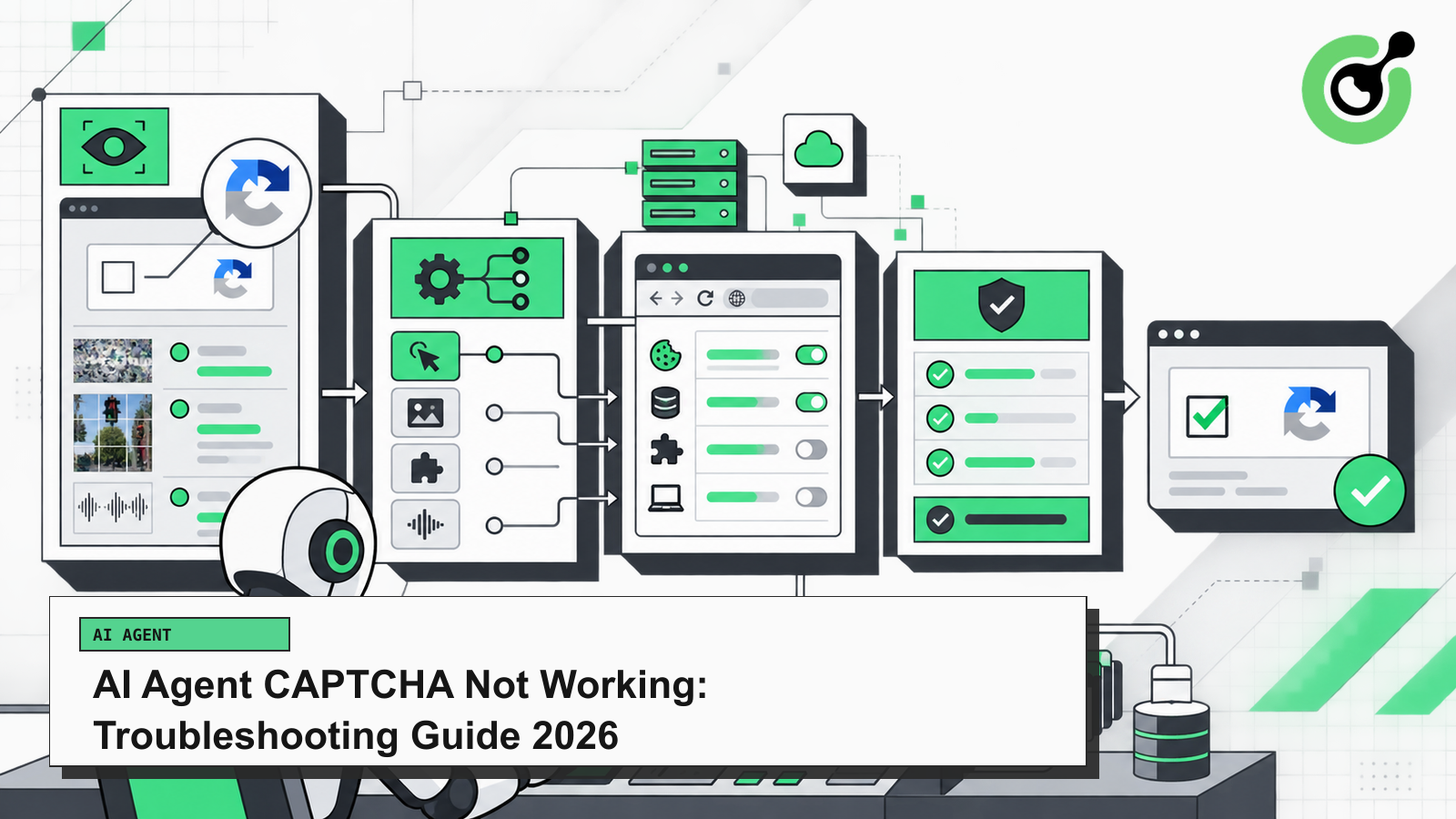
When an ai agent captcha not working report arrives, the phrase hides several different failures. Detection may be wrong, the agent may route to an unavailable tool, the browser may navigate before the result returns, or the application may reject a result that was technically produced. CapSolver supplies the documented CAPTCHA infrastructure, while your orchestrator must preserve evidence and choose the correct recovery branch. This guide turns a vague incident into a layered diagnosis covering reCAPTCHA v2, reCAPTCHA v3 including Enterprise, and Cloudflare Turnstile. It uses official package and tool names, requires application-level validation, and adds bounded stop conditions. Apply it only to lawful, reasonable, responsible, user-authorized workflows; never use troubleshooting as permission to expand into private, restricted, sensitive, or unauthorized data.
The product boundary for ai agent captcha not working is defined by CapSolver for AI Agents, Core SDK, Agent Tools, MCP Service. The Core SDK provides create_capsolver, detect, get_captcha_info, solve, and solve_on_page. Agent Tools provides get_all_tools, create_executor, and its documented execution path. MCP exposes solve_captcha, detect_captchas, solve_on_page, get_balance, and get_supported_captchas. Use only capsolver-core, capsolver-agent, and capsolver-mcp with their real names. The current agent layer is limited to reCAPTCHA v2, reCAPTCHA v3 including Enterprise, and Cloudflare Turnstile.
The input is one already-open authorized page. The output is a diagnostic state, not proof of a solution. The function stops on an unapproved hostname and routes a no-detection result away from the solver path. Production code should treat the documented object returned by get_captcha_info as structured evidence without guessing additional fields.
import os
from urllib.parse import urlparse
from capsolver_core import create_capsolver

APPROVED_HOSTS = {"portal.example"}

async def diagnose_page(page):
    if urlparse(page.url).hostname not in APPROVED_HOSTS:
        return {"state": "REVIEW", "reason": "host outside approved scope"}
    solver = create_capsolver(api_key=os.environ["CAPSOLVER_API_KEY"])
    detected = await solver.detect(page)
    if not detected:
        return {"state": "NO_CAPTCHA", "next": "diagnose application error"}
    info = await solver.get_captcha_info(page)
return {"state": "CAPTCHA_CONFIRMED", "info": info}ai agent captcha not working needs a defined incident classification at this stage. Record page evidence, detection result, tool inventory, solver operation, browser transition, and application response as one checkpoint, not as unrelated log messages. These values explain what the automation believed, what it observed, and why it was permitted to continue. The operating rule is to name the failing layer before changing configuration. The conservative boundary is to stop broad retries until the incident has one reproducible layer. Without that boundary, a technically successful API call can be attached to the wrong page, wrong account, wrong business object, or stale browser session.
Start with page evidence, then bind it to detection result, tool inventory, solver operation. Use typed fields and explicit unknown values. Every record should include an observed timestamp, a correlation ID, the authorized purpose, and the component that made the decision. Avoid copying credentials, full cookies, raw solution values, or unnecessary page content into the record. Missing evidence must remain missing; a convenient default must never look like a real observation.
The current packet should be compared with the last valid packet for the same authorized unit of work. A change in detection result may be expected, while a change in tool inventory can invalidate the job. Emit a small state set such as ACCEPT, RETRY_ONCE, REVIEW, or STOP with a reason code. Operational telemetry can follow OpenTelemetry Traces while keeping credentials, cookies, raw solution values, and unnecessary page content out of logs.
The stop condition is part of the implementation. When the workflow must stop broad retries until the incident has one reproducible layer, cancel pending child work, preserve a redacted evidence summary, release the queue lock, and prevent background retries from continuing with stale state. A later operator-approved run should begin from a fresh browser or task checkpoint and re-evaluate scope. This makes ai agent captcha not working explainable under load and prevents a single ambiguous page from becoming a retry storm.
The AI agent CAPTCHA loop causes adds adjacent implementation context, while this workflow keeps the narrower incident classification contract explicit. The output of this stage is a machine-readable decision and the minimum evidence required to reproduce it. It is not permission to ignore terms, access controls, data rights, rate limits, or account boundaries. A review state is a valid outcome when the evidence is incomplete.
ai agent captcha not working needs a defined detection evidence at this stage. Record URL, frame tree, widget markers, delayed scripts, challenge type, and capture timestamp as one checkpoint, not as unrelated log messages. These values explain what the automation believed, what it observed, and why it was permitted to continue. The operating rule is to wait for stable evidence before calling a tool. The conservative boundary is to route ambiguous or unsupported evidence to review. Without that boundary, a technically successful API call can be attached to the wrong page, wrong account, wrong business object, or stale browser session.
Start with URL, then bind it to frame tree, widget markers, delayed scripts. Use typed fields and explicit unknown values. Every record should include an observed timestamp, a correlation ID, the authorized purpose, and the component that made the decision. Avoid copying credentials, full cookies, raw solution values, or unnecessary page content into the record. Missing evidence must remain missing; a convenient default must never look like a real observation.
The current packet should be compared with the last valid packet for the same authorized unit of work. A change in frame tree may be expected, while a change in widget markers can invalidate the job. Emit a small state set such as ACCEPT, RETRY_ONCE, REVIEW, or STOP with a reason code. Evidence retention should reflect OWASP Logging Guidance while keeping credentials, cookies, raw solution values, and unnecessary page content out of logs.
The stop condition is part of the implementation. When the workflow must route ambiguous or unsupported evidence to review, cancel pending child work, preserve a redacted evidence summary, release the queue lock, and prevent background retries from continuing with stale state. A later operator-approved run should begin from a fresh browser or task checkpoint and re-evaluate scope. This makes ai agent captcha not working explainable under load and prevents a single ambiguous page from becoming a retry storm.
The MCP CAPTCHA error diagnosis adds adjacent implementation context, while this workflow keeps the narrower detection evidence contract explicit. The output of this stage is a machine-readable decision and the minimum evidence required to reproduce it. It is not permission to ignore terms, access controls, data rights, rate limits, or account boundaries. A review state is a valid outcome when the evidence is incomplete.
ai agent captcha not working needs a defined tool availability at this stage. Record installed package, get_all_tools inventory, MCP tool list, chosen tool name, argument schema, and returned error as one checkpoint, not as unrelated log messages. These values explain what the automation believed, what it observed, and why it was permitted to continue. The operating rule is to compare actual tools with current official names. The conservative boundary is to reject prompt-generated names or unavailable handlers. Without that boundary, a technically successful API call can be attached to the wrong page, wrong account, wrong business object, or stale browser session.
Start with installed package, then bind it to get_all_tools inventory, MCP tool list, chosen tool name. Use typed fields and explicit unknown values. Every record should include an observed timestamp, a correlation ID, the authorized purpose, and the component that made the decision. Avoid copying credentials, full cookies, raw solution values, or unnecessary page content into the record. Missing evidence must remain missing; a convenient default must never look like a real observation.
The current packet should be compared with the last valid packet for the same authorized unit of work. A change in get_all_tools inventory may be expected, while a change in MCP tool list can invalidate the job. Emit a small state set such as ACCEPT, RETRY_ONCE, REVIEW, or STOP with a reason code. The control boundary is consistent with Python asyncio Timeouts while keeping credentials, cookies, raw solution values, and unnecessary page content out of logs.
The stop condition is part of the implementation. When the workflow must reject prompt-generated names or unavailable handlers, cancel pending child work, preserve a redacted evidence summary, release the queue lock, and prevent background retries from continuing with stale state. A later operator-approved run should begin from a fresh browser or task checkpoint and re-evaluate scope. This makes ai agent captcha not working explainable under load and prevents a single ambiguous page from becoming a retry storm.
The output of this stage is a machine-readable decision and the minimum evidence required to reproduce it. It is not permission to ignore terms, access controls, data rights, rate limits, or account boundaries. A review state is a valid outcome when the evidence is incomplete.
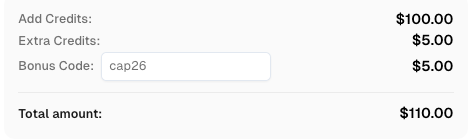
Redeem Your CapSolver Bonus Code
Boost your automation budget instantly!
Use bonus code CAP26 when topping up your CapSolver account to get an extra 5% bonus on every recharge — with no limits.
Redeem it now in your CapSolver Dashboard
ai agent captcha not working needs a defined session continuity at this stage. Record browser context ID, hostname, route, cookies, user agent, action, and navigation time as one checkpoint, not as unrelated log messages. These values explain what the automation believed, what it observed, and why it was permitted to continue. The operating rule is to compare state at call and return. The conservative boundary is to discard output after context replacement or route change. Without that boundary, a technically successful API call can be attached to the wrong page, wrong account, wrong business object, or stale browser session.
Start with browser context ID, then bind it to hostname, route, cookies. Use typed fields and explicit unknown values. Every record should include an observed timestamp, a correlation ID, the authorized purpose, and the component that made the decision. Avoid copying credentials, full cookies, raw solution values, or unnecessary page content into the record. Missing evidence must remain missing; a convenient default must never look like a real observation.
The current packet should be compared with the last valid packet for the same authorized unit of work. A change in hostname may be expected, while a change in route can invalidate the job. Emit a small state set such as ACCEPT, RETRY_ONCE, REVIEW, or STOP with a reason code.
The stop condition is part of the implementation. When the workflow must discard output after context replacement or route change, cancel pending child work, preserve a redacted evidence summary, release the queue lock, and prevent background retries from continuing with stale state. A later operator-approved run should begin from a fresh browser or task checkpoint and re-evaluate scope. This makes ai agent captcha not working explainable under load and prevents a single ambiguous page from becoming a retry storm.
The output of this stage is a machine-readable decision and the minimum evidence required to reproduce it. It is not permission to ignore terms, access controls, data rights, rate limits, or account boundaries. A review state is a valid outcome when the evidence is incomplete.
ai agent captcha not working needs a defined validation boundary at this stage. Record structured tool status, page response, form state, confirmation marker, repeated challenge, and trace ID as one checkpoint, not as unrelated log messages. These values explain what the automation believed, what it observed, and why it was permitted to continue. The operating rule is to evaluate the original business assertion. The conservative boundary is to do not retry when the same accepted-looking result is rejected twice. Without that boundary, a technically successful API call can be attached to the wrong page, wrong account, wrong business object, or stale browser session.
Start with structured tool status, then bind it to page response, form state, confirmation marker. Use typed fields and explicit unknown values. Every record should include an observed timestamp, a correlation ID, the authorized purpose, and the component that made the decision. Avoid copying credentials, full cookies, raw solution values, or unnecessary page content into the record. Missing evidence must remain missing; a convenient default must never look like a real observation.
The current packet should be compared with the last valid packet for the same authorized unit of work. A change in page response may be expected, while a change in form state can invalidate the job. Emit a small state set such as ACCEPT, RETRY_ONCE, REVIEW, or STOP with a reason code.
The stop condition is part of the implementation. When the workflow must do not retry when the same accepted-looking result is rejected twice, cancel pending child work, preserve a redacted evidence summary, release the queue lock, and prevent background retries from continuing with stale state. A later operator-approved run should begin from a fresh browser or task checkpoint and re-evaluate scope. This makes ai agent captcha not working explainable under load and prevents a single ambiguous page from becoming a retry storm.
The output of this stage is a machine-readable decision and the minimum evidence required to reproduce it. It is not permission to ignore terms, access controls, data rights, rate limits, or account boundaries. A review state is a valid outcome when the evidence is incomplete.
ai agent captcha not working needs a defined operational recovery at this stage. Record minimal fixture, package version, challenge family, trace timeline, stop reason, owner, and recovery test as one checkpoint, not as unrelated log messages. These values explain what the automation believed, what it observed, and why it was permitted to continue. The operating rule is to reduce the incident to one controlled test. The conservative boundary is to resume only after the failing layer passes a documented check. Without that boundary, a technically successful API call can be attached to the wrong page, wrong account, wrong business object, or stale browser session.
Start with minimal fixture, then bind it to package version, challenge family, trace timeline. Use typed fields and explicit unknown values. Every record should include an observed timestamp, a correlation ID, the authorized purpose, and the component that made the decision. Avoid copying credentials, full cookies, raw solution values, or unnecessary page content into the record. Missing evidence must remain missing; a convenient default must never look like a real observation.
The current packet should be compared with the last valid packet for the same authorized unit of work. A change in package version may be expected, while a change in challenge family can invalidate the job. Emit a small state set such as ACCEPT, RETRY_ONCE, REVIEW, or STOP with a reason code.
The stop condition is part of the implementation. When the workflow must resume only after the failing layer passes a documented check, cancel pending child work, preserve a redacted evidence summary, release the queue lock, and prevent background retries from continuing with stale state. A later operator-approved run should begin from a fresh browser or task checkpoint and re-evaluate scope. This makes ai agent captcha not working explainable under load and prevents a single ambiguous page from becoming a retry storm.
The output of this stage is a machine-readable decision and the minimum evidence required to reproduce it. It is not permission to ignore terms, access controls, data rights, rate limits, or account boundaries. A review state is a valid outcome when the evidence is incomplete.
ai agent captcha not working works in production only when every stage has a defined input, typed output, redacted evidence record, and terminal stop condition. Preserve the authorized page and business context, use verified CapSolver methods or API fields, keep retries bounded, and validate the original application outcome after recovery. Teams running lawful and permitted automation can evaluate CapSolver for the documented CAPTCHA layer while retaining deterministic policy, data quality, and human-review controls in their own systems.
Q: Why is my ai agent captcha not working?
The cause may be incorrect detection, unavailable tools, unsupported challenge type, stale browser state, solver failure, or application rejection.
Q: Which CAPTCHA types belong in the current agent path?
Limit the agent layer to documented reCAPTCHA v2, reCAPTCHA v3 including Enterprise, and Cloudflare Turnstile.
Q: Should I keep retrying when a result is rejected?
No. Preserve evidence, verify context, and move to review after the bounded attempt policy is exhausted.
Q: How do I confirm the agent tools are installed?
Inspect the documented get_all_tools output or the MCP tool inventory and compare names before running the workflow.
Q: What is the final success check?
Success is the expected state of the original authorized application, not merely a completed tool call.
Ethan Collins
AI Agent Workflow Engineer
Building clearer handoffs between AI agents and tools.
ABOUT THE AUTHOR
Estimate CAPTCHA solving costs in Browser Use by separating agent runs, challenge types, billable solves, retries, and verified outcomes from browser costs.

Set up CapSolver MCP in Claude Code, check the available CAPTCHA tools, and choose token or page solving for a supported, authorized browser task.