🎉NEWCapSolver for AI agents-MCP, agent tools, and SDK integrations

Ethan Collins
AI Agent Workflow Engineer
Published Oct 29, 2025
Updated Oct 29, 2025 · min read

Seems 2026 is defined by automation, but the hard part remains the same: Cloudflare Challenge 5s. For developers, data scientists, and businesses relying on web scraping, this anti-bot mechanism is a persistent, costly hurdle. "Checking your browser..." screen, often lasting five seconds or more, represents a significant bottleneck in any large-scale operation.
This comprehensive guide breaks down the six most effective strategies to bypass the Cloudflare Challenge in 2026, ranging from fundamental technical adjustments to the most advanced, AI-driven solutions. We will focus on reliable, future-proof methods that ensure your automation workflows remain fast, efficient, and undetected.
Cloudflare’s anti-bot system, particularly the Managed Challenge (which often manifests as the Cloudflare Challenge 5s loading screen), is a sophisticated multi-layered defense. It has evolved far beyond simple CAPTCHA puzzles. In 2026, the challenge primarily relies on three advanced detection vectors:
TLS/HTTP Fingerprinting: Cloudflare analyzes the unique signature of your HTTP requests (e.g., HTTP/2 or HTTP/3 headers, cipher suites, order of extensions) to see if it matches a known, legitimate browser like Chrome or Firefox. Most scraping libraries fail this check immediately.
JavaScript Execution: The 5-second challenge executes complex JavaScript in the browser to perform calculations, check for browser environment variables, and verify human-like behavior. Headless browsers are often flagged due to missing or inconsistent properties.
Behavioral Analysis: Cloudflare monitors mouse movements, scrolling, and input timing to differentiate between human users and robotic scripts.
Bypassing this requires a strategy that addresses all three vectors simultaneously.
To achieve reliable, large-scale automation, developers must move beyond simple workarounds. Here are the six leading methods for solving the Cloudflare Challenge 5s.
The most robust and future-proof method is to delegate the entire challenge to a specialized, AI-powered service. These services, like CapSolver, continuously update their models to counteract Cloudflare's latest detection mechanisms, including the complex TLS and JavaScript checks.
Why it works: CapSolver doesn't just solve a puzzle; it simulates a real, high-fidelity browser environment with perfect TLS/HTTP fingerprints and executes the necessary JavaScript to generate the required clearance cookies (cf_clearance). This offloads the computational and maintenance burden from your scraping infrastructure.
Implementation with CapSolver (Python Example):
Integrating CapSolver is a simple API call, which returns the necessary cookies and User-Agent to make your final request to the protected site.
# pip install requests
import requests
import time

# --- Configuration ---
API_KEY = "YOUR_CAPSOLVER_API_KEY"
TARGET_URL = "https://www.example-protected-site.com"
PROXY_STRING = "ip:port:user:pass" # Use a high-quality static/sticky proxy

def capsolver_solve_cloudflare_challenge():
    # 1. Create Task (AntiCloudflareTask is designed for the 5s challenge)
    create_task_payload = {
        "clientKey": API_KEY,
        "task": {
            "type": "AntiCloudflareTask",
            "websiteURL": TARGET_URL,
            "proxy": PROXY_STRING
        }
    }

    print("Sending task to CapSolver...")
    # CapSolver API Endpoint: https://api.capsolver.com/createTask
    res = requests.post("https://api.capsolver.com/createTask", json=create_task_payload)
    resp = res.json()
    task_id = resp.get("taskId")

    if not task_id:
        print("Failed to create task:", res.text)
        return None

    print(f"Got taskId: {task_id}. Polling for result...")

    # 2. Get Result
    while True:
        time.sleep(5) # Poll every 5 seconds
        get_result_payload = {"clientKey": API_KEY, "taskId": task_id}
        # CapSolver API Endpoint: https://api.capsolver.com/getTaskResult
        res = requests.post("https://api.capsolver.com/getTaskResult", json=get_result_payload)
        resp = res.json()
        status = resp.get("status")

        if status == "ready":
            solution = resp.get("solution", {})
            print("Challenge solved successfully!")
            return solution

        if status == "failed" or resp.get("errorId"):
            print("Solve failed! Response:", res.text)
            return None

# Execute the solver function
solution = capsolver_solve_cloudflare_challenge()

if solution:
    # Extract the essential clearance cookie and User-Agent
    cf_clearance_cookie = solution['cookies']['cf_clearance']
    user_agent = solution['userAgent']

    print("\n--- Final Request Details ---")
    print(f"User-Agent to use: {user_agent}")
    print(f"cf_clearance cookie: {cf_clearance_cookie[:20]}...")

    # Use a TLS-friendly library (like curl_cffi or requests-tls)
    # and the provided proxy for the final request.
    final_request_headers = {
        'User-Agent': user_agent,
        'Cookie': f'cf_clearance={cf_clearance_cookie}'
    }

    # Example final request (requires proper environment setup)
    # final_response = requests.get(TARGET_URL, headers=final_request_headers, proxies={'http': f'http://{PROXY_STRING}'})
    # print(final_response.text)
else:
    print("Failed to get solution.")
For more details on implementing this solution, you can refer to the official CapSolver API documentation.
Traditional headless browsers like Puppeteer and Selenium are easily detected. The 2026 approach involves using fortified versions, such as undetected-chromedriver or a custom Playwright setup with stealth plugins.
Key Requirements:
Stealth Plugins: Must spoof dozens of browser properties (navigator.webdriver, chrome.runtime, etc.).
Real User-Agents: Rotate through a list of current, legitimate User-Agents.
Human-like Behavior: Implement random delays, mouse movements, and scrolls to pass behavioral analysis.
While this method is free, it requires constant maintenance to keep up with Cloudflare's updates, making it a high-effort, high-risk strategy for large-scale operations.
curl_cffi)Since Cloudflare aggressively checks the TLS handshake, one method is to use specialized HTTP clients that can mimic the TLS fingerprint of a real browser. The Python library curl_cffi is a popular choice for this.
How it works: curl_cffi uses the underlying libcurl library and allows you to specify the exact TLS signature (e.g., "chrome101") you want to use. This can sometimes bypass the initial TLS check that triggers the Cloudflare Challenge 5s.
Caveat: This only solves the network layer. You will still need to execute the challenge-solving JavaScript, which is why this method is often combined with Method 2 or, more effectively, Method 1.
Cloudflare assigns reputation scores to IP addresses. Data center proxies are often flagged immediately, leading to a harder challenge or a direct block. Using high-quality, rotating residential or mobile proxies is essential.
Strategy: By routing your traffic through IPs that belong to real home users, you significantly lower the chance of being flagged as a bot. This doesn't solve the Cloudflare Challenge 5s itself, but it ensures you receive the easiest version of the challenge, which is quicker to solve with other methods. For a list of reliable providers, see CapSolver's guide on best proxy services.
While the Cloudflare Challenge 5s is the primary focus, many sites now use Cloudflare Turnstile as a lighter-weight, non-intrusive check. Your solution must be able to handle both. Turnstile is solved by providing a token (cf-turnstile-response) generated after executing a small piece of JavaScript.
CapSolver's Advantage: Services like CapSolver handle both the older 5s challenge (AntiCloudflareTask) and the newer Turnstile challenge (CloudflareTurnstileTask) using a unified API, ensuring seamless transitions as sites update their defenses. You can learn more about this specific task type in the CapSolver documentation.
For low-volume, non-critical scraping, a simple, brute-force approach is the "wait and retry" strategy.
Mechanism:
Attempt to access the target URL.
If the Cloudflare Challenge 5s page is detected, wait for a randomized period (e.g., 60 to 300 seconds).
Change your IP address (via proxy rotation).
Retry the request.
This method is highly inefficient, wastes resources, and is prone to IP bans, but it is the simplest to implement without specialized tools. It is not recommended for any professional or time-sensitive data collection.
In the constant arms race between scrapers and anti-bot systems, the cost of maintenance for custom solutions (Methods 2, 3, 4, 6) quickly outweighs the cost of a dedicated service.
| Feature | CapSolver (Method 1) | Custom Headless Setup (Method 2) |
|---|---|---|
| Success Rate | High (Continuously updated AI) | Low to Moderate (Prone to frequent detection) |
| Maintenance | Zero (Handled by CapSolver team) | High (Requires constant code updates) |
| Complexity | Simple API Integration | Requires deep knowledge of browser fingerprinting and stealth |
| Cost Efficiency | Pay-per-solve (Scalable) | High hidden cost in developer time and infrastructure |
CapSolver provides a reliable, scalable, and cost-effective way to solve the Cloudflare Challenge 5s and other complex CAPTCHAs, allowing your team to focus on data analysis, not bot-detection bypass.
Redeem Your CapSolver Bonus Code
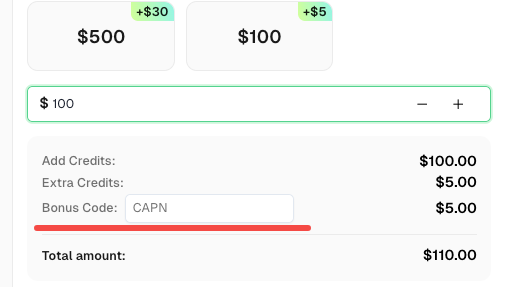
Don’t miss the chance to further optimize your operations! Use the bonus code CAPN when topping up your CapSolver account and receive an extra 5% bonus on each recharge, with no limits. Visit the CapSolver Dashboard to redeem your bonus now!
To further assist developers in navigating this complex topic, here are answers to common questions about solving the Cloudflare Challenge.
The Cloudflare Challenge 5s (or Managed Challenge) is an older, more intrusive security check that forces the user's browser to execute complex JavaScript for several seconds to prove it is not a bot. Cloudflare Turnstile is the newer, non-intrusive successor. Turnstile is designed to be solved almost instantly by legitimate users, but it still requires a script to execute and generate a token. A robust solution must handle both.
The legality of web scraping and bypassing anti-bot measures is complex and depends on jurisdiction and the website's terms of service. Generally, scraping publicly available data is not illegal, but violating a site's explicit terms of service or causing a denial of service can lead to legal action. Always ensure your automation adheres to ethical guidelines and legal requirements, and consider using services that offer rate-limiting and ethical scraping features.
Cloudflare's detection goes beyond simple navigator.webdriver checks. It analyzes the entire browser environment and network stack. Common reasons for detection in 2026 include:
Inconsistent TLS Fingerprints (Method 3 failure).
Missing or spoofed WebGL/Canvas data.
Lack of human-like behavior (e.g., instantly loading the page without any delay or mouse movement).
This is why a service like CapSolver is often necessary, as it maintains a perfectly faked environment that is constantly updated to match the latest browser versions.
Yes, you can attempt to solve it for free using open-source tools (Method 2 and 3), but this approach is rarely scalable or reliable for professional use. The time and effort required for constant maintenance and debugging often make the "free" solution far more expensive than using a paid, managed service.
The single most critical factor is the quality and consistency of your browser and network fingerprint. Cloudflare is looking for any anomaly that suggests automation. This includes matching the User-Agent, the TLS handshake, and the JavaScript execution results perfectly. This is the core problem that AI-powered solutions are designed to solve.
You can start by signing up on the CapSolver Dashboard, obtaining your API key, and referring to the extensive CapSolver guides for Cloudflare Turnstile & Challenge for integration examples in various languages and scenarios, including web scraping.
The battle to solve Cloudflare Challenge 5s will continue to evolve, but the strategy for successful automation remains clear: move away from reactive, custom-built bypass scripts and towards proactive, managed solutions. In 2026, the most efficient and reliable path to uninterrupted data collection is through a dedicated service like CapSolver , which handles the complexity of anti-bot detection so you can focus on your core business objectives. For any serious web scraping or automation project, a high-fidelity, AI-driven solver is no longer a luxury—it is a necessity.
Ethan Collins
AI Agent Workflow Engineer
Building clearer handoffs between AI agents and tools.
ABOUT THE AUTHOR
Learn what a Cloudflare Challenge is, how Cloudflare detects bots using JavaScript and machine learning, and why challenges appear during browsing. Complete guide for 2026.
Learn how to fix the "failed to verify cloudflare turnstile token" error. This guide covers causes, troubleshooting steps, and how to defeat cloudflare turnstile with CapSolver.