Fixing Low reCAPTCHA v3 Scores in AI Agents

Nikolai Smirnov
Software Development Lead
TL;DR
- Fixing low reCAPTCHA v3 scores in AI agents starts with checking action names, token freshness, domain matching, and server-side verification.
- Low scores are not just solver issues; browser behavior, IP reputation, traffic volume, and account state can all affect risk.
- Agents should stop repeated submissions after score failure and return a diagnostic state to the workflow.
- Use CAPTCHA tooling only in authorized workflows and respect site terms, access controls, and privacy boundaries.
Introduction
Fixing low reCAPTCHA v3 scores in AI agents requires more than asking for another token. reCAPTCHA v3 is score-based, so the site decides what action to take after backend verification. A low score can come from a wrong action value, stale token, mismatched domain, suspicious traffic pattern, or poor browser session quality. CapSolver is useful when the automation is lawful and the agent needs a structured way to obtain and submit a token. The durable fix is to instrument the full path: collection, solve request, token injection, form submit, and backend response.
How reCAPTCHA v3 Scores Work
Fixing low reCAPTCHA v3 scores in AI agents begins with the official model. Google explains that reCAPTCHA v3 returns a score for an action and lets the site owner choose thresholds. See Google reCAPTCHA v3 score guidance. Google also documents server-side token verification, including response fields such as success, score, action, hostname, and challenge timestamp in reCAPTCHA verification docs.
That means an AI agent can fail even when it receives a syntactically valid token. The target site may reject the request because the action is wrong, the score is below its threshold, or the token was submitted after it expired.
Diagnose the Action and Token Path
The action name is a frequent root cause. Fixing low reCAPTCHA v3 scores in AI agents should include logging the action requested by the page and the action returned by verification. If the page calls grecaptcha.execute(siteKey, { action: "login" }), do not submit a token created for a generic action.
Use CapSolver internal resources for parameter discovery and workflow checks: reCAPTCHA v3 guide, reCAPTCHA values, human-score token guidance, high-score token guidance, CAPTCHA solving FAQ, and reCAPTCHA overview.
Fix Session Quality Before Retrying
Low scores often reflect the whole session. A browser with no cookies, a fresh data directory every request, rapid form submissions, or inconsistent network routing can look risky. Fixing low reCAPTCHA v3 scores in AI agents means the agent should behave like a careful workflow engine: wait for page readiness, avoid duplicate clicks, preserve session context, and stop when blocked.
Use browser waits as an engineering model, but keep this article focused on score mechanics. The important point is that automation should wait for meaningful UI states rather than relying on fixed delays.
Score Failure Checklist
| Check | Why it matters | Fix |
|---|---|---|
| Action name | Verification can reject mismatched actions | Extract action from page runtime |
| Hostname | Tokens are bound to expected domains | Use the exact page URL |
| Token age | Expired tokens fail after delay | Solve close to submission |
| Session continuity | Risk signals include browser context | Keep cookies, IP, and user agent stable |
| Retry volume | Repeated failures can lower trust | Back off and stop after a limit |
Redeem Your CapSolver Bonus Code
Boost your automation budget instantly!
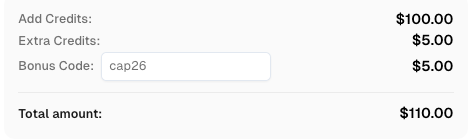
Use bonus code CAP26 when topping up your CapSolver account to get an extra 5% bonus on every recharge — with no limits.
Redeem it now in your CapSolver Dashboard
Make the Agent Return Diagnostics
Fixing low reCAPTCHA v3 scores in AI agents is easier when the agent returns a compact diagnostic object. Include action, page URL, challenge timestamp, submission timestamp, proxy region, retry count, and final server response. Do not log secrets, tokens, account credentials, or personal data.
Responsible use matters. A low score may be the site’s intended protection against unwanted automation. If the workflow is not authorized, stop rather than escalating traffic.
Separate Score Problems From Token Problems
Fixing low reCAPTCHA v3 scores in AI agents requires separating three failure classes. First, the token may be invalid because the site key, page URL, action, or enterprise setting is wrong. Second, the token may be valid but too old by the time the backend verifies it. Third, the token may verify successfully but receive a low score. These are different problems, and replacing every failed token with another token hides the real cause.
Use a structured verification log when you own the target application or have permission to inspect the response. Google’s siteverify response documentation describes fields that help with this split, including success, score, action, hostname, and challenge timestamp. That means there is no universal “good” score for every workflow. A score that passes a newsletter signup might fail a payment or account-login action.
The diagnostic path should stay specific to reCAPTCHA rather than drifting into generic Cloudflare fixes. If the team is still clarifying the provider, start with what is reCAPTCHA, then confirm the page values with an identify reCAPTCHA values pass. A reCAPTCHA v3 solver workflow depends on those values being correct, while a high-score token discussion is only useful after the action, hostname, timing, and reCAPTCHA data path are understood.
Review Agent Behavior Before Blaming the Solver
Fixing low reCAPTCHA v3 scores in AI agents often requires changing the agent’s browsing pattern. A browser that loads the page, immediately executes a form submit, fails, reloads, and repeats is producing a weak behavioral signal. A workflow that keeps cookies, waits for page readiness, fills fields once, and submits at a normal pace is easier to reason about. This does not guarantee a high score, because the site owner controls risk policy, but it removes avoidable noise.
Look for hidden agent mistakes. Some agents call the same tool twice because the planner did not notice the first submission. Others open a new browser context for each step, which destroys continuity. Some change proxy routing between token generation and submit. Others request a token before the form is ready, then submit after the token has aged. These defects are common in multi-step browser agents and should be fixed before any solver setting is changed.
Use Per-Action Threshold Thinking
Low score handling should be action-specific. Google recommends using actions so site owners can analyze risk by workflow. A login action, checkout action, comment action, and search action may all have different acceptable risk. Fixing low reCAPTCHA v3 scores in AI agents means the agent should log the exact action and not treat all scores as equivalent.
For teams that own the protected site, build a dashboard that groups failures by action, browser type, region, and account state. For teams automating an authorized third-party workflow, you usually do not see the backend score. In that case, infer carefully from the visible result and avoid repeated blind attempts. The OWASP Automated Threats project is a useful reminder that credential attacks, scraping, spam, and transaction abuse are real risks. Responsible automation should not resemble those patterns.
Improve Timing and Recovery
Fixing low reCAPTCHA v3 scores in AI agents should include a timing budget. Generate the token close to submission. Submit once. Wait for the actual server result. If the site rejects the request, stop or switch to a review state. Do not run a loop that generates ten tokens for the same action in a few seconds. That behavior is noisy and can damage the session further.
When the task is legitimate, consider adding a human approval checkpoint after repeated score failures. The checkpoint can confirm that the target workflow is allowed, the account is in good standing, and the agent is not trying to access data outside its scope. This keeps the automation useful without turning the solver into a mechanism for ignoring site policy.
Troubleshoot by Environment
Fixing low reCAPTCHA v3 scores in AI agents also depends on where the agent runs. A local developer browser, a CI runner, a cloud VM, and a containerized browser can produce different risk signals. Do not compare scores across environments without recording browser version, network route, cookies, account history, and action name. If failures only happen in CI, inspect headless settings, outbound IP reputation, missing fonts, and strict timeouts. If failures only happen for one account, check whether that account has been rate-limited or challenged before.
For owned applications, create a staging key and a production key. Use staging to test the integration path, not to infer production risk. Google’s reCAPTCHA Enterprise best practices for automated threats shows how risk signals are commonly tied to abuse patterns and action context. Even if you use standard reCAPTCHA v3 rather than Enterprise, the operational lesson is the same: a score is part of a risk decision, not a standalone pass or fail label.
Build a Score Failure Runbook
A runbook prevents teams from improvising under pressure. Step one is to confirm the exact action and page URL. Step two is to verify token timing and hostname. Step three is to compare the agent session with a manual session. Step four is to reduce retry pressure. Step five is to decide whether the workflow should continue, pause, or move to human review. This runbook should be short enough for an on-call engineer or automation operator to follow without reading source code.
The final check is business legitimacy. If the workflow is not authorized, fixing low reCAPTCHA v3 scores in AI agents is the wrong objective. Stop the task and update the policy. If the workflow is authorized, improve the engineering path so the agent behaves consistently and produces auditable diagnostics.
Conclusion
Fixing low reCAPTCHA v3 scores in AI agents requires matching action parameters, preserving session context, submitting fresh tokens, and limiting retries. Treat score failure as a signal to diagnose, not as a reason to loop. For authorized reCAPTCHA v3 automation where token solving is part of the workflow, CapSolver can be used as a controlled integration point.
FAQ
Why does my AI agent get a low reCAPTCHA v3 score?
The usual causes are wrong action names, weak session history, suspicious traffic patterns, stale tokens, and inconsistent network context.
Can a valid reCAPTCHA v3 token still fail?
Yes. The site verifies score, action, hostname, and timing. A token can be valid but still rejected by the site’s risk policy.
Should I keep requesting new tokens until the score improves?
No. Repeated attempts can worsen risk signals. Log the cause, back off, and review the workflow.
Is reCAPTCHA v3 solving allowed for any site?
No. Use it only where you have authorization and a legitimate workflow. Respect site policies and data access boundaries.
More
reCAPTCHAJul 16, 2026
Make reCAPTCHA Solver Tutorial: Build a No-Code CapSolver HTTP Scenario
Follow this Make reCAPTCHA solver tutorial to build a CapSolver HTTP scenario with createTask, getTaskResult, retry branches, and verification.

reCAPTCHAJul 15, 2026
Cursor reCAPTCHA v2 Solver: MCP Setup with CapSolver
A Cursor reCAPTCHA v2 solver is safest when Cursor calls a narrow MCP tool instead of asking the model to improvise browser steps. CapSolver provides that shape through `capsolver-mcp`, which exposes solving capabilities as discoverable Model Context Protocol tools. The practical setup is straightforward: install `capsolver-core`, install `capsolver-mcp`, add the server to Cursor, and choose token mode or browser mode depending on the workflow. This guide rewrites the common