🎉NEWCapSolver for AI agents-MCP, agent tools, and SDK integrations

Ethan Collins
AI Agent Workflow Engineer
Published Aug 12, 2026
Updated Aug 12, 2026 · min read
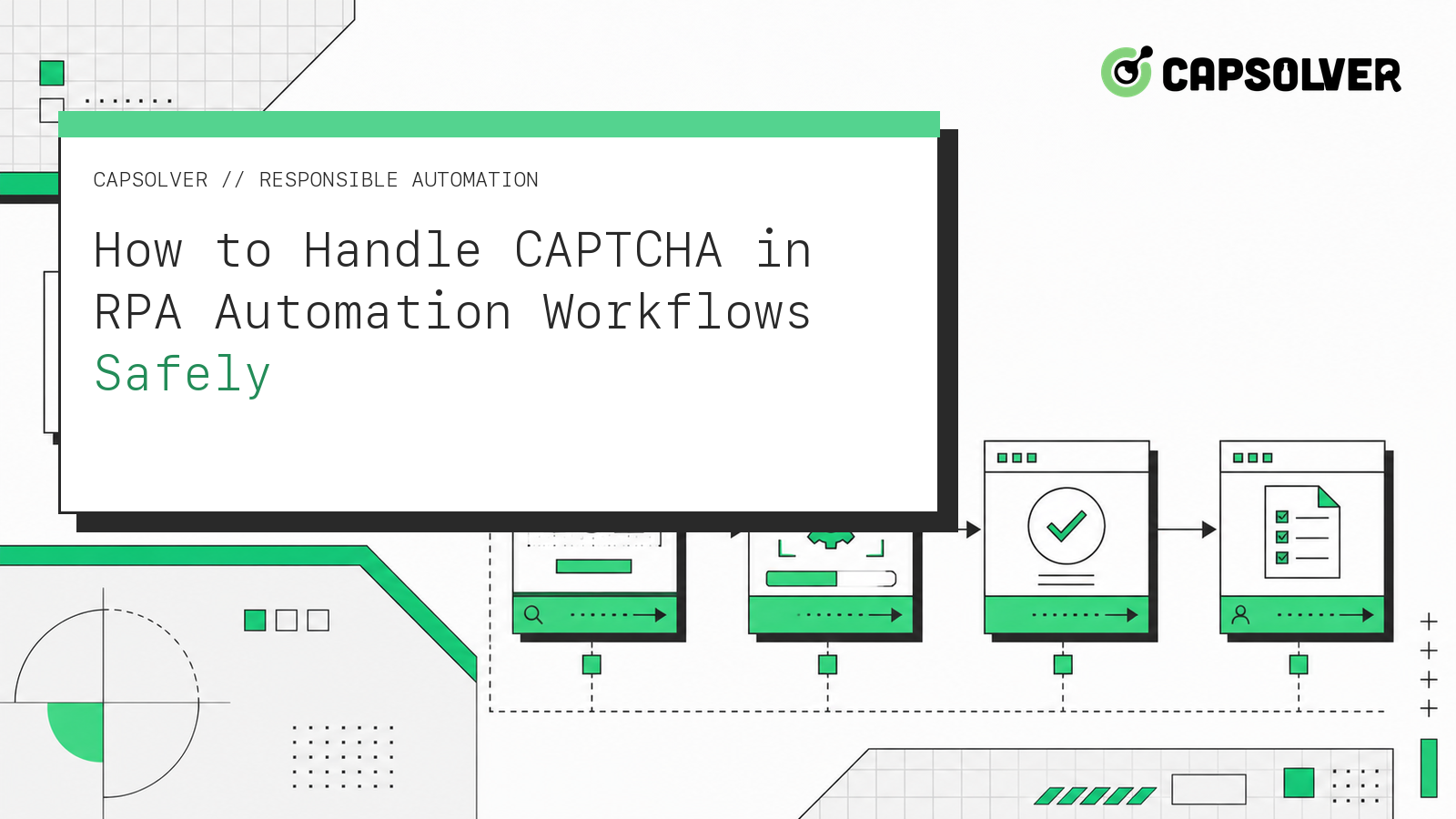
RPA CAPTCHA automation is reliable only when CAPTCHA becomes an explicit workflow state. CapSolver can provide the CAPTCHA handling layer through its browser extension or documented API, while the RPA platform controls process scope, credentials, timeouts, and business validation. This avoids the common failure where a robot keeps clicking after verification appears, loses form state, or submits twice. A production design pauses at detection, waits for one bounded result, verifies the expected page transition, and escalates on uncertainty. Use this pattern only for lawful, reasonable, responsible, user-authorized work. Do not automate access to private, restricted, sensitive, or unauthorized data.
Add CAPTCHA_DETECTED, CAPTCHA_SOLVING, CAPTCHA_SOLVED, CAPTCHA_FAILED, and REVIEW to the RPA state machine. A CAPTCHA event should freeze downstream clicks until the verification handler returns.
The extension developer settings document onDetectedCallback, solvedCallback, and solvedFailedCallback. They also document bounded repeat settings such as reCaptchaRepeatTimes. The browser extension product explains where the extension fits in browser automation.
In the extension configuration, use callback names that your RPA page bridge registers before navigation:
window.rpaCaptchaDetected = () => {
  window.rpaState = "CAPTCHA_DETECTED";
};

window.rpaCaptchaSolved = () => {
  window.rpaState = "CAPTCHA_SOLVED";
};

window.rpaCaptchaFailed = () => {
  window.rpaState = "CAPTCHA_FAILED";
};
Map these names to onDetectedCallback, solvedCallback, and solvedFailedCallback in the extension’s assets/config.js. The input is the extension event. The output is a local RPA state change, not a new network action. Stop if failure is reported, the callback never arrives before the deadline, or the current host differs from the allowlist.
Redeem Your CapSolver Bonus Code
Boost your automation budget instantly!
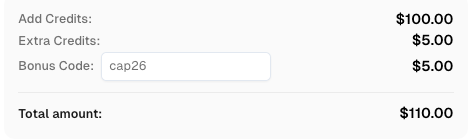
Use bonus code CAP26 when topping up your CapSolver account to get an extra 5% bonus on every recharge — with no limits.
Redeem it now in your CapSolver Dashboard
Before verification, record only non-sensitive process state: step name, authorized host, page route, and idempotency key. Do not serialize passwords, tokens, or personal data into logs. After CAPTCHA_SOLVED, re-read the DOM and confirm the form still contains the expected values before submitting.
The HTTP idempotency semantics help distinguish safe retries from duplicate business actions. The OWASP logging guidance supports redacting credentials and verification tokens.
Use one solve attempt per workflow checkpoint. Set a local deadline longer than normal page rendering but shorter than the overall RPA job. If the challenge repeats, move to REVIEW rather than incrementing an open-ended counter.
RPA CAPTCHA automation succeeds only when the expected business state appears: a confirmation banner, authenticated account page, or accepted form status. A callback alone is insufficient. The WCAG 2.2 requirements are relevant for QA teams validating accessible alternatives to visual verification.
Use the extension when the RPA robot already controls a full Chrome session and callback-based recovery is easiest. Use the task API overview when the platform can provide documented task parameters and manage polling. Do not mix both methods at the same checkpoint because competing handlers can create duplicate actions.
RPA CAPTCHA automation should be a finite recovery branch, not a background loop. Pause the robot, use documented callbacks or API tasks, protect process state, validate the final business outcome, and stop on repeated challenges. CapSolver supplies the CAPTCHA layer; your RPA orchestration remains responsible for permission, timing, and safe completion.
The extension documents detection, solved, and failed callback configuration names.
No. Use one bounded attempt and route repeated or terminal failures to review.
The expected application or business state proves success, not the callback by itself.
No. Limit it to lawful, approved hosts and user-authorized purposes.
Ethan Collins
AI Agent Workflow Engineer
Building clearer handoffs between AI agents and tools.
ABOUT THE AUTHOR
Fix common Selenium CAPTCHA integration problems by checking test configuration, extensions, waits, iframe context, solver responses, and application results.

Choose the CapSolver Python Core SDK or direct HTTP API by task support, page access, response handling, and the responsibilities your application owns.