🎉NEWCapSolver for AI agents-MCP, agent tools, and SDK integrations

Ethan Collins
AI Agent Workflow Engineer
Published Jul 17, 2026
Updated Jul 17, 2026 · min read
A production-ready langchain captcha solver agent tool workflow should not ask an AI agent, no-code scenario, or crawler to invent CAPTCHA handling at runtime. It should detect the checkpoint, package only the fields needed for recovery, run a policy check, call CapSolver through a narrow integration layer, apply the result in the original session, and verify that the target page actually moved forward.
The important distinction is that CapSolver is the solving provider, while your workflow remains responsible for context, safety, and verification. That separation keeps secrets outside prompts, prevents uncontrolled retries, and makes each failed checkpoint observable enough to debug.
Developers using LangChain tools, agents, LangGraph nodes, or custom tool routers for browser automation and API workflows that encounter allowed CAPTCHA checkpoints.
This article assumes you already have authorization to automate the target workflow and that CAPTCHA handling is part of a legitimate testing, accessibility, QA, internal operations, or data collection process. It focuses on engineering structure rather than shortcuts. The goal is to make the recovery step predictable, auditable, and easy to maintain.
The usual LangChain mistake is exposing too much operational detail through a tool. A safe CAPTCHA tool should not be a general HTTP client. It should accept a typed challenge packet, enforce policy, call CapSolver behind the scenes, and return an action state that downstream nodes can trust.
Many teams start with a brittle pattern: detect a blocked page, call a solver, paste the result somewhere, and hope the automation continues. That works in demos but fails in production because anti-bot checkpoints are bound to context. The same website URL, sitekey, challenge URL, user-agent, proxy, cookies, and page lifecycle may all matter.
A better design treats CAPTCHA recovery as a state transition. The workflow enters a blocked state, collects evidence, calls CapSolver, applies the result, and only leaves the blocked state after target-side verification. This also gives SEO and product teams cleaner documentation: each article, tutorial, and integration page can explain the exact recovery contract instead of repeating vague "solve CAPTCHA" language.
Use four layers:
This architecture makes the system easier to test because each layer has a small contract. The detector can be tested with saved HTML or screenshots. The policy wrapper can be tested with allowlist fixtures. The CapSolver adapter can be tested with mock task responses. The verifier can be tested with expected routes, selectors, response fields, or business events.
The final verification step is not optional. A provider can return a successful task result while the target rejects the session because the browser context changed, the token was applied too late, or the challenge repeated. Your automation should continue only after the application shows an accepted state.
from langchain_core.tools import tool
from pydantic import BaseModel, Field

class CaptchaRecoveryInput(BaseModel):
    challenge_type: str = Field(pattern="^(recaptcha_v2|recaptcha_v3|turnstile)$")
    website_url: str
    website_key: str
    context_id: str
    attempt: int = 0

@tool(args_schema=CaptchaRecoveryInput)
async def capsolver_recovery_tool(
    challenge_type: str,
    website_url: str,
    website_key: str,
    context_id: str,
    attempt: int = 0,
):
    if attempt > 1:
return {"state": "needs_review", "reason": "retry_budget_exceeded"}
    result = await capsolver_router.solve(
challenge_type=challenge_type,
website_url=website_url,
website_key=website_key,
context_id=context_id,
    )
    return {
"state": "continue" if result.verified else "needs_review",
"provider": "capsolver",
"challenge_type": challenge_type,
"verified": result.verified,
    }
Treat this as a reference shape, not a copy-paste universal adapter. The exact CapSolver task type and fields depend on the challenge. reCAPTCHA, Cloudflare Turnstile, and DataDome are different enough that they should keep separate handlers even when they share logging, retries, and billing controls.
Before you ship this workflow into a recurring job, check these gates:
These quality gates are also useful for programmatic SEO content. If you generate multiple integration guides, every page should include specific implementation details, unique failure modes, and concrete checks for that platform or challenge type. A page that only swaps the tool name is thin content and should not be published.
The deeper issue behind these mistakes is ownership. The automation owner should own policy and verification. CapSolver should own solving. The agent or scenario should own task progress. When those responsibilities blur, debugging becomes guesswork and small errors turn into repeated blocks.
Use this checklist when moving from a prototype to production:
A well-designed recovery flow should feel boring in operation. Most of the time it detects, solves, verifies, and returns a small state. When it fails, the logs should explain where: detection, policy, provider, application, or verification.
A strong programmatic SEO page for this topic needs more than a keyword in the title. It should answer a real implementation question, show an example contract, explain verification, and include platform-specific failure modes. For this page, the unique value is the LangChain Agents angle: the fields, checks, and mistakes are different from a generic CAPTCHA API article.
Use internal links to connect related workflows:
Keep anchor text descriptive. Avoid forcing the exact same phrase into every link. The cluster should help readers move from a broad CAPTCHA solver guide to the specific framework, no-code tool, crawler, or challenge type they are implementing.
CapSolver handles the solving provider side. Your application still needs detection, policy checks, result application, retry limits, and target-side verification. Those pieces are what make the workflow reliable.
Usually no. The safer pattern is to let the recovery tool apply the result and return a simple state such as continue, retry_once, or needs_review. This keeps secrets and session artifacts outside the prompt.
Start with one solve attempt and one replay. If the checkpoint repeats, preserve evidence and stop. Repeated CAPTCHA pages often mean session mismatch, bad proxy continuity, changed user-agent, missing challenge fields, or a target-side rule that needs review.
Verify the target, not the provider response alone. Look for a successful route, expected selector, accepted form response, known API field, or business event. If the provider says solved but the target still shows a checkpoint, treat it as a failed recovery.
Redeem Your CapSolver Bonus Code
Boost your automation budget instantly!
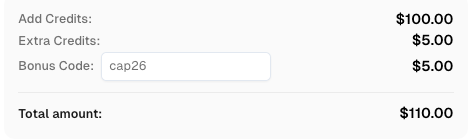
Use bonus code CAP26 when topping up your CapSolver account to get an extra 5% bonus on every recharge - with no limits.
Redeem it now in your CapSolver Dashboard
Ethan Collins
AI Agent Workflow Engineer
Building clearer handoffs between AI agents and tools.
ABOUT THE AUTHOR
Estimate CAPTCHA solving costs in Browser Use by separating agent runs, challenge types, billable solves, retries, and verified outcomes from browser costs.

Set up CapSolver MCP in Claude Code, check the available CAPTCHA tools, and choose token or page solving for a supported, authorized browser task.