🎉NEWCapSolver for AI agents-MCP, agent tools, and SDK integrations

Ethan Collins
AI Agent Workflow Engineer
Published Aug 12, 2026
Updated Aug 12, 2026 · min read

capsolver-core==0.1.0, capsolver-mcp==0.1.0 and mcp==1.29.1 in an isolated Python environment.get_supported_captchas without a provider key.When a tool fails to appear in Cursor, an API key is only one possible concern. The configured executable may not exist, the package may be installed in another environment or the MCP process may fail before tool discovery. Testing each stage separately gives the error a location and avoids changing unrelated settings.
CapSolver documents a Python MCP server with local stdio support. This guide uses that actual package and a small MCP client to verify startup, initialization and a local registry call. It then shows how the same executable can be represented in a Cursor configuration. The local handshake was executed for this article; Cursor itself and provider solving were not exercised, so those checks remain explicit steps for your environment.
Install the MCP server and its core dependency into one Python environment, then use that environment's absolute executable path.
The CapSolver MCP service documentation describes the server, transport options and browser prerequisites. Python's virtual environment documentation explains environment creation. The following shell commands are setup instructions for a POSIX shell; the pinned packages were installed successfully in the verification environment.
python3 -m venv .venv
.venv/bin/python -m pip install capsolver-core==0.1.0 capsolver-mcp==0.1.0 mcp==1.29.1
Use Python 3.11 or later for the preflight because it uses asyncio.timeout. On Windows, use the environment's Scripts/python.exe path. Pinning records the versions tested here; it is not a claim that these will remain the newest versions.
The local registry check below does not launch a browser. The official MCP guide separately documents browser extras and a Chromium installation for browser operations. Tool discovery can therefore pass while a later browser action still needs additional setup.
The AI and automation FAQ provides broader product context.
Run a small stdio client that initializes the server, checks the tool list and calls its local supported-type registry.
The MCP lifecycle specification defines initialization before normal operation. Save the following as preflight.py and run it with .venv/bin/python preflight.py from the environment created above.
import asyncio,json,sys
from mcp import ClientSession, StdioServerParameters
from mcp.client.stdio import stdio_client

EXPECTED={'solve_captcha','detect_captchas','solve_on_page',
          'get_balance','get_supported_captchas'}

async def main():
    # Empty key intentionally tests discovery and the local registry only.
    # Never call get_balance or solving tools with this configuration.
    params=StdioServerParameters(command=sys.executable,
        args=['-m','capsolver_mcp'],env={'CAPSOLVER_API_KEY':''})
    async with asyncio.timeout(20):
        async with stdio_client(params) as (read,write):
            async with ClientSession(read,write) as session:
                initialized=await session.initialize()
                tools=await session.list_tools()
                names={t.name for t in tools.tools}
                if not EXPECTED.issubset(names):
                    raise RuntimeError('expected tools missing')
                registry=await session.call_tool('get_supported_captchas',{})
                if registry.isError:
                    raise RuntimeError('local registry tool failed')
                print(json.dumps({'server':initialized.serverInfo.name,
                     'discovered_tools':sorted(names),'registry_call_ok':True},sort_keys=True))

asyncio.run(main())The executed run reported server name capsolver, discovered detect_captchas, get_balance, get_supported_captchas, solve_captcha and solve_on_page, and returned registry_call_ok: true. The context managers then closed the client and subprocess session.
The empty key is intentional. In the tested version, the registry operation reads supported handlers locally. No balance or solving call was made. A listed tool is a capability declaration; its presence does not prove credentials, browser dependencies or the target workflow are ready. The 20-second deadline bounds the local check instead of leaving a failed initialization waiting indefinitely.
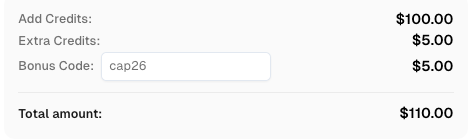
Redeem Your CapSolver Bonus Code
Boost your automation budget instantly!
Use bonus code CAP26 when topping up your CapSolver account to get an extra 5% bonus on every recharge — with no limits.
Redeem it now in your CapSolver Dashboard
Point Cursor's MCP configuration to the same installed Python executable and module that passed the preflight.
Cursor documents .cursor/mcp.json for project settings and ~/.cursor/mcp.json for global settings in its MCP setup guidance. The following is a JSON configuration template. Replace the executable path with your real absolute path before using it; its structure was parsed during verification, but it was not loaded in the Cursor UI for this article.
{
  "mcpServers": {
    "capsolver": {
      "command": "/absolute/path/to/project/.venv/bin/python",
      "args": ["-m", "capsolver_mcp"]
    }
  }
}The official server documentation supports CAPSOLVER_API_KEY. The template deliberately contains no secret. Supply the key through an appropriate local secret mechanism and ensure that the server process launched by Cursor receives it. A variable set in one terminal does not establish that a separately launched desktop application has that variable.
Review Cursor's current configuration options for your environment. Keep credentials out of shared project configuration, screenshots, prompts and diagnostic output. Follow the MCP guidance on security considerations for tool connections when reviewing trust boundaries.
After configuring Cursor, inspect the available tools in its MCP interface. If the names differ from the tested set, check the installed version and selected executable before attempting a solve. The CapSolver agent tools guide describes another integration surface; do not mix its setup instructions with the MCP server's command.
Classify the failed stage and test its prerequisite directly before repeating a tool call.
| Observed failure | Check first | What discovery already proves |
|---|---|---|
| Process cannot start | Absolute executable path and package environment | Nothing until initialization succeeds |
| Initialization times out | Process logs, transport and startup failure | The client attempted a connection |
| Expected tool is missing | Package version and selected server | The server returned a tool list |
| Provider rejects a request | Credential delivery and the provider's error details | The local protocol can work without provider access |
| Browser action cannot start | Browser extras and installed browser runtime | A tool can be declared before its runtime is ready |
| Tool returns but page is unchanged | Supported challenge, page state and postcondition | A returned result does not establish page acceptance |
Do not print a key to confirm that it exists. Check presence without exposing the value, and use the provider's returned error classification for a controlled authorized request. The MCP troubleshooting guide provides additional context for later failures.
Use CapSolver with one authorized test workflow after local startup and discovery are understood.
Add provider access and browser prerequisites only where the chosen tool needs them. Then verify the page and final business assertion, recording that evidence separately from the preflight output. This sequence leaves each failure with a specific owner: local setup, protocol, account access, browser runtime or application behavior.
Q: Can the preflight run without a CapSolver API key?
Yes, for the pinned version and local registry call tested here. It does not call balance or solving tools and does not establish that authenticated operations will work.
Q: Does this article prove the configuration works in the Cursor UI?
No. The real local MCP handshake and registry call were tested, and the JSON template was parsed. The Cursor UI still needs verification in your environment.
Q: Why use an absolute Python path?
It identifies the environment containing the tested packages. A desktop application's command search path may differ from the terminal where packages were installed.
Q: Do discovered browser tools mean Chromium is installed?
No. Tool discovery and browser runtime readiness are separate checks. Follow the official browser setup instructions before using browser operations.
Ethan Collins
AI Agent Workflow Engineer
Building clearer handoffs between AI agents and tools.
ABOUT THE AUTHOR
Estimate CAPTCHA solving costs in Browser Use by separating agent runs, challenge types, billable solves, retries, and verified outcomes from browser costs.

Set up CapSolver MCP in Claude Code, check the available CAPTCHA tools, and choose token or page solving for a supported, authorized browser task.