🎉NEWCapSolver for AI agents-MCP, agent tools, and SDK integrations

Lucas Mitchell
Automation Engineer
Published Sep 19, 2025
Updated Sep 19, 2025 · min read

Web scraping, an essential process for gathering vast amounts of data, frequently encounters sophisticated defenses like AWS Web Application Firewall (WAF) Bot Control. These systems are designed to differentiate between legitimate human users and automated bots, posing significant hurdles for developers and data scientists. While traditional web scraping tools often struggle to interact with these dynamic and interactive challenges, leading to blocked requests and incomplete data extraction, a proactive approach is key to successfully solving AWS WAF challenges when web scraping.
This article delves into the intricacies of AWS WAF, exploring its mechanisms and the challenges it presents for web scrapers. Crucially, we will provide a detailed, actionable solution leveraging Python and CapSolver to overcome these obstacles. By the end of this guide, you will understand how to effectively bypass AWS WAF, ensuring your web scraping operations remain robust and efficient. We highly recommend utilizing CapSolver for its advanced AI-powered capabilities, which streamline the process of solving complex CAPTCHAs and other WAF challenges, ensuring uninterrupted data streams for your projects.
AWS WAF (Web Application Firewall) is a crucial security service provided by Amazon Web Services that helps protect web applications from common web exploits and bots. It acts as a shield, filtering and monitoring HTTP and HTTPS requests that reach your web applications. While essential for security, AWS WAF presents significant hurdles for legitimate web scraping operations, often misidentifying scrapers as malicious bots.
For web scrapers, AWS WAF's protective measures translate into several significant challenges:
Overcoming these challenges is paramount for any successful web scraping operation targeting AWS WAF-protected sites. The key lies in adopting advanced strategies and leveraging specialized tools that can mimic human behavior and solve complex CAPTCHAs efficiently. This is where solutions like CapSolver become invaluable, an indispensable tool for navigating the complexities of AWS WAF.
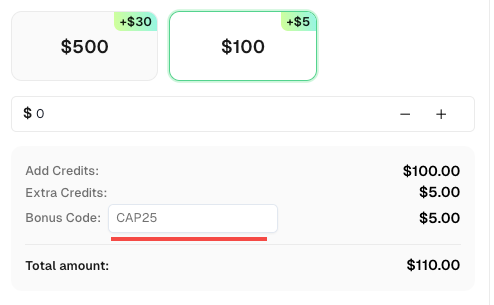
Don’t miss the chance to further optimize your operations! Use the bonus code CAP25 when topping up your CapSolver account and receive an extra 5% bonus on each recharge, with no limits. Visit the CapSolver Dashboard
While AWS WAF presents formidable challenges, they are not insurmountable. By combining Python with a powerful CAPTCHA-solving service like CapSolver, you can effectively bypass these security measures and continue your web scraping tasks. CapSolver offers two primary methods for tackling AWS WAF: a token-based solution and a recognition-based solution.
Before diving into the technical implementation, it's important to understand why CapSolver is the recommended solution. CapSolver provides a robust and reliable service specifically designed to handle various CAPTCHA types, including those deployed by AWS WAF. Its key benefits include:
The token-based approach is the most efficient method for bypassing AWS WAF. It involves obtaining a valid aws-waf-token cookie from CapSolver, which you can then use in your subsequent requests to the target website. This method is ideal for scenarios where the website presents a CAPTCHA challenge that requires a token for verification.
awsKey, awsIv, awsContext, and awsChallengeJS.AntiAwsWafTask or AntiAwsWafTaskProxyLess.aws-waf-token cookie.Here is a Python script demonstrating how to use CapSolver's token-based solution:
import requests
import time

# Your CapSolver API Key
CAPSOLVER_API_KEY = "YOUR_CAPSOLVER_API_KEY"
CAPSOLVER_CREATE_TASK_ENDPOINT = "https://api.capsolver.com/createTask"
CAPSOLVER_GET_TASK_RESULT_ENDPOINT = "https://api.capsolver.com/getTaskResult"

# The URL of the website protected by AWS WAF
WEBSITE_URL = "https://your-target-website.com" # Replace with your target URL

def solve_aws_waf_token(website_url, capsolver_api_key):
    # --- Step 1: Initial request to get WAF parameters ---
    # This part of the code needs to be adapted to how the target website
    # presents the WAF challenge and where the parameters are located.
    # The following is a generalized example.

    # It's recommended to use a session object to maintain cookies
    session = requests.Session()
    response = session.get(website_url)

    # Extract awsKey, awsIv, awsContext, awsChallengeJS from the response.text
    # This often requires parsing the HTML or JavaScript of the page.
    # The exact method will vary depending on the website.
    # For this example, we'll use placeholder values.
    aws_key = "EXTRACTED_AWS_KEY"
    aws_iv = "EXTRACTED_AWS_IV"
    aws_context = "EXTRACTED_AWS_CONTEXT"
    aws_challenge_js = "EXTRACTED_AWS_CHALLENGE_JS"

    # --- Step 2: Create a task with CapSolver ---
    task_payload = {
        "clientKey": capsolver_api_key,
        "task": {
            "type": "AntiAwsWafTaskProxyLess",
            "websiteURL": website_url,
            "awsKey": aws_key,
            "awsIv": aws_iv,
            "awsContext": aws_context,
            "awsChallengeJS": aws_challenge_js
        }
    }

    create_task_response = requests.post(CAPSOLVER_CREATE_TASK_ENDPOINT, json=task_payload).json()
    task_id = create_task_response.get('taskId')

    if not task_id:
        print(f"Error creating CapSolver task: {create_task_response.get('errorDescription')}")
        return None

    print(f"CapSolver task created with ID: {task_id}")

    # --- Step 3: Poll for the task result ---
    while True:
        time.sleep(5)
        get_result_payload = {"clientKey": capsolver_api_key, "taskId": task_id}
        get_result_response = requests.post(CAPSOLVER_GET_TASK_RESULT_ENDPOINT, json=get_result_payload).json()

        if get_result_response.get('status') == 'ready':
            aws_waf_token_cookie = get_result_response['solution']['cookie']
            print("CapSolver successfully solved the CAPTCHA.")
            return aws_waf_token_cookie
        elif get_result_response.get('status') == 'failed':
            print(f"CapSolver task failed: {get_result_response.get('errorDescription')}")
            return None

# --- Step 4: Use the token in subsequent requests ---
if __name__ == "__main__":
    aws_waf_token = solve_aws_waf_token(WEBSITE_URL, CAPSOLVER_API_KEY)
    if aws_waf_token:
        print(f"Received AWS WAF Token: {aws_waf_token}")

        # Use the token in your subsequent requests
        headers = {
            'Cookie': aws_waf_token
        }
        final_response = requests.get(WEBSITE_URL, headers=headers)
        print("Successfully accessed the website:")
print(final_response.text)In some cases, AWS WAF may present an image-based CAPTCHA that requires you to identify objects within an image. For these scenarios, CapSolver's recognition-based solution is the answer. This method involves sending the CAPTCHA image to CapSolver for analysis and receiving the coordinates or indices of the correct objects in return.
AwsWafClassification.Here is a Python script demonstrating how to use CapSolver's recognition-based solution:
import requests
import base64

# Your CapSolver API Key
CAPSOLVER_API_KEY = "YOUR_CAPSOLVER_API_KEY"
CAPSOLVER_CREATE_TASK_ENDPOINT = "https://api.capsolver.com/createTask"

# The URL of the website protected by AWS WAF
WEBSITE_URL = "https://your-target-website.com" # Replace with your target URL

def solve_aws_waf_image_captcha(image_path, question, capsolver_api_key):
    # --- Step 1: Read and encode the image ---
    with open(image_path, "rb") as image_file:
        encoded_string = base64.b64encode(image_file.read()).decode('utf-8')

    # --- Step 2: Create a task with CapSolver ---
    task_payload = {
        "clientKey": capsolver_api_key,
        "task": {
            "type": "AwsWafClassification",
            "images": [encoded_string],
            "question": question
        }
    }

    create_task_response = requests.post(CAPSOLVER_CREATE_TASK_ENDPOINT, json=task_payload).json()

    if create_task_response.get('errorId') == 0:
        solution = create_task_response.get('solution')
        print("CapSolver successfully solved the image CAPTCHA.")
        return solution
    else:
        print(f"Error creating CapSolver task: {create_task_response.get('errorDescription')}")
        return None

# --- Step 3: Use the solution to interact with the CAPTCHA ---
if __name__ == "__main__":
    # This is a placeholder for the image and question you would extract from the webpage
    captcha_image_path = "path/to/your/captcha/image.jpg"
    captcha_question = "aws:grid:chair" # Example question

    solution = solve_aws_waf_image_captcha(captcha_image_path, captcha_question, CAPSOLVER_API_KEY)

    if solution:
        print(f"Received solution: {solution}")
        # Use the solution (e.g., object indices) to interact with the webpage
        # and solve the CAPTCHA. This part will require a browser automation
# library like Selenium or Playwright.| Feature | Token-Based Solution | Recognition-Based Solution |
|---|---|---|
| Best For | CAPTCHA challenges requiring a token | Image-based CAPTCHAs (e.g., object recognition) |
| Process | Extracts parameters, gets token, uses token in requests | Captures image, sends for recognition, uses solution to interact |
| Complexity | Relatively straightforward API calls | Requires browser automation to interact with the solved CAPTCHA |
| Dependencies | requests library |
requests, base64, and a browser automation library (e.g., Selenium) |
| CapSolver Task Type | AntiAwsWafTask / AntiAwsWafTaskProxyLess |
AwsWafClassification |
By choosing the appropriate solution based on the type of AWS WAF challenge you encounter, you can effectively automate the bypassing process and ensure your web scraping operations run smoothly. For more detailed information and additional options, you can refer to the official CapSolver documentation.
When it comes to tackling the complexities of AWS WAF, having a reliable and efficient tool is not just an advantage—it's a necessity. While there are various methods to approach this challenge, CapSolver stands out as a comprehensive and developer-friendly solution. It's more than just a CAPTCHA solver; it's a strategic partner in your data acquisition endeavors.
Choosing CapSolver means you're not just getting a tool that can bypass a specific type of CAPTCHA. You're investing in a service that continuously adapts to the evolving landscape of web security. The team behind CapSolver is dedicated to staying ahead of the curve, ensuring that their solutions remain effective against the latest advancements in WAF technology. This commitment allows you to focus on your core business—extracting and analyzing data—without getting bogged down in the ever-changing world of CAPTCHA and bot detection.
Furthermore, the ease of integration with Python, as demonstrated in the code examples, makes CapSolver an accessible solution for developers of all skill levels. Whether you're a seasoned web scraping expert or just starting, you'll find the documentation clear and the API intuitive. This seamless integration, combined with the high accuracy and scalability of the service, makes CapSolver a powerful ally in your web scraping toolkit. For those looking to automate their workflows, exploring options like How to Integrate CapSolver with Selenium | Complete Guide 2025 can provide even greater efficiency.
Beyond direct CAPTCHA solving, a comprehensive web scraping strategy against AWS WAF involves several advanced techniques to minimize detection and maintain persistent access. These methods complement CapSolver's capabilities, creating a more resilient scraping infrastructure.
IP blocking and rate limiting are common AWS WAF tactics. To circumvent these, robust proxy rotation is essential. Instead of relying on a single IP, a pool of diverse proxies (residential, mobile, or datacenter) can distribute requests, making it harder for WAF to identify and block your scraper. Effective proxy management involves:
AWS WAF inspects HTTP headers, especially the User-Agent string, to identify bots. Mismatched or outdated User-Agents can trigger immediate flags. To avoid this:
Accept, Accept-Language, Referer, Connection) that a real browser would send. Inconsistent or missing headers are red flags.Sophisticated WAFs use browser fingerprinting and JavaScript challenges to detect automated tools. Headless browsers (like Puppeteer or Playwright) can execute JavaScript and render pages, mimicking real browser behavior more closely than simple HTTP requests. However, even headless browsers can be detected if not configured carefully [2].
navigator.webdriver being true.AWS WAF tracks session activity through cookies. Proper cookie management is vital for maintaining state and appearing as a legitimate user [2].
Aggressive request rates are a primary trigger for WAFs. Implement intelligent throttling to control the speed of your requests.
By integrating these advanced strategies with CapSolver's specialized CAPTCHA-solving capabilities, you can build a highly robust and efficient web scraping solution capable of navigating even the most stringent AWS WAF protections. This multi-faceted approach ensures not only successful data extraction but also the long-term viability of your scraping operations. For general insights into avoiding detection, consider reading Best User Agents for Web Scraping & How to Use Them.
Navigating the complexities of AWS WAF during web scraping can be a daunting task, but with the right strategies and tools, it is entirely achievable. We've explored the intricate mechanisms of AWS WAF, the challenges it poses for scrapers, and most importantly, how to overcome these hurdles using Python and the powerful capabilities of CapSolver. By understanding both token-based and recognition-based solutions, and integrating them with advanced scraping techniques like proxy rotation, intelligent header management, and human behavior simulation, you can build a resilient and efficient web scraping infrastructure.
CapSolver emerges as a critical component in this ecosystem, offering high-accuracy, scalable, and easy-to-integrate solutions for bypassing AWS WAF challenges. Its continuous adaptation to new security measures ensures your data streams remain uninterrupted, allowing you to focus on the valuable insights your data provides.
Ready to elevate your web scraping game and conquer AWS WAF? Don't let CAPTCHAs and bot detection stand in your way. Take the first step towards seamless data extraction today.
AWS WAF (Web Application Firewall) is a security service that protects web applications from common web exploits and bots. It challenges web scraping by detecting automated traffic through various mechanisms like CAPTCHAs, IP blocking, rate limiting, and dynamic request validation. These measures are designed to prevent bots from accessing or manipulating website content, making it difficult for scrapers to collect data without being detected and blocked.
CapSolver is a specialized CAPTCHA-solving service that uses AI and machine learning to bypass AWS WAF challenges. It offers two main solutions: a token-based approach (AntiAwsWafTask) that provides an aws-waf-token cookie to bypass WAF, and a recognition-based approach (AwsWafClassification) for image-based CAPTCHAs. CapSolver's API allows for seamless integration into Python scraping scripts, automating the CAPTCHA-solving process.
While it is technically possible to attempt to bypass AWS WAF without a third-party service, it is significantly more challenging and often less effective for large-scale or persistent scraping. Manual methods require constant adaptation to evolving WAF defenses, and building custom CAPTCHA-solving logic is resource-intensive. Third-party services like CapSolver specialize in this area, offering continuously updated solutions and high success rates that are difficult to replicate independently.
Beyond using a CAPTCHA solver like CapSolver, best practices include implementing robust proxy rotation and management, intelligent user-agent and header rotation, simulating human behavior with headless browsers (including evading browser fingerprinting), effective cookie and session management, and adaptive request throttling. A multi-layered approach combining these techniques with a reliable CAPTCHA-solving service provides the most robust solution.
The legality of web scraping is complex and depends on various factors, including the website's terms of service, the nature of the data being scraped, and the jurisdiction. While AWS WAF aims to prevent unauthorized access, the act of scraping itself is not inherently illegal. However, bypassing security measures can potentially lead to legal issues. It is crucial to consult legal counsel and adhere to ethical scraping practices, respecting robots.txt files and website terms of service. For more information on the legality of web scraping, you might refer to resources like Is Web Scraping Legal? the Comprehensive Guide for 2025.
Lucas Mitchell
Automation Engineer
Helping browser automation recover and continue.
ABOUT THE AUTHOR
Explore how AI detects and solves CAPTCHA challenges, from image recognition to behavioral analysis. Understand the technology behind AI CAPTCHA solvers and how CapSolver aids automated workflows. Learn about the evolving battle between AI and human verification.

Compare top CAPTCHA solving APIs by speed, accuracy, uptime, and pricing. See how CapSolver, 2Captcha, CapMonster Cloud, and others stack up in our detailed performance comparison.