🎉NEWCapSolver for AI agents-MCP, agent tools, and SDK integrations

Ethan Collins
AI Agent Workflow Engineer
Published Mar 26, 2024
Updated Oct 17, 2025 · min read
In the wake of the digital revolution, data has become an enterprise's most valuable asset. Web Scraping, the key technology for efficiently acquiring massive amounts of public network information, is increasingly becoming the cornerstone for driving business automation, empowering machine learning models, and deepening commercial insights. It is no longer just a technical tool but a critical strategic capability for businesses to gain a competitive edge and enable real-time decision-making.
This article will delve into the five core applications of web scraping across the three strategic domains of "Automation," "Machine Learning," and "Business Insights." We will provide unique insights and practical implementation advice to help enterprises surpass their competitors and build a high-value, data-driven business.
Traditional market research and data collection methods are often time-consuming, costly, and lack real-time capabilities. Web scraping, by using automated programs (crawlers) to simulate human browsing behavior and extract structured data from web pages, significantly enhances the efficiency and scale of data acquisition.
Three Strategic Values of Web Scraping:
We will focus on the five most impactful application scenarios, which are not only common industry practices but also key to achieving differentiated competition.
In the age of Artificial Intelligence, the truth that "data determines the upper limit of a model" is widely accepted. Web scraping is the most effective method for building high-quality, customized training datasets.
| Challenge | Web Scraping Solution | Unique Value and Insight |
|---|---|---|
| Public datasets are outdated or irrelevant | Real-time scraping of domain-specific data ensures data freshness and relevance. | Customized Label Generation: By scraping specific website reviews, tags, or classification information, more granular labels can be automatically generated for the data, far exceeding the granularity of general datasets. |
| Insufficient data volume | Scalable scraping of text, images, video metadata, etc., to quickly build million-level datasets. | Multimodal Data Fusion: Scraping not just text, but also associated image descriptions and user interaction data, to train more complex cross-modal AI models. |
| Data bias | Scraping data from multiple, different sources for cross-validation and balancing to reduce data bias from a single source. | Data Drift Monitoring: Continuously scrape data and compare it with the model's training data to timely detect changes in data distribution (data drift), guiding model retraining. |
【Practical Advice】: When scraping data for ML models, the data cleaning and structuring process should be considered a core component of the scraping pipeline, ensuring uniformity of data format and accuracy of labels.
In the e-commerce and retail sectors, price is the most direct factor influencing consumer purchasing decisions. Web scraping enables millisecond-level monitoring of competitors' prices, inventory, and promotional activities, thereby supporting Dynamic Pricing strategies.
By continuously scraping the SKU (Stock Keeping Unit) prices, discount information, and inventory status of major competitors, enterprises can feed this data into their pricing algorithms. Machine learning models can then adjust the product prices in real-time based on demand elasticity, competitor movements, and historical sales data to maximize profit or market share.
【Differentiated Value】: Beyond just price, scraping "Price Change History" and "Bundle Sales Strategies" provides deeper insights. For example, analyzing the magnitude of a competitor's price adjustments during specific holidays can predict their future marketing behavior.
Social media, forums, news websites, and e-commerce review sections contain a vast amount of consumer sentiment data. By scraping this unstructured text data and combining it with Natural Language Processing (NLP) technology, enterprises can perform large-scale Sentiment Analysis.
【Unique Insight】: The granularity of sentiment analysis should be refined from the "product" level to the "product feature" level. For instance, when scraping reviews for a mobile phone, analyze the sentiment not only for the product as a whole but also for specific keywords like "battery life" and "camera performance" to guide product improvement.
For B2B enterprises, finding potential customers and market partners is key to sustained growth. Web scraping can automate this tedious process.
By scraping data from industry directories, corporate listings, job boards, and professional social platforms , a target customer database can be built, including company names, contacts, job titles, technology stacks, and company size.
【Practical Advice】: Combining this with the CAPTCHA solutions mentioned in the internal hyperlinks can more effectively counter the anti-scraping mechanisms of target websites, ensuring the continuity and accuracy of lead data. For example, using a tool like CapSolver to solve complex AWS WAF or reCAPTCHA challenges ensures the automated scraping process remains uninterrupted.
Further Reading: Solving complex CAPTCHA challenges is a critical step in acquiring high-quality sales leads. Learn more about the info of solving AWS WAF CAPTCHA and reCAPTCHA v2/v3.
The financial industry demands extremely high standards for data real-time capability and accuracy. Web scraping plays an irreplaceable role in financial intelligence, algorithmic trading, and risk management.
【Differentiated Value】: Beyond scraping traditional financial data, scraping supply chain data (such as public information on shipping tracking and factory production status) can provide early macroeconomic signals for investment decisions—a unique advantage that traditional financial data sources often lack.
Choosing the right technology stack is crucial when implementing a web scraping project. Below is a comparison of several mainstream scraping methods in terms of efficiency, anti-bot capability, and cost:
| Feature | Self-Built Crawler (e.g., Python/Scrapy) | Commercial Scraping Service (e.g., Scraping API) | Headless Browser (e.g., Puppeteer/Playwright) |
|---|---|---|---|
| Development Cost | High (Requires handling all details) | Low (API call, quick integration) | Medium (Requires handling browser environment and resource consumption) |
| Scraping Efficiency | Extremely High (Optimized for specific targets) | High (Provider manages maintenance) | Lower (High resource consumption, slower speed) |
| Anti-Bot Capability | High (Customizable anti-bot strategies) | Extremely High (Professional team manages proxy pool and fingerprinting) | Medium (Simulates real browser behavior) |
| Maintenance Difficulty | Extremely High (Frequent updates needed for website structure changes) | Low (Provider manages maintenance) | Medium (Browser updates and environment configuration) |
| Best Use Case | Long-term, large-scale, highly customized projects | Fast, stable, high-concurrency commercial data needs | Scenarios requiring complex JavaScript execution or login |
【Unique Insight】: For commercial applications demanding high efficiency and strong anti-bot capabilities, a Commercial Scraping Service is often the more cost-effective choice, as it outsources the complex work of proxy management and anti-bot maintenance to a specialized team.
While web scraping holds immense potential, its practical operation still faces numerous challenges, especially in scenarios involving large-scale and high-frequency data collection.
Website anti-bot mechanisms are becoming increasingly sophisticated, ranging from simple IP blocking to complex behavioral analysis, TLS fingerprinting, and CAPTCHA challenges.
Countermeasures:
Data scraping must comply with laws, regulations, and the website's Terms of Service.
Countermeasures:
robots.txt file before scraping and respect the owner's scraping restrictions.Web scraping is an indispensable part of a modern enterprise's data-driven strategy. By applying it to core areas such as AI training data generation, dynamic pricing, market sentiment analysis, automated lead generation, and financial intelligence, businesses can gain real-time, precise commercial insights and maintain a competitive edge.
A successful web scraping strategy lies not only in technological advancement but also in adherence to legal regulations, respect for data ethics, and continuous adaptation to anti-bot challenges. With the ongoing development of AI technology, future web scraping will be more intelligent and adaptable, bringing unprecedented depth and breadth to business decision-making.
Q1: Is web scraping legal?
A1: The legality of web scraping depends on the specific content and method of scraping. Generally, scraping publicly accessible data (non-login, non-private information) is legal. However, you must strictly adhere to the target website's robots.txt protocol and Terms of Service. Scraping copyrighted content or private personal data is illegal. It is advisable to consult with legal professionals and always conduct data collection in a responsible and ethical manner.
Q2: Can scraped data be used directly for Machine Learning models?
A2: Generally, no. Raw scraped data often contains significant noise, missing values, inconsistent formats, and other issues. Before being used for Machine Learning models, it must undergo rigorous pre-processing steps such as Data Cleaning, Data Transformation, and Feature Engineering to ensure data quality and model accuracy.
Q3: What is the difference between web scraping and API calls?
A3: An API (Application Programming Interface) is an official interface proactively provided by a website or service for obtaining structured data; it is stable, efficient, and legal. Web scraping extracts data from the HTML content of a website and is used when an API is not provided or its functionality is limited. Whenever possible, prioritize using the API; only consider web scraping when the API is unavailable or insufficient for your needs.
Q4: How does CapSolver help with CAPTCHA issues in web scraping?
A4: CapSolver is a professional automated CAPTCHA solving service. It utilizes advanced AI and Machine Learning technology to automatically recognize and solve various complex CAPTCHA types, such as reCAPTCHA v2/v3, Cloudflare, and AWS WAF CAPTCHA and more. By integrating the CapSolver API into your scraping workflow, you can achieve uninterrupted automated data collection**, effectively solving the CAPTCHA obstacles in anti-bot mechanisms.
Redeem Your CapSolver Bonus Code
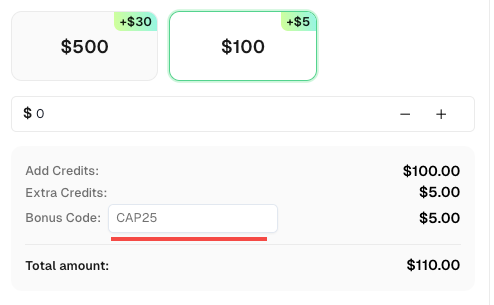
Don’t miss the chance to further optimize your operations! Use the bonus code CAP25 when topping up your CapSolver account and receive an extra 5% bonus on each recharge, with no limits. Visit the CapSolver Dashboard to redeem your bonus now!
Q6: How can I ensure my web scraping is sustainable (i.e., won't break due to website structure changes)?
A6: Website structure changes are one of the biggest challenges for scraping. Countermeasures include:
Ethan Collins
AI Agent Workflow Engineer
Building clearer handoffs between AI agents and tools.
ABOUT THE AUTHOR
Learn scalable Rust web scraping architecture with reqwest, scraper, async scraping, headless browser scraping, proxy rotation, and compliant CAPTCHA handling.

Learn the best techniques to scrape job listings without getting blocked. Master Indeed scraping, Google Jobs API, and web scraping API with CapSolver.