🎉NEWCapSolver for AI agents-MCP, agent tools, and SDK integrations

Ethan Collins
AI Agent Workflow Engineer
Published Jul 14, 2026
Updated Jul 15, 2026 · min read
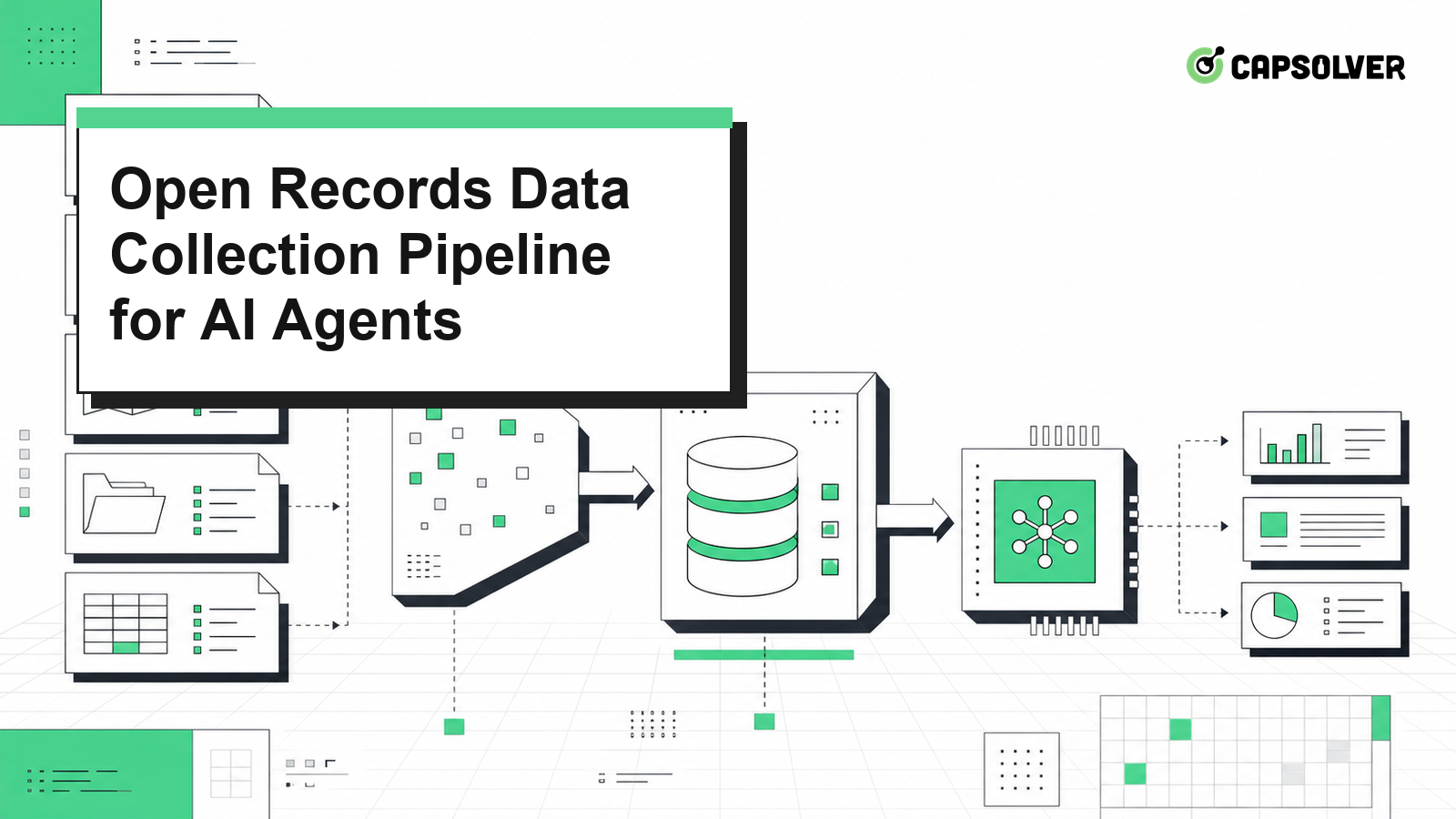
An open records data collection pipeline for AI agents should separate public-source retrieval from model reasoning. The first visible CapSolver mention points to CapSolver because browser challenges may appear during public portal workflows, and those checks should be handled with documented code. The safer pattern is a three-stage pipeline: approve the source, collect only permitted public fields, then feed normalized records to the agent. This keeps the model focused on analysis while operational code handles rate limits, page state, and challenge handling.
Start with a registry of open records sources. Each entry should include the public URL, permitted fields, refresh interval, robots and terms notes, contact path, and a data owner. The Data.gov API guidance is a useful model for treating public data access as a documented interface rather than an improvised crawl.
The collector should write raw fetch metadata and normalized records separately. Raw metadata includes URL, status code, crawl time, content hash, and parser version. Normalized records include only the fields your use case needs. The AI agent should consume normalized records from storage or a queue, then cite the original public URL when producing answers.
Some open records portals place reCAPTCHA or Turnstile on search forms. For permitted workflows, use a controlled browser worker instead of asking the agent to improvise. CapSolver's AI SDK describes solve_on_page(page) for Playwright browser mode, where the SDK detects, solves, and fills the token back into the page.
import os
from capsolver_core import create_capsolver

async def collect_search_page(page, query: str) -> dict:
    await page.fill("input[name='q']", query)
    cap = create_capsolver(api_key=os.environ["CAPSOLVER_API_KEY"])
    solve_results = await cap.solve_on_page(page)
    if solve_results and not any(r.filled for r in solve_results):
        return {"ok": False, "reason": "captcha_not_filled"}
    await page.click("button[type='submit']")
    await page.wait_for_load_state("networkidle")
    return {"ok": True, "html": await page.content()}
The open records data collection pipeline should store only the fact that a browser challenge was handled and the non-secret result state. Do not put tokens, cookies, or private session data into model context.
Give the AI agent a record contract instead of a browser. A useful payload is small:
{
  "source_id": "county-recorder-001",
  "record_url": "https://public.example.gov/record/123",
  "record_type": "filing",
  "published_date": "2026-07-14",
  "fields": {"title": "...", "agency": "...", "document_id": "..."},
  "collection_evidence": {"parser": "v3", "content_hash": "sha256:..."}
}
This contract helps the agent reason over open records data without touching private account pages or restricted systems. The W3C Data on the Web Best Practices also supports clear metadata, provenance, and data quality signals for web data.
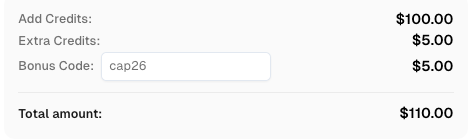
Redeem Your CapSolver Bonus Code
Boost your automation budget instantly!
Use bonus code CAP26 when topping up your CapSolver account to get an extra 5% bonus on every recharge — with no limits.
Redeem it now in your CapSolver Dashboard
Validate duplicate detection, missing fields, parser drift, and source availability before a record reaches the agent. If a source changes layout, pause collection and keep the last good parser version. If the portal requires login or shows restricted data, exclude it unless you have explicit authorization and a documented legal basis.
The CapSolver FAQ can help operations teams answer account and billing questions, while the browser-mode SDK methods remain the implementation source for CAPTCHA handling details.
An open records data collection pipeline for AI agents succeeds when the agent receives trustworthy records instead of messy browser state. Use source approval, minimal fields, audit logs, and bounded challenge handling. For permitted browser workflows where CAPTCHA blocks an otherwise lawful collection step, CapSolver can fit into the worker layer without exposing secrets to the model.
Usually no. Let controlled collectors handle retrieval, validation, and normalization. The agent should consume approved records and evidence.
Exclude private, restricted, sensitive, or unauthorized data. Public availability does not remove legal, contractual, or ethical obligations.
CapSolver fits in the browser worker when a permitted public workflow presents a supported challenge. It should not be placed inside the model prompt.
Track content hashes, field completeness, selector misses, and sample renders. Pause collection when those signals change sharply.
Ethan Collins
AI Agent Workflow Engineer
Building clearer handoffs between AI agents and tools.
ABOUT THE AUTHOR
Learn scalable Rust web scraping architecture with reqwest, scraper, async scraping, headless browser scraping, proxy rotation, and compliant CAPTCHA handling.

Learn the best techniques to scrape job listings without getting blocked. Master Indeed scraping, Google Jobs API, and web scraping API with CapSolver.